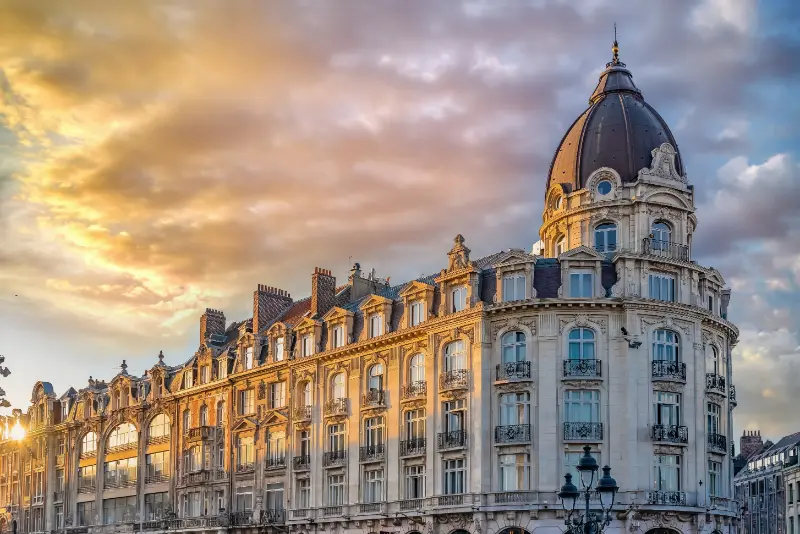
The Musée Gustave Moreau is one of the most visually distinctive artists’ houses in Paris. From the outside, the address at 14 rue de La Rochefoucauld looks relatively restrained. Inside, domestic rooms give way to huge studio spaces packed with paintings, drawings and unfinished projects, all linked by the museum’s famous spiral staircase. The contrast between private home and monumental workshop is the reason to visit even before you decide how much you like Moreau’s Symbolist art.
This museum was not created decades later by curators trying to reconstruct an artist’s life. Moreau himself planned the transformation of his family home into a museum near the end of his career and left the house, works and contents to the French state with the wish that the collection remain together. The museum opened in 1903, and its dense historical presentation is part of the experience.
Check tickets and Paris experiences
Compare current tours, timed-entry tickets and experiences before fixing your itinerary.
GetYourGuideTiqetsCivitatisViatorAffiliate links: we may earn a commission at no extra cost to you.
Important 2026 warning: check the museum on the morning of your visit
The museum is currently affected by a labor movement that can cause occasional, unpredictable closures. The institution says it updates its homepage each morning. This means a normal opening-hours listing is not enough in September 2026: check the museum’s current notice before leaving your hotel, especially if you are traveling across the city specifically for this visit.
Under normal conditions, the museum is open every day except Tuesday from 10:00 to 18:00, with last admission at 17:30. It closes on 1 January, 1 May and 25 December. The standard ticket is currently €8 full price and €6 reduced. Permanent collections are free on the first Sunday of the month.
A useful ticket detail: the ticket also connects to Musée Jean-Jacques Henner
The current ticket gives access to the permanent collections of both the Gustave Moreau Museum and the Musée Jean-Jacques Henner and is valid for seven days. This is valuable if you enjoy artists’ houses but do not want to force two museums into the same afternoon. Keep the ticket and check the partner museum’s own opening conditions before planning the second visit.
This is a better strategy than treating a joint ticket as an obligation to “get your money’s worth.” Paris becomes tiring when every discount creates another compulsory stop. Use the seven-day validity to preserve flexibility.
The domestic rooms come first
The lower rooms retain the feeling of a nineteenth-century home and personal memorial. Family portraits, furniture, objects and works by Moreau’s friends create a different emotional register from the giant studios above. Do not rush through these rooms simply because the staircase has become the museum’s most photographed feature.
Moreau deliberately created a personal environment that explains how he wanted his work remembered. This makes the museum partly a self-portrait in architectural form. The arrangement tells you not only what he painted but also what he valued, collected and chose to preserve.
The second- and third-floor studios
In 1895 Moreau asked architect Albert Lafon to transform the house by creating large north-lit studios capable of holding major works. These rooms are dense with paintings, watercolors and studies. Rather than the spacious “one masterpiece per wall” style of many modern museums, you encounter an artist’s lifetime in accumulation.
Large compositions such as The Suitors become more understandable in this context because nearby drawings and studies show the labor behind them. Moreau reworked paintings repeatedly, and the museum makes that process visible. Look for unfinished surfaces and compare them with highly resolved passages.
The spiral staircase: beautiful, but not the whole museum
The iron spiral staircase joining the studios is one of the most photographed museum interiors in Paris. It deserves attention because it solves a practical circulation problem with extraordinary elegance, but do not let social-media imagery reduce the museum to a staircase stop. The real value is the relationship between architecture and the sheer quantity of work surrounding it.
If photography is important to you, be considerate in a narrow circulation space. Blocking stairs for posed images creates a safety and visitor-flow problem. Enjoy the structure, take a quick photograph when space permits, then move on to the art.
Understanding Gustave Moreau without an art-history degree
Moreau is usually associated with Symbolism: mythological, biblical and literary subjects transformed into elaborate, dreamlike images. You do not need to decode every symbol. Start with color, density and recurring themes. Notice how jewels, architecture, bodies and landscape become less like realistic descriptions and more like components of an imagined mental world.
The museum is especially good for understanding artistic process because drawings sit close to large canvases. Ask how a composition changes between study and final painting. In some works, “final” is not even the right word because Moreau continued revising paintings for years.
How long to spend
Allow 90 minutes to two hours. The museum is physically smaller than a national collection, but the walls are dense. An hour is possible if you focus on the house, staircase and principal studios. Two hours gives enough time to look at studies and understand the relationship between rooms.
If you are not especially interested in Symbolism, the building can still justify a shorter visit. Pair it with the Musée de la Vie Romantique and a walk through the 9th arrondissement for a coherent cultural day rather than traveling across Paris for one specialist museum.
Accessibility and the reality of a historic house
Historic artist houses present more complicated access conditions than modern galleries. The famous staircase is inherently not a step-free route, although alternative access provisions may exist for parts of the museum. Visitors with mobility needs should contact the museum or consult the current accessibility information before travel and ask exactly which floors and rooms are reachable.
The same principle applies to crowding. Narrow domestic rooms can feel busy even with modest visitor numbers. If you prefer quiet museums, arrive close to opening on a normal operating day rather than at the peak of a free Sunday.
Who should prioritize it?
- Symbolism and nineteenth-century art enthusiasts will find one of the most concentrated experiences in Paris.
- Architecture and interior-design travelers may enjoy the transformation from domestic rooms to vast studios even if Moreau is new to them.
- Photographers will appreciate the staircase and studio light, but should visit respectfully.
- Repeat Paris visitors looking for a smaller museum with a strong identity should place it high on the list.
- Travelers on a tight first-trip schedule should choose it based on personal interest rather than general fame.
A sensible neighborhood route
Start around Saint-Georges, visit Moreau, then walk toward the Musée de la Vie Romantique and South Pigalle. From there you can continue to Montmartre or return toward the grands boulevards. This route keeps the day geographically compact and lets nineteenth-century cultural history connect naturally to the streets where it happened.
If you also want the Musée Jean-Jacques Henner because of the joint ticket, schedule it on another day or later in the week. The 7-day ticket validity is specifically useful because Henner is in the 17th arrondissement rather than next door.
Compare nearby activities
Guided walks in Montmartre and the 9th arrondissement can complement the museum, but keep the museum slot flexible while the current labor disruption continues. Book a tour only if you can still make the meeting point comfortably even if the museum closes unexpectedly.
Official information
Check the official opening-hours and prices page and the museum homepage on the morning of your visit. The 10:00–18:00 schedule, Tuesday closure, €8/€6 prices and current warning about unpredictable closures were verified in September 2026.
Frequently asked questions
Why is the museum famous for its staircase?
The elegant spiral staircase links the large upper studios created during Moreau’s late-life transformation of the house. It is visually striking, but the studios and dense collection are the deeper reason to visit.
Is the museum currently open normally?
Normal published hours still exist, but in September 2026 the museum warns of occasional unpredictable closures linked to a labor movement. Check the homepage the morning you plan to go.
Is the first Sunday free?
The museum currently states that access to the permanent collections is free on the first Sunday of the month. Crowd levels can be higher, so free does not always mean easier.
What does the joint ticket include?
The current ticket covers the permanent collections at both Musée Gustave Moreau and Musée Jean-Jacques Henner and is valid for seven days, subject to each museum’s own opening conditions.
Final planning advice
The Musée Gustave Moreau is memorable because artist, collection and architecture remain unusually intertwined. Give yourself enough time to move from the private rooms into the enormous studios, look beyond the famous staircase and notice the unfinished work around you. In 2026, the most important practical step is simple: verify that the museum is open before you set out.
One more practical planning note
The current risk of unplanned closure changes how you should schedule the day. Pair Moreau with flexible nearby activities such as walking South Pigalle, visiting a free collection or exploring the 9th arrondissement. Avoid placing a non-refundable guided tour immediately after a museum visit whose opening status is uncertain. Check the official homepage after breakfast, then decide whether to go. If it is closed, use the neighborhood route rather than losing time trying to negotiate at the door.