Disclosure: This article contains affiliate links or booking widgets. If you book through them, Dreaming of Paris may earn a commission at no extra cost to you. How our affiliate links work.
The Loire Valley is possible as a day trip from Paris without a car, but only if you stop thinking of “the Loire Valley” as one attraction. It is a large region of towns, châteaux, rivers and vineyards. A coach tour can link several major castles because transport is organized for you. An independent traveler using trains should build the day around one or two places with rail access.
Check tickets and Paris experiences
Compare current tours, timed-entry tickets and experiences before fixing your itinerary.
GetYourGuideTiqetsCivitatisViator
Affiliate links: we may earn a commission at no extra cost to you.
The two easiest anchors are Amboise and Chenonceau. Amboise gives you a walkable historic town with the royal château and Clos Lucé; Chenonceau gives you one of the most distinctive châteaux in France and a station only about 400 meters from the ticket office.
Option 1: Amboise only — the least stressful independent day
The Amboise tourism office states that the town is about 1.5 hours from Paris by train. You can reach the area by TGV from Paris-Montparnasse to Saint-Pierre-des-Corps and continue, or use regional services from Paris-Austerlitz depending on the timetable. The center is walkable from the local station, though the station is across the Loire and you should allow time to cross into town.
A strong Amboise day includes the Château Royal d’Amboise, lunch in town and Clos Lucé, Leonardo da Vinci’s final residence. If you move quickly, add a riverside walk. Do not add Chenonceau simply because it is “nearby” unless train times line up cleanly.

Option 2: Chenonceau only — easiest château-to-station logistics
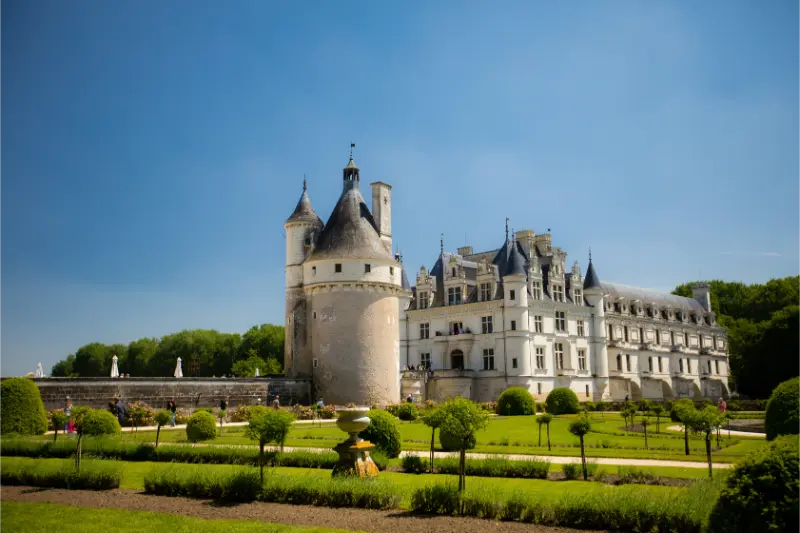
Chenonceau is unusually convenient for a major château. The official site states that TER trains from Tours reach Chenonceaux in about 25 minutes and the SNCF station is roughly 400 meters from the ticket office. That makes it one of the rare Loire icons you can visit independently without a taxi from the station.
In 2026, full adult admission with a guide leaflet is €19; an audioguide ticket is €24. The château and gardens are open every day of the year, but opening hours vary significantly by season. In high-demand periods, timed reservations may be required, so check the official calendar before buying train tickets.
Give the estate at least 3 hours. The interior rooms matter, but so do the two main gardens, the river views, farm/flower areas and the architecture spanning the Cher. A 90-minute rush defeats the reason to travel this far.
Option 3: Amboise + Chenonceau — possible, but timetable first
This is the combination many independent travelers want. It can work because regional trains connect the area, but the order depends on the exact day. Do not write an itinerary first and search trains second. Open the SNCF schedule for your date, identify the Paris arrival, the Amboise–Chenonceaux connection and the evening return, then build visits inside those fixed transport points.
A realistic version is early Paris departure → Amboise morning → train to Chenonceaux → 3-hour château visit → return via Tours/Saint-Pierre-des-Corps. The reverse can also work. What does not work is adding a long sit-down lunch, both Amboise château and Clos Lucé, Chenonceau, wine tasting and an early train back to Paris.
Why Chambord is harder without a car
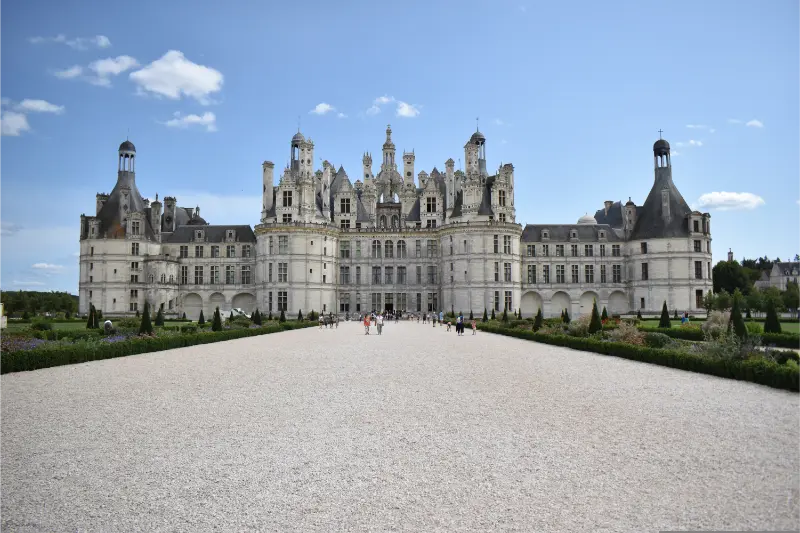
Chambord is one of the Loire Valley’s defining images, but it does not have the same station-at-the-gate advantage as Chenonceau. Public transport options are more seasonal and involve additional road connections. If Chambord is your must-see, a guided day tour from Paris or a regional base with organized transport can be more rational than forcing a complex independent day.
This is the central decision: independent rail trip for Amboise/Chenonceau versus guided transport for a multi-château circuit including harder-to-reach sites.
How many castles can you truly appreciate in one day?
Two is enough. Three is possible only when transport is optimized and visits are short. Four is a collection exercise, not a meaningful visit. Châteaux contain furnished rooms, staircases, art, gardens and large grounds. Their stories also overlap; after several rushed interiors, details blur.
If your goal is photography and exterior architecture, a multi-stop tour may still suit you. If you care about history, choose fewer.
Amboise vs Chenonceau: which should a first-timer choose?
| Choose Amboise if… | You want a real town, cafés, royal history and Leonardo da Vinci connections. |
|---|---|
| Choose Chenonceau if… | You want one spectacular château, gardens and the easiest station-to-monument logistics. |
| Choose both if… | You are comfortable following train schedules and willing to keep meals/other stops simple. |
| Choose a tour if… | You want Chambord plus other châteaux without solving regional transport yourself. |
Train strategy from Paris
Paris-Montparnasse is useful for TGV services to Saint-Pierre-des-Corps/Tours; Paris-Austerlitz serves regional routes toward the Loire. The “fastest” outbound train is not automatically the best if it creates a poor regional connection. Search the whole journey to your actual destination, not Paris → Tours as a separate ticket unless you know the onward schedule.
Leave margin on the return. Missing the last convenient connection because a château visit ran long can turn a pleasant day into an expensive problem.
Food: do not let lunch break the timetable
In Amboise, a restaurant lunch is easy if your schedule allows it. At Chenonceau, there are on-site food options and picnic areas, which can be more efficient. The château’s official services page confirms both covered and open picnic areas. Carrying a simple lunch can save an hour on a tightly connected day.
Spring, summer and autumn differences
Spring: gardens and moderate walking weather, but changing rain. Summer: longest opening hours, strongest crowds and potential heat inside non-air-conditioned historic buildings. Autumn: attractive landscapes and cooler walking, but shorter opening windows later in the season. Winter: Chenonceau remains open, while the broader region feels quieter and daylight constrains multi-stop plans.
Loire Valley with children
One château plus a town is usually better than three interiors. Chenonceau’s river setting, gardens and maze break up room visits. Amboise pairs history with Clos Lucé’s Leonardo theme. Bring snacks and build outdoor time into the day rather than asking children to process Renaissance furniture for eight hours.
Is it worth doing from Paris?
Yes if châteaux are a major interest and you have at least five or six days in Paris. On a three-day first visit, Versailles or Fontainebleau gives you a major palace experience with less travel. Use our day trips from Paris comparison before committing.
When an overnight is better
If you want Chambord, Chenonceau, Amboise, vineyards and villages, stop calling it a day trip. Spend one or two nights in Tours or Amboise. The Loire is a region, and its strongest experiences appear when you are not constantly checking the train back to Paris.
A sample Amboise-only schedule
Take an early train from Paris and aim to be in Amboise before 10:00. Visit Château Royal first while concentration is fresh, have lunch in the center, then walk to Clos Lucé for the afternoon. If time remains, use the Loire riverfront rather than adding another paid site. This day gives you a town, two complementary Renaissance stories and no regional transfer stress.
A sample Chenonceau-only schedule
Reach Chenonceaux late morning, enter with a timed slot, spend 90 minutes in the château and at least another 60–90 minutes in the gardens and estate. Eat on site or use the picnic area, then take a regional train back through Tours/Saint-Pierre-des-Corps. This is the most robust no-car plan because the station is genuinely close to the gate.
Why Blois and Chambord are a different type of day
Blois itself has rail access and a major château, but combining it with Chambord introduces a road-transfer problem. Seasonal regional shuttles can help, but schedules change and should be verified for the exact date. If Chambord is your dream image, a guided tour solves that last-mile issue more cleanly than trying to improvise taxis in peak season.
Wine tasting from Paris: be realistic
A Loire wine experience is better with an overnight or organized tour. Independent rail travelers can find tastings in and around Amboise/Tours, but wineries are often outside station centers. Do not add a rural tasting to a two-château rail day unless transport is booked and the producer confirms the appointment.
When to choose Versailles instead
If your interest is court life, formal gardens and one enormous royal complex, Versailles is far easier from Paris and deserves priority on a first short trip. Choose Loire when you specifically want Renaissance château variety, landscapes and a sense of leaving the Paris region. The extra travel should buy a different experience.
Frequently asked questions
Can I visit Chenonceau by train?
Yes. The official château site states that Chenonceaux station is about 400 meters from the ticket office, with regional train connections via Tours.
Can I do Chambord and Chenonceau independently in one day?
It is much less convenient than Amboise + Chenonceau because Chambord lacks the same direct rail access. For that pair, organized transport is often easier.
How early should I leave Paris?
Early enough to reach your first site close to opening and preserve daylight for the second. Exact train times change, so build the day from the live SNCF timetable.
Official Amboise access information · Official Chenonceau access.