Disclosure: This article contains affiliate links or booking widgets. If you book through them, Dreaming of Paris may earn a commission at no extra cost to you. How our affiliate links work.
Saint-Germain-des-Prés is often reduced to two café terraces and a story about writers who are no longer sitting there. The literary mythology is real, but the neighborhood is more interesting when you connect it to the former abbey, postwar publishing, art galleries, small streets, churches and the transition toward Luxembourg Garden.
This walk is not an attempt to find an “authentic” Saint-Germain untouched by luxury shops. That version does not exist. Instead, it shows how different eras coexist in a small part of the Left Bank and how to enjoy the famous places without letting them consume the whole visit.
Begin at the church, not the café
Église Saint-Germain-des-Prés gives the neighborhood its name and anchors its history. The abbey was founded in the 6th century, although the surviving church has evolved through later periods. Step inside before the streets get busy and look at the mix of architectural and decorative layers rather than expecting a single untouched medieval interior.
The official Paris tourism Saint-Germain walk also begins here for good reason: once you understand the abbey, the neighborhood stops feeling like a collection of cafés with an old church in the middle.
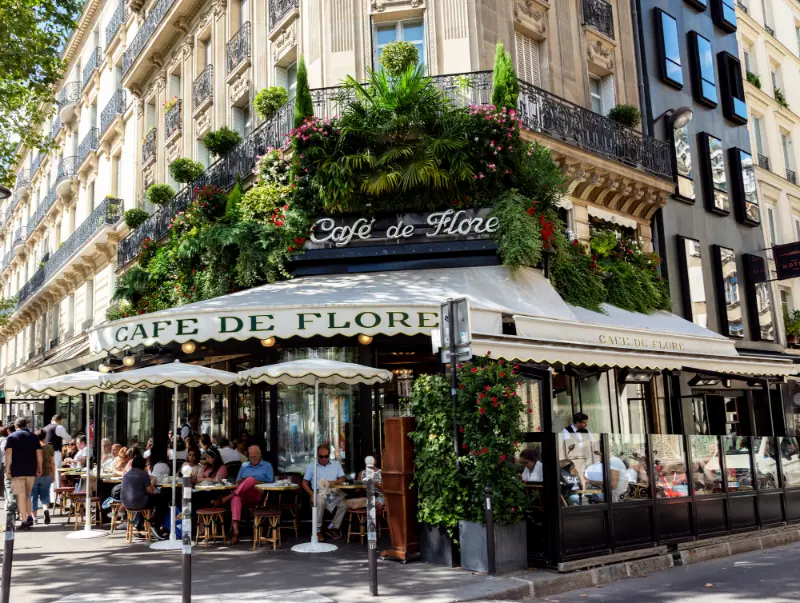
Café de Flore and Les Deux Magots: see them with realistic expectations
The two famous cafés are historically associated with writers, philosophers and artists, and both remain functioning businesses. Sitting on the terrace can be enjoyable if the history matters to you, but it is an experience you are paying for. You do not need to order a full meal to “understand” Saint-Germain, and you should not expect a time capsule.
A useful compromise is to see the façades, read a little about their intellectual history in advance and decide on the spot whether the atmosphere is worth your time. If every table is crowded and you have a four-hour walk ahead, continue. The neighborhood contains dozens of cafés.
Place de Fürstenberg: beautiful, tiny and no longer secret
Place de Fürstenberg is one of the most photographed corners of Saint-Germain because of its intimate scale and central lamppost. It is charming, but describing it as hidden is outdated. Visit early or late if you want to appreciate the square without a queue of cameras.
Nearby is the Musée National Eugène-Delacroix, located in the painter’s former apartment and studio. It is a small museum, which makes it a good alternative to a mega-museum day. Check current opening and ticket arrangements before adding it.
Rue de Buci: useful for understanding the neighborhood’s daily rhythm
Rue de Buci combines food shops, cafés and heavy visitor traffic. It is livelier than many romantic descriptions suggest. Walk it as a connector and pay attention to the neighboring lanes rather than treating the street as a destination that requires an hour.
Morning and late afternoon feel different. In the morning, deliveries and food shopping are more visible; later, terraces dominate. If you are staying in the neighborhood, seeing both moods is more revealing than trying to capture one “perfect” moment.
Cour du Commerce Saint-André and revolutionary echoes
This narrow passage connects to the broader revolutionary history of the Left Bank and preserves a scale that contrasts with nearby boulevards. It is also lined with businesses, so the passage is easiest to enjoy without lingering in shop entrances when taking photographs.
Historical associations around the passage are sometimes simplified in tourist storytelling. Use plaques and museum sources for exact claims rather than repeating every legend attached to a doorway. Saint-Germain has enough documented history without embellishment.
Saint-Sulpice: the big church that deserves more than a novel reference
Walk south to Place Saint-Sulpice and the church of the same name. Its mismatched towers, broad façade and large interior create a completely different scale from Saint-Germain-des-Prés. The church contains important art, including murals by Eugène Delacroix in the Chapel of the Holy Angels.
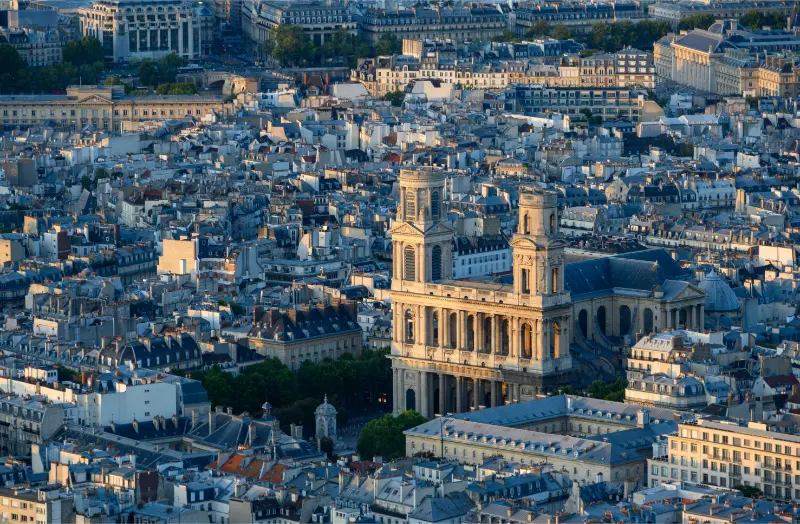
Visitors sometimes arrive because of popular fiction associations. Those can be fun, but the architecture, organ tradition and Delacroix works are better reasons to stay.
Luxembourg Garden: use it as part of the route, not a separate attraction
From Saint-Sulpice, continue toward the Jardin du Luxembourg. The garden is one of the smartest ways to structure a Left Bank day because it provides seating and visual space after dense streets. The central basin, palace façade and formal terraces are the obvious sights, but the quieter tree-lined sections are often more restorative.
Chairs are meant to be used. A 20-minute pause here can make the difference between a pleasant afternoon and museum fatigue.
Art galleries: what to expect when visiting
Saint-Germain has a long association with galleries and art dealing, especially around rue de Seine and nearby streets. Many galleries are commercial spaces rather than museums. When a gallery is open to the public, it is usually fine to step inside. Photography policies vary, so the individual gallery’s guidance is the best reference when the rules are not obvious.
The best experience is exploratory: choose a street, look through windows and enter the places that genuinely interest you. A list of ten “must-see galleries” ages quickly because exhibitions and businesses change.
Bookshops and publishing history
The neighborhood’s literary identity extends beyond the famous café era. Publishers, bookshops and institutions helped define the Left Bank’s intellectual life. Browse a shop even if your French is limited; art books, photography and translated editions make the experience accessible.
If Shakespeare and Company is on your list, it is across the river-facing edge of the Latin Quarter rather than in Saint-Germain proper. Combine it with our Latin Quarter guide instead of zigzagging back and forth.
A 3-hour Saint-Germain route
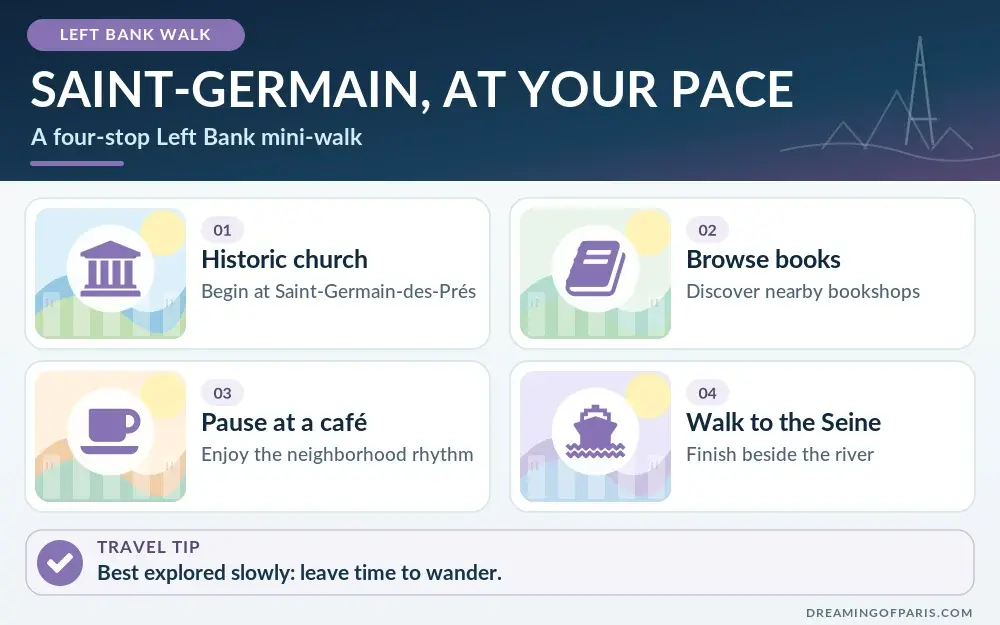
- 0:00–0:25: Église Saint-Germain-des-Prés and square.
- 0:25–0:50: famous cafés and nearby side streets.
- 0:50–1:20: Place de Fürstenberg and rue de Seine galleries.
- 1:20–1:50: rue de Buci and Cour du Commerce Saint-André.
- 1:50–2:20: Saint-Sulpice.
- 2:20–3:00: Luxembourg Garden.
Add an hour for the Delacroix museum, a gallery exhibition or a long café stop. If you want lunch, treat the route as a half-day.
How to create a full Left Bank day
Begin with the Latin Quarter in the morning, cross through Luxembourg Garden around lunch and finish in Saint-Germain. This keeps you on foot and makes historical sense: university Paris transitions into literary and artistic Paris without a metro ride.
Another strong combination starts at Notre-Dame and Île de la Cité, crosses to Saint-Michel and then moves west. Do not add Montmartre to the same day unless you enjoy spending your trip underground.
Where to eat in Saint-Germain
Prices vary dramatically. A famous café terrace, a contemporary restaurant and a neighborhood bakery are three different experiences, and none should be judged by the same budget. Decide what you are paying for: history, location, cooking or convenience.
If you want a simple lunch, look beyond boulevard Saint-Germain to side streets around Saint-Sulpice and farther south. Current menus matter more than reputation alone, so check before committing to a famous address.
Saint-Germain at night
The neighborhood works well in the evening because churches and galleries give way to restaurants, cinemas and bars without the nightlife intensity of some Right Bank areas. The Seine is close, making it easy to finish with a river walk. For a wider route, see our Paris at night guide.
Where to stay
Saint-Germain is excellent for first-time visitors who value walkability, classic Left Bank atmosphere and evening dining. It is rarely a bargain. Rooms in historic buildings can be compact and some streets are noisy. Compare exact blocks, not just neighborhood names, in our where to stay in Paris guide.
Compare hotels for your stay in Paris
Check current availability, location and prices before choosing the exact neighborhood.
Check Paris hotels on Booking.comAffiliate link: we may earn a commission at no extra cost to you.
Saint-Germain with children
The garden makes this neighborhood easier with children than the café mythology suggests. Use Luxembourg as the main movement break, keep church visits short and let older children choose a bookshop or pastry stop. For family-specific logistics, use our Paris with kids guide.
Common mistakes
- Spending the entire visit at Café de Flore and Les Deux Magots.
- Calling Place de Fürstenberg “secret” and expecting solitude at midday.
- Ignoring Saint-Sulpice because it is not directly on boulevard Saint-Germain.
- Trying to turn every literary association into a precise historical fact.
- Skipping Luxembourg Garden because it seems like “just a park.”
How rain changes Saint-Germain
Saint-Germain is one of the easiest neighborhoods to enjoy in poor weather because the route can alternate between churches, galleries, bookshops and cafés. Instead of cancelling the walk, shorten the garden section and extend the indoor stops. Wet pavements also change the visual character of the streets after dark. Bring a compact umbrella, but do not build an itinerary that requires standing in café queues simply to stay dry.
On hot days, reverse the logic: use Luxembourg Garden early or late and reserve churches or museum interiors for the warmest hours.
FAQ
How long do you need in Saint-Germain-des-Prés?
Three hours works for a good walk. Half a day is better if you want a museum, gallery time, shopping or a long café stop.
Are the famous cafés worth it?
They are worth it if literary history and atmosphere matter to you and the price feels acceptable. They are not required to enjoy the neighborhood.
Is Saint-Germain good for first-time visitors?
Yes. It is central, walkable and easy to connect with Notre-Dame, the Latin Quarter, the Louvre area and Musée d’Orsay.
What is the best time to walk here?
Morning is calmer for streets and architecture; late afternoon into evening is better for café atmosphere and dinner. A rainy day can also work well because churches, galleries and cafés provide frequent shelter.
Saint-Germain becomes more rewarding when you stop trying to recreate 1940s Paris. Let the famous history inform the walk, then pay attention to the neighborhood that exists now: art, books, churches, gardens, expensive terraces and ordinary streets all occupying the same compact piece of the Left Bank.
Compare Saint-Germain-des-Prés guided walks and tastings
The live options below are useful if you want a guided visit, reserved experience or packaged activity for this specific part of the trip. Compare the exact inclusions, meeting point, language and cancellation terms before booking.