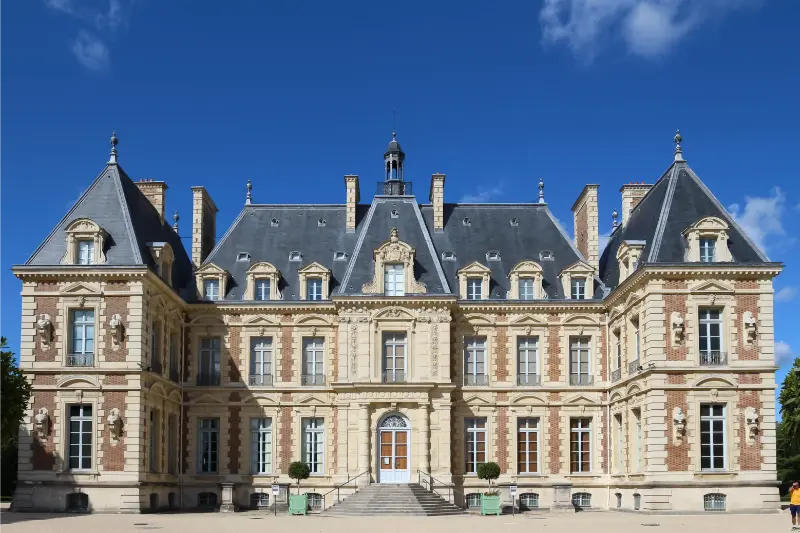
Parc de Sceaux is one of the best easy escapes from central Paris when you want formal French landscape design without committing to a full Versailles day. The departmental estate covers about 180 hectares south of Paris, with long axes, lawns, water features, wooded sections, a château museum, historic pavilions and gardens shaped by the legacy of André Le Nôtre. It is outside the City of Paris but easy to reach on RER B.
The park is large enough for a real half-day and calm enough to feel like a change of rhythm. It is especially popular in spring for cherry blossom, but reducing Sceaux to “the hanami park” misses most of what makes the estate interesting. The formal perspective, canals, château setting and seasonal tree structure work throughout the year.
How to get to Parc de Sceaux from Paris
The estate is served by several RER B stations, including Bourg-la-Reine, Sceaux, Parc de Sceaux and La Croix de Berny. The best station depends on which entrance and route you want. If your priority is the château and formal northern axis, a northern approach can be more logical; for the southern water features or a through-walk, Parc de Sceaux or La Croix de Berny may suit better.
This is another destination where entering a generic park name into a map can produce a poor route. Decide whether you want a loop returning to the same station or a point-to-point walk exiting at another RER stop. The estate’s size makes a through-route particularly attractive.
2026 park opening hours are seasonal
The park opens every day unless exceptional weather forces closure, but hours change by month. Current published hours are: 8:00–17:00 from November to January, 8:00–18:00 in February, 7:30–19:00 in March with later closing after the clock change, 7:00–20:30 in April, 7:00–21:00 from May through July, 7:00–20:30 in August, 7:30–20:00 in September, and 8:00–19:00 in October with earlier closing after the clock change.
Weather can override normal hours. Strong winds and storms are especially relevant in a park with mature trees. Check the official estate page on the day of travel if conditions are poor rather than assuming the gates will follow the normal schedule.
The château and museum have different hours
The park and museum are separate planning problems. The château museum is generally closed Monday and certain public holidays. From March through October it normally opens in the afternoon, with shorter winter hours from November through February. Last admission is before closing.
That means an early-morning park visit may be excellent for photography but too early for the château. If you want both, schedule the landscape first, have lunch or a picnic, then enter the museum after it opens. Always recheck the museum schedule because exhibitions and special events can affect access.
Why the landscape matters
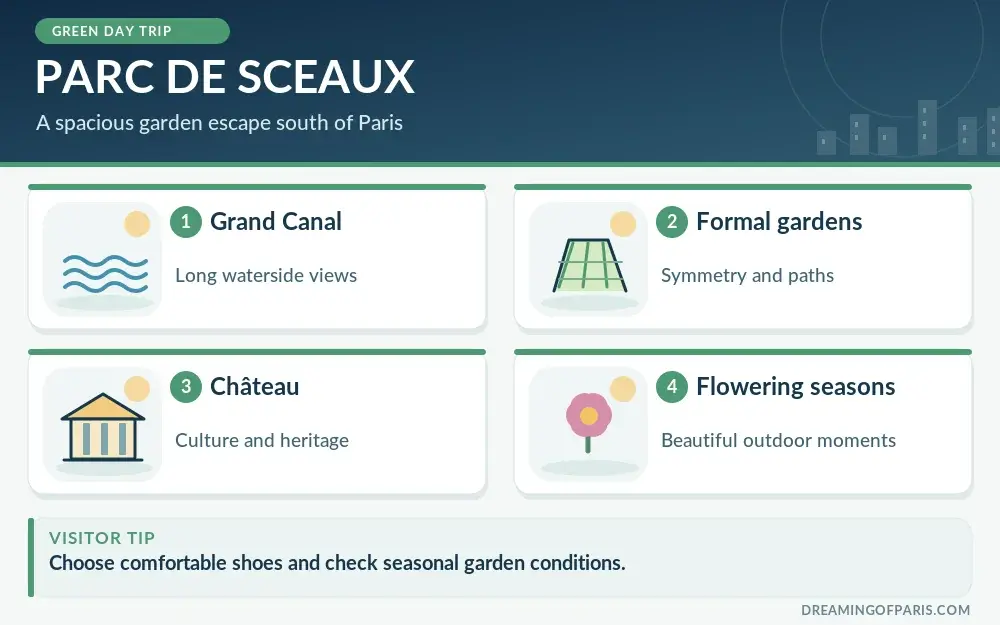
Sceaux is closely associated with the formal garden tradition of André Le Nôtre, and the estate is valuable because you can experience large-scale perspective without the density of Versailles. Long straight axes, clipped structure, basins and controlled sightlines contrast with wooded sections and later landscape elements.
Walk slowly enough to notice how views are staged. Formal gardens are not only about flowers; they are about geometry, distance and power. Move along a central axis, then step to the side and see how the composition changes. The garden becomes more interesting once you recognize that movement is part of the design.
The Grand Canal and water landscape
The canal and basins provide one of the clearest reasons to keep walking beyond the château. Reflections, long sightlines and open lawns create a sense of scale that photographs from the formal terraces do not fully communicate. In warm weather, this is also where the estate feels most like a day out rather than a museum visit.
If your group includes children, the water landscape and open areas can make the day easier than a purely architectural excursion. Bring realistic walking shoes; 180 hectares is far larger than a central square or neighborhood garden.
Cherry blossom and hanami: beautiful, but plan for crowds
Sceaux is famous for spring cherry blossom, particularly the ornamental groves that attract large numbers of visitors for hanami. Peak bloom varies with weather, so exact dates cannot be guaranteed months in advance. Warm spells, rain and wind can shift or shorten the best period.
If blossom is your main goal, monitor the estate’s official updates close to your visit and go early on a weekday if possible. A crowded weekend can transform a peaceful park into an event atmosphere. That can still be enjoyable, but it is a different experience from a quiet garden walk.
The château: what to expect
The current Château de Sceaux houses departmental museum collections connected to the history of the estate and the Île-de-France region. Interiors, paintings, furniture and decorative arts help reconnect the landscape to the people who shaped and inhabited the domain.
Do not expect Versailles-scale royal apartments. Sceaux offers a more compact museum experience that complements the park. This is one reason the estate works well as a half-day: the indoor component enriches the visit without dominating it.
Pavillon de l’Aurore and other buildings
The Pavillon de l’Aurore is another historic element of the estate, but it has more limited opening patterns than the park and château. The Orangerie and former stables are also used for events or temporary exhibitions. Check the day’s program if one of these buildings is a priority.
A common travel-planning error is assuming every building shown on an estate map functions like a permanently open museum room. At Sceaux, different spaces have different roles and schedules. Think of the domain as a collection of sites within one landscape.
A practical half-day route
For a first visit, enter from the north, walk the formal approach toward the château, continue through the principal garden axis to the water features, then loop through wooded paths before returning. If the museum is open, insert it after the initial outdoor section rather than visiting it first and emerging when the best light has disappeared.
A point-to-point version is even better for energetic walkers: enter near Sceaux or Bourg-la-Reine, cross the estate via the château and canal, then exit toward Parc de Sceaux or La Croix de Berny for the RER back to Paris. This avoids retracing every step.
How much time do you need?
Three to four hours is a good first visit if you want the park plus the château. Two hours is enough for a focused landscape walk. In cherry-blossom season, add time for crowds, photos and possible picnicking. A full day is justified for garden enthusiasts, families or anyone combining special exhibitions and multiple historic buildings.
Do not schedule a tight timed attraction in central Paris immediately afterward. RER disruptions happen, and the walk from the park interior to the station may be longer than your map estimate. Leave buffer time for the return.
Food, picnics and facilities
The estate has food options and kiosks in or around the park depending on season, but picnicking is one of the easiest ways to enjoy the setting. Bring water and check current rules for large-group setups or events. Toilets are available at several museum and park locations, though not every historic pavilion has accessible facilities.
If you are visiting with children, choose your picnic area based on the route rather than carrying everything across the full estate. The park’s size is the main practical challenge, not lack of things to do.
Is Parc de Sceaux better than Versailles?
They solve different travel problems. Versailles offers a globally important palace complex and enormous historical collections; Sceaux offers a quieter, easier landscape day with lower planning pressure. If this is your first trip and royal history is a priority, Versailles still has a stronger claim. If you have already been to Versailles or want gardens without a full-day commitment, Sceaux can be the better fit.
It is also a useful spring alternative when you care more about blossom and outdoor space than palace interiors. The RER B connection makes it straightforward from many central stations.
Who should prioritize Sceaux?
- Garden and landscape-design enthusiasts who want another major Le Nôtre-related estate.
- Repeat Paris visitors looking for a half-day outside the dense center.
- Families who benefit from open lawns and a mix of indoor/outdoor activities.
- Spring travelers who want cherry blossom and are willing to monitor bloom conditions.
- First-time visitors with very limited time should choose it only if parks and gardens are a priority over central monuments.
Official information
Use the estate’s official opening-hours and access page before travel. The RER B access, 180-hectare size and seasonal 2026 park hours in this guide were checked against current Hauts-de-Seine information.
Frequently asked questions
Is Parc de Sceaux in Paris?
No. It is in the Hauts-de-Seine department just south of Paris, but RER B makes it an easy excursion from the city.
Is the park free?
General park access is normally free, while museum exhibitions, events or specific activities can have separate ticketing. Check the estate program for your date.
When is cherry blossom season?
Usually spring, but peak bloom changes every year with temperature, rain and wind. Monitor official updates close to travel rather than booking around a fixed historical date.
Which RER station is best?
There is no universal answer. Bourg-la-Reine and Sceaux are useful for northern approaches, while Parc de Sceaux and La Croix de Berny serve other sides. Plan your walking route first.
Final planning advice
Parc de Sceaux is easy to reach but large enough that a little route planning pays off. Choose your entrance based on the château, blossom groves or canal, check seasonal closing time, and consider a point-to-point walk between two RER stations. Give the estate at least half a day if you want both garden and museum; the reward is a side of Greater Paris that feels spacious, elegant and far removed from the pressure of the central sightseeing circuit.