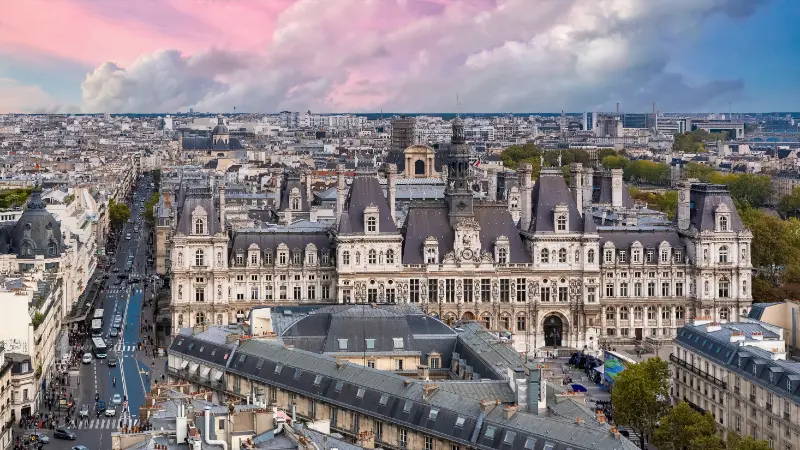
Paris 4th Arrondissement Guide: Notre-Dame, Île Saint-Louis, Le Marais and the Seine is for travelers who want to understand the district as more than a number on the Paris map. The 4th arrondissement combines two versions of historic Paris: the islands and riverfront around Notre-Dame, and the eastern Marais with Place des Vosges, old Jewish streets, hôtels particuliers and dense shopping lanes. It is one of the richest sightseeing areas in the city, but also one of the easiest places to overpack.
This guide contains affiliate links. If you book through them, Dreaming of Paris may earn a commission at no extra cost to you.
Book the practical parts of your Paris trip
Compare accommodation first, then check tickets and experiences for the fixed parts of your itinerary.
Check Paris hotelsGetYourGuideTiqetsCivitatisAffiliate links: we may earn a commission at no extra cost to you.
Why explore the 4th arrondissement?
The 4th is especially rewarding for first-time visitors, architecture and history lovers, photographers, walkers and travelers who want a central base with active streets from morning into evening. It is less convincing for anyone seeking quiet, cheap lodging or an uncrowded local atmosphere in the most famous sections; you need to use side streets and early or late hours to find calm.
Think of this district as a compact city walk with several different moods. The best plan is not to see everything; it is to choose a logical direction and leave enough margin for a market, a courtyard, a café or a street that deserves an unplanned detour.
What to see in Paris’s 4th arrondissement
Notre-Dame and the eastern Île de la Cité
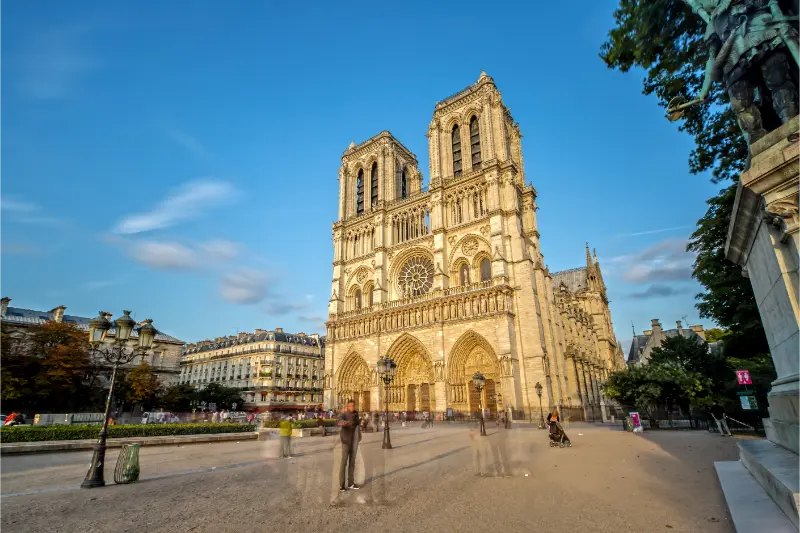
Notre-Dame is again a functioning cathedral and one of the strongest anchors in the city. Pair it with the riverbanks and island streets rather than rushing straight to another distant monument. If you are already tired, this is a sensible point to simplify the route. Continue only if the next street or stop genuinely adds something to your day.
Île Saint-Louis
The smaller island rewards one slow circuit of the quays plus Rue Saint-Louis-en-l’Île. Its scale makes it ideal after Notre-Dame, especially early morning or evening when day-trip traffic drops. Do not over-plan this stop. A flexible twenty or thirty minutes can be more rewarding than a tightly scheduled visit that makes every detour feel like a problem.
Place des Vosges
The square is a formal pause inside the Marais. Walk the arcades, sit in the garden and, if it interests you, visit the Maison de Victor Hugo rather than treating the place as a two-minute photo stop. Approach it as part of the street network rather than a standalone pin, and continue on foot long enough to see the atmosphere change.
Rue des Rosiers and the Jewish quarter
The area carries layers of Jewish history, food culture, fashion and heavy visitor traffic. The mix of residential streets, religious sites and heavy visitor traffic means some pavements can become congested, especially around photo stops and queues. Use the stop as an orientation point. The adjacent streets are worth reading on the map before you automatically head for the next famous name.
Hôtel de Ville and the Seine
The city hall frontage and riverside make a useful geographic hinge between the islands and the Marais. This is also a strong area for an evening walk when façades and bridges are lit. Notice the contrast between the main frontage and the smaller streets around it. That contrast is often more revealing than the headline sight alone.
Eastern Marais side streets
Streets toward Saint-Paul, Village Saint-Paul and the Arsenal side feel different from the more commercial western Marais. They are useful if you want old Paris without spending the whole walk in the busiest retail lanes. Pair this place with the next highlight instead of treating both as separate missions. The walk between them is part of the experience.
A practical walking route through the 4th
Start with the route as written, then adapt it to weather and reservations. A timed museum entry should control the sequence; almost everything else can remain flexible.
Step 1. Begin at Notre-Dame, then walk around the eastern part of Île de la Cité and cross to Île Saint-Louis before the midday crush. Keep Notre-Dame and the eastern Île de la Cité as your first orientation point and avoid adding distant stops before the route has properly begun.
Step 2. Enter the Marais through Saint-Paul, reach Place des Vosges, then work west through side streets instead of following only Rue de Rivoli. The middle section is where the district’s character should become clearer; use Île Saint-Louis as a reference if you need to shorten or extend the walk.
Step 3. Finish near Hôtel de Ville and the Seine, which leaves you well placed for a river walk, the 1st arrondissement or an evening meal. At the end, decide whether the day should continue into dinner or finish here. Eastern Marais side streets gives you a natural point from which to make that choice.
Where to eat and how to pace the day
The 4th has famous food addresses, but queues can distort the experience. Treat Rue des Rosiers as one option rather than the only place to eat. Saint-Paul and streets north of Hôtel de Ville provide more alternatives, and a picnic by the Seine can be more enjoyable than forcing a meal into a packed timetable.
Keep at least one meal unscheduled. Paris days rarely unfold exactly as a map suggests, and a flexible lunch makes it much easier to stay longer at a market, museum or park without stressing about a reservation.
Is the 4th arrondissement a good place to stay?
The 4th is exceptionally convenient and atmospheric, especially for first-time visitors who like walking. Hotels tend to be expensive and rooms can be small in historic buildings. Noise varies sharply: a room over a busy Marais street is a different experience from one on a courtyard.
Price is only one part of value. A slightly higher rate near a useful line or walkable evening area can reduce daily transport and make short stays noticeably easier. You can compare hotels in Paris on Booking.com and then compare recent guest comments before booking.
Getting around the 4th
Hôtel de Ville, Saint-Paul and Pont Marie are useful, while Châtelet is nearby for broader connections. Inside the arrondissement, walking is almost always better because the main sights sit close together but require time to appreciate.
The fastest option is not always the best one inside a neighborhood. One extra station can save little while costing the street experience, so walk short gaps and reserve the Métro for larger transfers. For fares, passes and connections, use our Paris Métro and public transport guide.
How much time should you allow?
For most travelers, the sweet spot is a generous half day. That gives the route enough room for one substantial indoor stop and at least one unhurried food break.
A full day is justified if this arrondissement is one of your trip priorities. Otherwise, stop while the route still feels enjoyable and connect the next neighborhood on another day. If you need a compact version, prioritize Notre-Dame and the eastern Île de la Cité, Île Saint-Louis and Hôtel de Ville and the Seine.
When to visit during the day
Season changes the rhythm: summer encourages longer evenings, while winter rewards using daylight for the outdoor legs first. In either case, check the current schedule of ticketed venues before building a day around them.
Whatever the season, verify the current opening day and reservation policy of any ticketed venue shortly before you go. Temporary exhibitions, maintenance and special events can change the best order even when the geography stays the same.
Who will enjoy this arrondissement most?
Travelers who enjoy reading a city through streets, shops and small changes in architecture will get the most from this guide. Families can shorten the route, while visitors with reduced mobility should verify slopes, paving and individual venue access in advance. In this case, the strongest fit is still first-time visitors, architecture and history lovers, photographers, walkers and travelers who want a central base with active streets from morning into evening.
Combine the 4th with nearby Paris
Useful related guides include Notre-Dame and Île de la Cité, Île Saint-Louis walk, Le Marais guide and Place des Vosges. The links below are the most practical extensions because they share a border, transport corridor or strong theme with this arrondissement.
Tours and bookable experiences
Before reserving, check whether the experience is a true small-area walk or a citywide itinerary. For this guide, the first type usually integrates better with the rest of the day.
Common planning mistakes
Mistake 1: Trying to see Notre-Dame, Sainte-Chapelle, the full Marais, Picasso Museum and Centre Pompidou in a single compact day.
Mistake 2: Queueing for one famous food stop while ignoring equally good alternatives one or two streets away.
Mistake 3: Treating Île Saint-Louis as only an ice-cream stop instead of walking its quays and noticing the 17th-century urban fabric.
Finally, do not treat the arrondissement boundary as a wall. Paris neighborhoods spill across administrative lines, and crossing one street into the next arrondissement is often the most logical way to finish the route.
Frequently asked questions
Is the 4th the best arrondissement for a first visit?
It is one of the best for atmosphere and walkability, but prices and crowds are higher than in many outer districts.
How long do you need?
A full day is justified if Notre-Dame, the islands and the Marais all matter to you. Half a day forces major compromises.
Is Île Saint-Louis worth it?
Yes, especially as a slow extension of Notre-Dame rather than a separate trip.
What pairs best with the 4th?
The 3rd arrondissement is the natural Marais continuation, while the 5th begins just across the Seine.
Official information and final tip
For seasonal events and current visitor information, consult official Paris tourism information. For a ticketed museum, monument or attraction, check that venue’s own official website as well before you commit the rest of the day to a fixed entry time.
A strong visit ends before the district feels exhausted. Follow the route, keep the useful detours, and leave something for another trip instead of turning the final hour into a race.