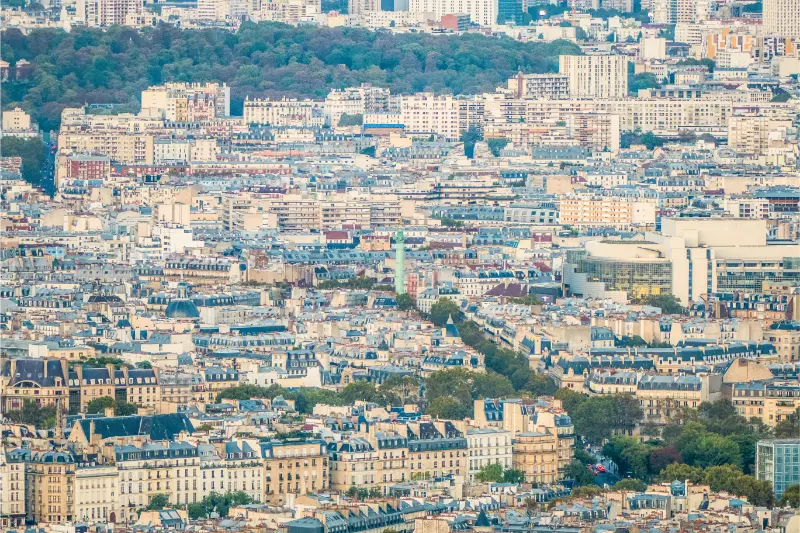
Paris 11th Arrondissement Guide: Bastille, Oberkampf, Charonne and Local Nightlife is for travelers who want to understand the district as more than a number on the Paris map. The 11th is one of the best arrondissements for seeing how contemporary Paris lives after work. Bastille, République, Oberkampf and Charonne create several distinct centers, while former workshop courtyards and the Faubourg Saint-Antoine preserve traces of the district’s craft and industrial past.
This guide contains affiliate links. If you book through them, Dreaming of Paris may earn a commission at no extra cost to you.
Book the practical parts of your Paris trip
Compare accommodation first, then check tickets and experiences for the fixed parts of your itinerary.
Check Paris hotelsGetYourGuideTiqetsCivitatisAffiliate links: we may earn a commission at no extra cost to you.
Why explore the 11th arrondissement?
The 11th is especially rewarding for food lovers, couples and friends who want lively evenings, repeat visitors, concert-goers and travelers who prefer restaurants and neighborhood energy to postcard monuments. It is less convincing for visitors who want to step outside their hotel into the Louvre-Eiffel-Tower version of Paris; major icons require a short metro ride.
A good visit has a clear beginning and end but a loose middle. Use the major sights for orientation, then spend the valuable part of the walk on the streets linking them. That is where the arrondissement stops feeling like an administrative zone.
What to see in Paris’s 11th arrondissement
Bastille and Port de l’Arsenal
Bastille is a transport and meeting hub more than a preserved historic square, but the July Column, Opéra Bastille and nearby marina help explain the area’s scale. Drop down toward Port de l’Arsenal for a calmer waterside contrast. Keep the camera away for the first few minutes and look at how people actually move through the space; it helps separate a functioning neighborhood from a tourist stop.
Faubourg Saint-Antoine
This historic route was shaped by furniture makers and craftspeople. The main street is busy, but the real interest is in side courtyards and passages, many of which still reveal a workshop geography even when their uses have changed. Allow enough margin for an unexpected closure or queue. The surrounding area gives you alternatives without forcing a complete itinerary change.
Oberkampf
Oberkampf is shorthand for the 11th’s bars and nightlife, but it is also a daytime neighborhood of cafés, bakeries, street art and small businesses. Visit before dark if you want to understand the streets rather than only the evening scene. The value here is context. Read the place in relation to the arrondissement’s history, scale and daily life rather than only its most photographed detail.
Rue de Charonne
Charonne provides a strong alternative to the busiest nightlife strips. Restaurants, boutiques and residential blocks create a more gradual transition from Bastille toward eastern Paris. Spend a few minutes beyond the obvious viewpoint; the surrounding blocks often explain why this stop matters to the neighborhood.
Atelier des Lumières
The immersive digital-art venue occupies a former foundry and can be a useful indoor anchor in poor weather. The program changes, so the current exhibition matters more than the building name alone. This is a good place to slow the pace and decide whether the next section needs more time or can remain a short pass-through.
Cirque d’Hiver and the northern edge
Near the 3rd-arrondissement boundary, the Cirque d’Hiver and surrounding streets connect the 11th to République and the Marais while keeping a more local feel. If this becomes the longest stop of the day, shorten a later section rather than rushing here; the route is designed to remain coherent after a cut.
A practical walking route through the 11th
The sequence below is realistic for travelers who actually stop, look and eat. It avoids the common mistake of calculating only map distance and forgetting the time absorbed by Paris itself.
Step 1. Start at Bastille, walk east along Faubourg Saint-Antoine and deliberately enter a few open courtyards without treating private spaces as attractions. Keep Bastille and Port de l’Arsenal as your first orientation point and avoid adding distant stops before the route has properly begun.
Step 2. Turn north through Rue de Charonne toward the Atelier des Lumières area, then continue toward Oberkampf in late afternoon. The middle section is where the district’s character should become clearer; use Faubourg Saint-Antoine as a reference if you need to shorten or extend the walk.
Step 3. Finish around République or lower Oberkampf for dinner, which lets the route evolve naturally from history and craft to evening life. At the end, decide whether the day should continue into dinner or finish here. Cirque d’Hiver and the northern edge gives you a natural point from which to make that choice.
Where to eat and how to pace the day
The 11th is a place to choose restaurants deliberately. There are destination tasting menus, natural-wine bars, bakeries and casual international food within a short walk. Do not cross the arrondissement for one social-media address if you already have several good options nearby; this is exactly the district where a flexible neighborhood meal usually works.
Reserve only when the meal itself is a priority. Otherwise, protect flexibility: a good bakery, market counter or neighborhood bistro close to the route is often more useful than an acclaimed address that forces a forty-minute detour.
Is the 11th arrondissement a good place to stay?
The 11th can offer better value than the western center while still keeping you close to the Marais. Bastille is transport-friendly, Oberkampf is livelier, and Charonne feels more residential. Noise is the main variable, so check whether your room faces a bar street or an interior courtyard.
Before paying, simulate one typical day from the hotel: morning trip to a central sight, return after dinner, and walk with luggage. That simple check exposes inconvenient locations better than a generic ‘central’ label. You can compare hotels in Paris on Booking.com and then compare recent guest comments before booking.
Getting around the 11th
Lines 1, 5, 8 and 9 cover key edges, while République adds several more connections. Because the arrondissement stretches east-west, the nearest station matters more than the arrondissement label itself.
Paris buses can be scenic, but traffic makes them harder to predict. For a reservation with a fixed entry time, favor the Métro and add a walking buffer from the station. For fares, passes and connections, use our Paris Métro and public transport guide.
How much time should you allow?
Budget more time than the map suggests. Walking distances can be short, but museum queues, markets, terraces and small detours quietly turn a two-hour sketch into a four-hour visit.
When necessary, cut the farthest stop instead of speeding up everything else. Paris itineraries remain enjoyable when one section disappears; they rarely improve when every section is rushed. If you need a compact version, prioritize Bastille and Port de l’Arsenal, Faubourg Saint-Antoine and Atelier des Lumières.
When to visit during the day
Late morning is often the easiest starting point because cafés and shops are awake without forcing an early alarm. Continue through lunch and let the final stop determine whether the walk should end before dinner or flow naturally into the evening.
Whatever the season, verify the current opening day and reservation policy of any ticketed venue shortly before you go. Temporary exhibitions, maintenance and special events can change the best order even when the geography stays the same.
Who will enjoy this arrondissement most?
Different travel styles can use the same route: couples may linger over meals, families may prioritize parks, and solo travelers can add museums. The key is to keep the geographic order even when the stops change. In this case, the strongest fit is still food lovers, couples and friends who want lively evenings, repeat visitors, concert-goers and travelers who prefer restaurants and neighborhood energy to postcard monuments.
Combine the 11th with nearby Paris
Useful related guides include 11th and Oberkampf walk, Bastille and Faubourg Saint-Antoine, Canal Saint-Martin and Père-Lachaise. Nearby planning works best when the second area begins where the first walk ends. The following guides were chosen with that principle in mind.
Tours and bookable experiences
A guided walk earns its place when it adds context you would not get from a map—history, food tastings, architecture or access to specialist stories. Compare the exact route before booking so you do not pay to repeat your independent walk.
Common planning mistakes
Mistake 1: Assuming Bastille contains a surviving fortress to visit; the historic meaning is in the site and surrounding urban fabric.
Mistake 2: Choosing Oberkampf accommodation without checking nighttime noise.
Mistake 3: Spending the whole visit in bars and missing the workshop courtyards and Charonne side streets that explain the district’s identity.
Finally, do not treat the arrondissement boundary as a wall. Paris neighborhoods spill across administrative lines, and crossing one street into the next arrondissement is often the most logical way to finish the route.
Frequently asked questions
Is the 11th good for nightlife?
Yes. Oberkampf, Bastille and nearby streets provide one of the city’s broadest mixes of bars, restaurants and music venues.
Is it good for first-time visitors?
It works well if you value food and evening atmosphere and do not mind taking the metro to major western sights.
How long should I spend?
A half day plus dinner is ideal for a first exploration.
What pairs best with it?
The 3rd/4th-arrondissement Marais, Canal Saint-Martin and Père-Lachaise all connect naturally.
Official information and final tip
For seasonal events and current visitor information, consult official Paris tourism information. For a ticketed museum, monument or attraction, check that venue’s own official website as well before you commit the rest of the day to a fixed entry time.
The arrondissement is easiest to remember as a sequence of connected places rather than a list of attractions. Keep the anchors, walk the transitions and allow one unscheduled stop; that is usually where the day becomes personal.