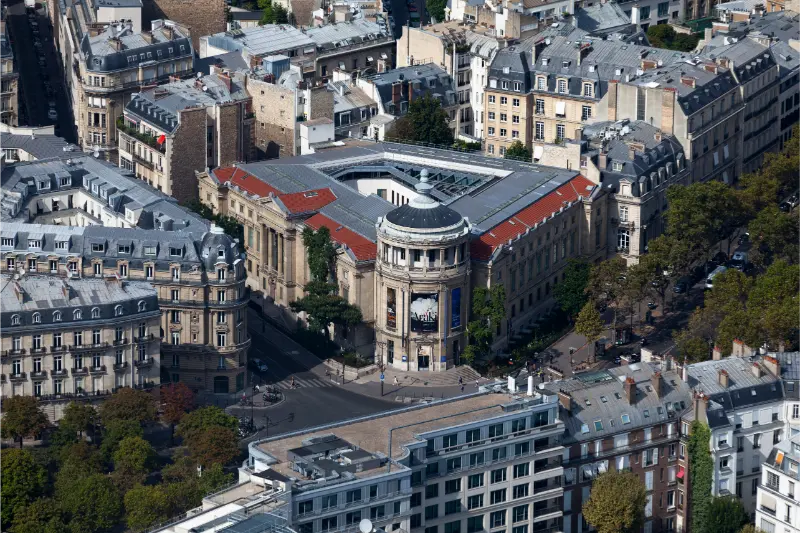
Musée Guimet is one of the strongest choices in Paris when you want a major collection without the scale and pressure of the Louvre. Its focus is Asian art, and that focus is broad enough to take you from Afghanistan and India to China, Korea, Japan and Southeast Asia without turning the visit into a generic “world museum” marathon. The building at Place d’Iéna is also easy to combine with Trocadéro, the Eiffel Tower area and several other museums in the 16th arrondissement.
The key to enjoying Guimet is not trying to “finish Asia.” The museum’s permanent displays cover thousands of years, with sculpture, ceramics, paintings, textiles, religious objects, prints and archaeological material. A better plan is to choose two or three regions that genuinely interest you, then leave time for one section you know little about. That approach makes the museum feel exploratory rather than encyclopedic.
Check tickets and Paris experiences
Compare current tours, timed-entry tickets and experiences before fixing your itinerary.
GetYourGuideTiqetsCivitatisViatorAffiliate links: we may earn a commission at no extra cost to you.
Musée Guimet practical information for 2026
The main Musée Guimet site is at 6 place d’Iéna, 75116 Paris. The museum is currently open every day except Tuesday from 10:00 to 18:00. The ticket desk closes earlier and last admission is before the galleries close, so arriving at 17:30 is not a realistic way to see the museum. The standard combined admission is currently €15 full price and €12 reduced, and the main Iéna collections and temporary exhibitions are free on the first Sunday of the month. Always recheck the day before visiting because temporary room closures and special-event conditions can change.
The nearest Metro stations are Iéna on line 9 and Boissière on line 6. This matters because the museum sits in a very efficient western-Paris sightseeing zone. If you are already following our 16th arrondissement guide, you can place Guimet between Trocadéro and the quieter streets around Iéna rather than making a separate cross-city journey.
What makes the collection different from other Paris museums
Guimet was founded in Paris in 1889 by industrialist and collector Émile Guimet. The institution later became a major national museum of Asian arts, and its holdings were significantly strengthened by archaeological missions, scholarly exchanges and the reorganization of French national collections in the twentieth century. Today the museum describes a permanent display of roughly 5,500 square metres and collections stretching across the Asian continent.
That breadth is the first reason to visit. The second is the quality of individual groups. The Southeast Asian galleries are especially strong, with Khmer, Cham, Thai and Javanese works that make it possible to compare how Hindu and Buddhist imagery changed across regions. The museum is equally useful if your interests are Chinese ceramics, Japanese prints, Himalayan art, Indian sculpture or the art of Afghanistan and Central Asia.
A smart route for a first visit
Start by looking at the museum plan before you move into the galleries. If you are new to Asian art, choose a geographic route rather than jumping between isolated masterpieces. For example, begin with India, continue into Southeast Asia, then move toward China, Korea and Japan. You will start noticing how materials, religious ideas and visual languages migrate and transform rather than seeing each room as a disconnected national category.
If you already know which cultures interest you, reverse the strategy. Go directly to those galleries while your attention is fresh, then use the final hour for discovery. The Guimet collection is dense enough that a specialist can spend most of a day here, but most travelers will remember more from a selective two- to three-hour visit than from a five-hour attempt to inspect every case.
Highlights to prioritize without turning the museum into a checklist
The Khmer and Southeast Asian sculpture rooms are among the clearest introductions to the museum’s strengths. Large stone figures and architectural fragments let you examine scale and carving in a way that photographs cannot reproduce. In the Indian and Himalayan sections, pay attention not only to the subject of the images but also to the relationship between sculpture, ritual and sacred space.
The Chinese and Japanese collections require a different rhythm. Ceramics, lacquer, painting, prints and refined decorative objects often reward slower, closer looking. Instead of rushing to the label of the “most famous” object, compare several works made from the same material and ask what changed across periods. Guimet is at its best when it makes you curious about technique and context.
How long should you spend at Musée Guimet?
Allow about two hours for a focused first visit and three hours if Asian art is a major interest. An hour can work if you deliberately choose one or two departments, but it is too short for a representative survey. Four hours is reasonable for travelers who enjoy reading labels and comparing objects, yet even then you will not cover everything.
Build a short break into longer visits. Museum fatigue is particularly easy to underestimate in object-rich collections where every case asks for close attention. If the rooftop or restaurant is operating under current conditions, they can help divide the visit, but never plan around a secondary space without checking that it is actually open on your date.
Maison Guimet and Musée d’Ennery: do not assume they work like ordinary extensions
Guimet operates more than one site, but access rules differ. Maison Guimet at the Hôtel d’Heidelbach is currently visited through specific guided tours and reservation arrangements, not simply by walking over with a standard main-museum ticket. The Musée d’Ennery is closed for renovation. If one of these sites is important to you, treat it as a separate booking problem and check the museum’s official schedule.
This is exactly the kind of detail that can make an otherwise well-planned day fail. “Same institution” does not always mean same opening hours, same entrance procedure or automatic access. Keep the Iéna museum as your reliable anchor and add another Guimet venue only after confirming its current conditions.
Best nearby combinations
Guimet is close enough to Trocadéro to combine with an Eiffel Tower day, but resist the temptation to schedule every museum around Chaillot in the same afternoon. The Musée du Quai Branly is also nearby, yet the two collections are substantial and conceptually different. For most visitors, one major museum plus outdoor time is more rewarding than two large collections back to back.
A balanced route is Guimet in the morning, lunch around Iéna or Passy, then Trocadéro and the Seine in the afternoon. Another strong option is Guimet followed by the Palais de Tokyo if you deliberately want an art-heavy day contrasting historical Asian collections with contemporary practice.
Is Musée Guimet good for families?
It can be, especially with children who already have a strong interest in Japan, China, mythology, sculpture or archaeology. The mistake is expecting children to follow an adult encyclopedic route. Give them a narrower mission: find three different Buddhas, compare animal forms, choose a favorite ceramic object, or look for how dragons and guardians change across cultures.
Families should also confirm current visitor activities and workshops, because these can provide a more structured entry point. If your children need frequent outdoor breaks, the museum’s location is useful: you can leave the building and continue the day in the open spaces around Trocadéro rather than being trapped in a dense central museum district.
Accessibility and comfort
The main museum has modern visitor infrastructure, but travelers with specific mobility, sensory or assistance needs should check the official accessibility page before arrival. Temporary works, lift maintenance or room closures can affect a route even when the building is generally accessible. If you need step-free access, ask which entrance to use rather than assuming the monumental entrance is the best one.
Large bags are another practical consideration. Paris museums may restrict luggage for security reasons, and there is little value in arriving with a suitcase simply because you are between hotel check-out and a train. Use luggage storage first, then visit the museum without forcing security staff or cloakroom limits to solve a travel-logistics problem.
Who should prioritize Musée Guimet?
- Prioritize it if you have a real interest in Asian art, archaeology, Buddhism, Hindu art, ceramics or Japanese visual culture.
- Prioritize it on a repeat Paris trip when you want a museum of international importance that is less overwhelming than the largest institutions.
- Use it strategically if rain changes your western-Paris sightseeing day.
- Do not choose it only because it is near the Eiffel Tower; the collection deserves focused attention.
- Check current temporary exhibitions because they can change how much time you need and whether advance booking is sensible.
Compare bookable Paris experiences nearby
If you are combining the museum with Trocadéro, the Eiffel Tower or a Seine cruise, compare live availability and meeting points before buying anything. The main risk is not ticket price but creating two timed activities with too little travel and security buffer between them.
Official information to check before visiting
Use the official Guimet access and opening-hours page and the official admission-fees page for the latest conditions. The 10:00–18:00 schedule, Tuesday closure and €15/€12 prices in this guide were checked against the museum’s current information in September 2026.
Frequently asked questions about Musée Guimet
Is Musée Guimet worth it if I know little about Asian art?
Yes. The collection is broad enough to work as an introduction, but use the map and choose a few regions rather than trying to absorb the entire continent in one visit. The strongest first visit is usually selective.
Is it included in the Paris Museum Pass?
The museum currently states that the Paris Museum Pass is accepted for eligible access to the permanent collections under the pass conditions. Temporary or separately operated experiences can have different rules, so verify the exact inclusion when you travel.
Can I visit Guimet and the Eiffel Tower in one day?
Yes. Geographically they combine very well. The problem is not distance but over-scheduling. Give Guimet at least two hours and leave a generous buffer before any timed Eiffel Tower reservation.
What is the best time to visit?
Opening time is a good choice if you prefer quiet galleries. The first free Sunday can save money but may attract more visitors. Major temporary exhibitions can also change crowd patterns.
Final planning advice
Musée Guimet works best when you arrive with a theme, not a completion target. Pick the regions or materials that matter most to you, give yourself two or three unhurried hours, and use the museum’s western-Paris location to create a day with both culture and outdoor time. That is a better use of the collection than treating it as a filler stop before the Eiffel Tower.
Before travel, recheck temporary exhibitions, first-Sunday conditions, gallery closures and any special access rules for Maison Guimet. Save the museum address and nearest station in your itinerary, and leave a buffer after the visit. The collection often holds attention longer than expected once you find a section that connects with your interests.