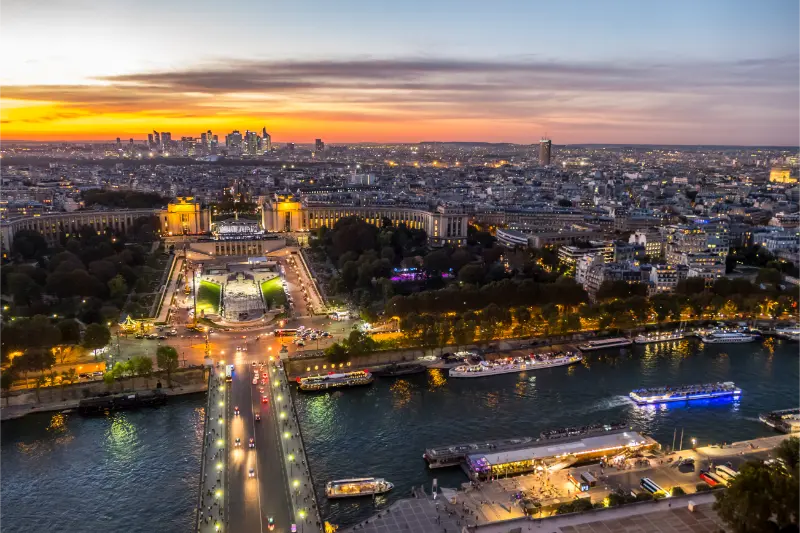
The Cité de l’Architecture et du Patrimoine is one of Paris’s most useful museums for travelers who keep looking up at buildings and wondering what they are actually seeing. Inside one wing of the Palais de Chaillot, the museum uses full-scale casts, reconstructed mural environments, models, drawings and architectural objects to explain more than a thousand years of French architecture. It is much more visual and physical than the phrase “architecture museum” may suggest.
The location makes it easy to underestimate. Many visitors cross Trocadéro focused entirely on the Eiffel Tower and never realize that the Palais de Chaillot contains major national museums. If you enjoy cathedrals, urban design, restoration, Art Nouveau, modernism or Le Corbusier, the Cité can be one of the most memorable indoor stops in western Paris.
Check tickets and Paris experiences
Compare current tours, timed-entry tickets and experiences before fixing your itinerary.
GetYourGuideTiqetsCivitatisViatorAffiliate links: we may earn a commission at no extra cost to you.
Hours and tickets in 2026
The Cité is at 1 place du Trocadéro et du 11 Novembre, 75116 Paris. It is currently open Monday and Wednesday through Sunday from 11:00 to 19:00, closed Tuesday, with a Thursday late opening until 21:00. The ticket desk closes before the galleries, so do not plan to arrive in the final minutes.
For the permanent collection, the museum currently lists a €9 full price and €6 reduced price. A ticket including temporary exhibitions is currently €13 full price and €10 reduced. The first Sunday of each month offers free admission under the museum’s current policy. Ticket structures can change with exhibitions, so verify exactly what your ticket includes.
Why the full-scale casts are the best introduction
The ground-floor cast gallery is the section most likely to change a skeptical visitor’s mind. It contains more than 350 full-scale reproductions of architectural elements from churches, cathedrals and civic monuments. These are not tiny models. Portals, sculpture and sections of buildings appear at human scale, allowing you to examine medieval and early-modern architecture without traveling across France.
The historical value is double. The casts document the original monuments, but many are also nineteenth- and early-twentieth-century heritage objects in their own right, created as part of a systematic effort to study and preserve architecture. Look at them both as copies of older buildings and as evidence of how an earlier generation thought museums should teach architecture.
How to read the cast gallery without architectural training
Do not worry about memorizing style labels. Start by comparing openings, columns, capitals, sculpture and the relationship between decoration and structure. Ask simple questions: Where does the building carry weight? What is designed to attract your eye? Which details communicate a religious or civic story? The museum becomes much more accessible once you stop treating terminology as an exam.
If you have already visited Notre-Dame, Sainte-Chapelle or another medieval church in Paris, the gallery gives you a useful second look at the language of portals, stone sculpture and vaulting. Afterward, real buildings around the city become easier to read because you have seen details separated from the distractions of crowds and scale.
Murals and stained glass: a section that feels like entering fragments of buildings
The mural and stained-glass gallery uses large reproductions and reconstructed architectural spaces to present medieval painting at scale. Instead of seeing a detached fragment on a white wall, you can understand how imagery originally related to vaults, apses and chapels. This spatial approach is one of the museum’s most unusual strengths.
One practical 2026 limitation: the second level of the mural and stained-glass gallery is currently closed for renovation work. The rest of the museum still justifies a visit, but this closure matters if medieval wall painting is your main interest. Check the latest notice before travel because renovation phases can change.
Modern and contemporary architecture
The upper modern galleries move from the industrial era toward the present using drawings, photographs, models and multimedia. Housing becomes a major theme because modern architecture is not only about monuments; it is about how large numbers of people live, work and move through cities.
A highlight is the full-scale reconstruction of an apartment from Le Corbusier’s Cité Radieuse in Marseille. Even visitors who know the famous exterior photographs often understand the project differently after walking through a domestic interior. Scale, storage, circulation and proportions become real in a way that plans cannot convey.
How long to spend
Two hours is a good minimum; three hours is better if architecture is a genuine interest. The museum itself promotes the idea of a roughly two-hour tour of France through architecture, but close looking can easily extend that. If you add a temporary exhibition, allow additional time rather than compressing the permanent galleries.
For a shorter visit, prioritize the cast gallery and the modern architecture section. Those two areas provide the clearest contrast between historic monument culture and modern design. Travelers already exhausted by museums should avoid beginning here after a long Louvre morning; architecture demands visual attention to detail.
Is it good for children?
Yes, particularly for older children who respond to scale, models and “how buildings work.” The full-size casts can be more engaging than conventional display cases. Ask children to identify animals, faces, repeated patterns or structural shapes, then compare them between buildings.
For teenagers interested in design, engineering or cities, the modern galleries are especially useful. The apartment reconstruction can lead to a practical conversation about why architects make trade-offs between space, light, density and function. That is more relatable than asking them to memorize architects’ names.
Accessibility and visitor logistics
The Trocadéro entrance is wheelchair accessible and the museum publishes specific accessibility resources. At the time of writing, some lift issues have also been noted by the institution, so visitors who depend on elevators should verify current conditions before arrival. Automatic lockers are available, but suitcases, scooters and skateboards are not accepted inside the building.
This is another reason not to treat the museum as something to do between hotel checkout and a train. Store luggage elsewhere. The Palais de Chaillot is a large complex, so confirm which entrance you need rather than assuming every door on the square leads directly to the museum.
How to combine it with nearby attractions
The most natural combination is outdoor Trocadéro plus one museum. Our 16th arrondissement guide shows how the area connects to Passy and other western neighborhoods. If the weather is good, spend time on the terrace and gardens between indoor visits instead of stacking museums.
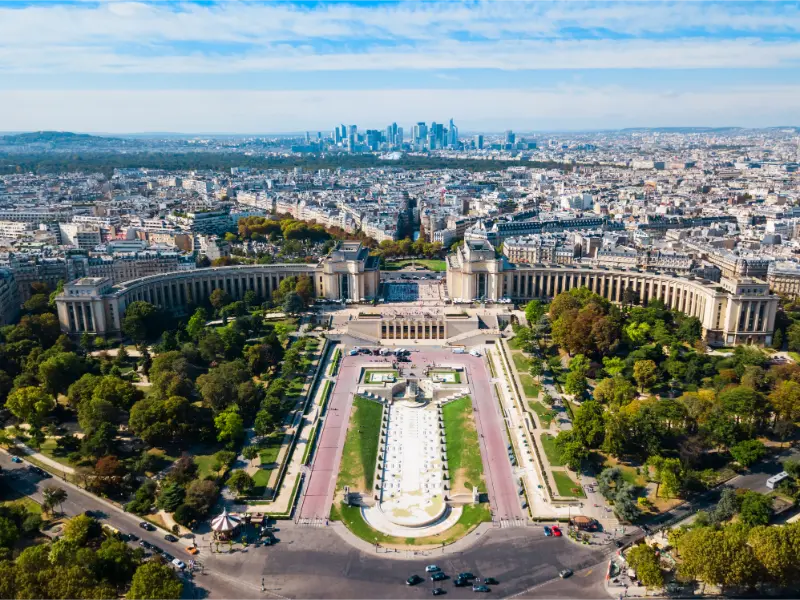
The Musée National de la Marine occupies another part of the Chaillot complex, while Guimet and Palais de Tokyo are nearby. Architecture specialists can justify two museums in one day, but most visitors will get more from choosing one and leaving enough energy to observe actual Paris buildings afterward.
Who should choose the Cité?
- Architecture and design enthusiasts should consider it a priority rather than a secondary attraction.
- Repeat visitors can use it to deepen what they have already seen in churches, monuments and modern neighborhoods.
- Families with curious older children may prefer the large casts and models to a traditional art museum.
- First-time visitors with only two days should choose it if architecture is a personal interest, not simply because it is next to the Eiffel Tower.
- Visitors with mobility needs should confirm current lift status because renovation or maintenance can alter the accessible route.
Compare nearby activities
If you add an Eiffel Tower ticket or guided architecture walk, keep the museum visit flexible. The Thursday late opening is particularly useful because it lets you use daylight for outdoor Paris and move indoors later.
Official information
Check the official practical-information page and official ticket page. The hours, Thursday late opening and current ticket figures in this guide were verified against the Cité’s September 2026 information.
Frequently asked questions
Is the museum useful if I am not an architect?
Yes. The full-scale casts and apartment reconstruction are designed to make architecture physical and understandable. Curiosity about buildings is enough; specialist vocabulary is not required.
What should I see if I only have one hour?
Focus on the monumental cast gallery and one section of the modern architecture gallery. Trying to rush all three galleries will leave you with less than choosing two strong themes.
Is the Eiffel Tower visible from the building?
The Palais de Chaillot sits directly opposite the Eiffel Tower across the Trocadéro gardens, so the surrounding terraces are among the classic viewing areas. Museum access and terrace access are separate matters.
Should I book the Thursday evening?
It can be a very efficient option if you want outdoor sightseeing in daylight and museum time later. Check whether the temporary exhibition you want follows the same late-opening schedule.
Final planning advice
The Cité de l’Architecture rewards curiosity more than prior knowledge. Spend time with a few casts instead of trying to photograph every portal, walk through the modern galleries with questions about how people actually live, and then go back outside to test what you have learned on Paris itself. That transition—from museum object to real city—is the reason this institution is more useful than its low profile suggests.