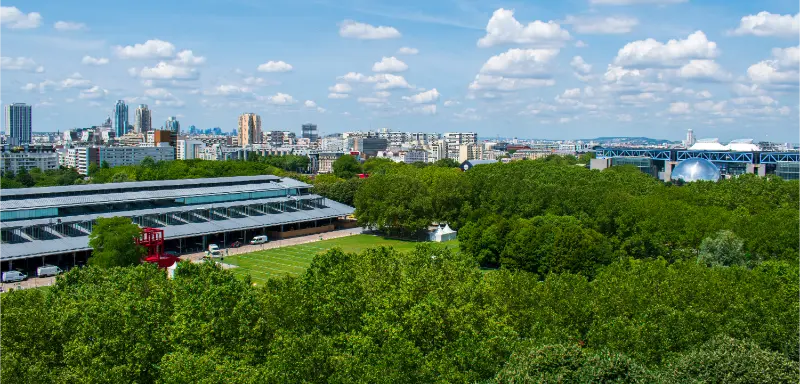
Cité des Sciences is one of the strongest family stops in Paris, but it is easy to plan too much around it. The museum sits inside the much larger La Villette area and works best when you decide in advance whether the science museum is the main event or one part of an outdoor day. Current official information lists opening 9:15–18:00 Tuesday to Saturday and 9:15–19:00 Sunday, with Monday closed. The redesigned Cité des enfants uses separate spaces for ages 2–6 and 5–10, with timed 1 hour 30 minute sessions; booking is strongly recommended.
Choose the age-appropriate experience first
The Cité des enfants is not one generic play zone. The 2–6 and 5–10 spaces are designed around different developmental needs. If siblings span both ranges, decide whether to split adults temporarily or choose the experience that best fits the child who will benefit most.
Check tickets and Paris experiences
Compare current tours, timed-entry tickets and experiences before fixing your itinerary.
GetYourGuideTiqetsCivitatisViator
Affiliate links: we may earn a commission at no extra cost to you.
The most useful family schedule has fewer fixed stops than an adult sightseeing plan. Children and teenagers notice queues, hunger and dead travel time more than they notice whether a famous monument was skipped. Put one anchor experience in each half-day and let the spaces between anchors stay flexible.
Do not stack too many exhibitions
A timed children’s session plus one major permanent or temporary exhibition is often enough for younger families. Science museums are cognitively dense; children may look energetic while already becoming overloaded. A break outside in Parc de la Villette can reset the day better than another gallery.
Age matters more than the label ‘family friendly’. A six-year-old, a twelve-year-old and a sixteen-year-old can react very differently to the same museum. Explain the plan before you arrive, give older children some choice, and keep a nearby exit option for moments when the group has had enough.
Book before the day if the children’s spaces matter
Official guidance strongly recommends reservations for Cité des enfants. Treat that session as the fixed anchor, then make everything else flexible. Arrive early enough for security and orientation rather than entering the building at the exact session time.
When booking timed attractions, leave a genuine buffer for transport and security. Paris journeys that look short on a map can become tiring with changes, stairs or crowded platforms. A calmer arrival almost always produces a better visit than squeezing in one extra stop.
Use La Villette as part of the visit
The lawns, canal, playgrounds and architecture around the museum make it possible to alternate indoor and outdoor time. In good weather, lunch outside can be a better family reset than staying inside the complex for hours.
Getting there without draining the family
The northeast-Paris location is straightforward by public transport but not necessarily close to your other sights. Avoid pairing it with a distant timed monument on the same half-day. A canal walk or nearby neighborhood is a more coherent continuation.
What to do when children have had enough
Leave. The ticket price should not determine how long a tired child must stay. The most useful family habit in Paris is stopping while everyone still has a positive memory, especially at interactive museums where stimulation accumulates quickly.
Useful connections on Dreaming of Paris
Combine it with our La Villette and Canal de l’Ourcq guide. For broader planning, see Paris with kids.
What are the current Cité des Sciences opening hours?
Official information currently lists Tuesday–Saturday 9:15–18:00 and Sunday 9:15–19:00, with Monday closed. Verify before visiting on holidays.
How long is a Cité des enfants session?
The current 2–6 and 5–10 sessions are listed at 1 hour 30 minutes.
Should I reserve?
Yes if Cité des enfants is important to your day. The museum strongly recommends booking those sessions.
A final planning note
Cité des Sciences is best when it leaves room for curiosity rather than when it fills an entire schedule. Reserve the age-specific anchor, add one secondary objective and let La Villette provide the breathing space.
For Cité des Sciences with kids, one more practical point is worth keeping in mind. Age matters more than the label ‘family friendly’. A six-year-old, a twelve-year-old and a sixteen-year-old can react very differently to the same museum. Explain the plan before you arrive, give older children some choice, and keep a nearby exit option for moments when the group has had enough. Use this as a decision rule rather than a rigid instruction: the best version of the day is the one that keeps the route coherent and leaves enough energy for the place itself.
For Cité des Sciences with kids, one more practical point is worth keeping in mind. When booking timed attractions, leave a genuine buffer for transport and security. Paris journeys that look short on a map can become tiring with changes, stairs or crowded platforms. A calmer arrival almost always produces a better visit than squeezing in one extra stop. Use this as a decision rule rather than a rigid instruction: the best version of the day is the one that keeps the route coherent and leaves enough energy for the place itself.
For Cité des Sciences with kids, one more practical point is worth keeping in mind. The most useful family schedule has fewer fixed stops than an adult sightseeing plan. Children and teenagers notice queues, hunger and dead travel time more than they notice whether a famous monument was skipped. Put one anchor experience in each half-day and let the spaces between anchors stay flexible. Use this as a decision rule rather than a rigid instruction: the best version of the day is the one that keeps the route coherent and leaves enough energy for the place itself.
Plan by the child’s attention span, not by the size of the building
The Cité des Sciences can fill a day, but that does not mean every family should stay all day. The strongest plan starts with the age-specific Cité des enfants session if you have booked one, then adds only one major exhibition or activity. A preschooler who has already completed a hands-on session may get more from running outside in Parc de la Villette than from another gallery; an older child interested in space, technology or biology can usually handle a longer museum block.
Timed children’s sessions create a hard anchor. Arrive with enough margin for security, toilets and finding the correct area. Do not schedule a second ticketed attraction across Paris immediately afterward. If the family still has energy, use the park, canal or another La Villette venue as a flexible extension. That is why our La Villette and Canal de l’Ourcq guide works better as the companion article than a central-Paris itinerary.
What changes by age
- Younger children: protect the booked hands-on session, schedule food early and keep the rest optional.
- Primary-school age: add one exhibition linked to a real interest—space, the body, transport, mathematics or the environment.
- Teenagers: give them the map and let them choose the second stop; a science visit works better when it feels self-directed.
Families should also plan the return journey before children are tired. Porte de la Villette is straightforward by Metro, but the walk inside the complex can be longer than expected. Photograph the locker or cloakroom location if you use one, agree on a meeting point for older children and keep snacks for after—not inside spaces where food is restricted.
A good Cité des Sciences day is successful when everyone leaves with one or two memorable things to talk about, not when every floor is completed. If you have younger children and want a broader city plan, continue with Paris with kids; for older children, the teenager guide has a different pacing strategy.
A practical decision check for Cité des Sciences with Kids in 2026
Cité des Sciences works best when one child-focused session is the day’s fixed point and everything else is optional. The building is too large for a completion mindset. Before you give it a fixed slot, compare that reason with the strongest alternative already on your itinerary. If the alternative matters more, move this stop to an optional block instead of forcing both into the same half-day. That simple choice keeps the article useful for different travelers rather than implying that every reader needs the same Paris.
A realistic way to fit it into the day
Arrive with margin, complete the booked children’s area, have lunch, then choose either one exhibition or outdoor time in La Villette. Leave while children still have energy for the trip back. Keep the previous and following stops close enough that a delay of twenty or thirty minutes does not create a cascade of missed reservations. Paris days become much easier when the route can absorb a longer lunch, a queue or a weather change without requiring a taxi across the city.
The trade-off worth making explicit
The trade-off is museum depth versus family stamina. A second exhibition may be intellectually attractive to adults but less useful than an hour outside after a highly interactive session. Making that trade-off deliberately is more useful than adding another item to a checklist. Ask what you would remove if this experience takes longer than expected; if the answer is “nothing,” the day is probably already too full.
Small details that prevent avoidable problems
Write down the session time and entrance area, and photograph the locker location if you use one. A large cultural complex is exactly where small logistics save stress later. Save the exact address or entrance you intend to use, keep enough phone battery for the return route and recheck any time-sensitive information on the official site. These are small steps, but they protect the part of the experience that actually matters from being swallowed by logistics.
Where it belongs in the wider Paris cluster
Combine with Parc de la Villette and the canal, not another major museum. For older children, compare the day with Arts et Métiers or a street-art route. Treat that pairing as a geographic or thematic cluster, not an obligation to complete everything. One strong connection is enough to make the day coherent; two or three distant add-ons usually reduce the value of the place you came to see.