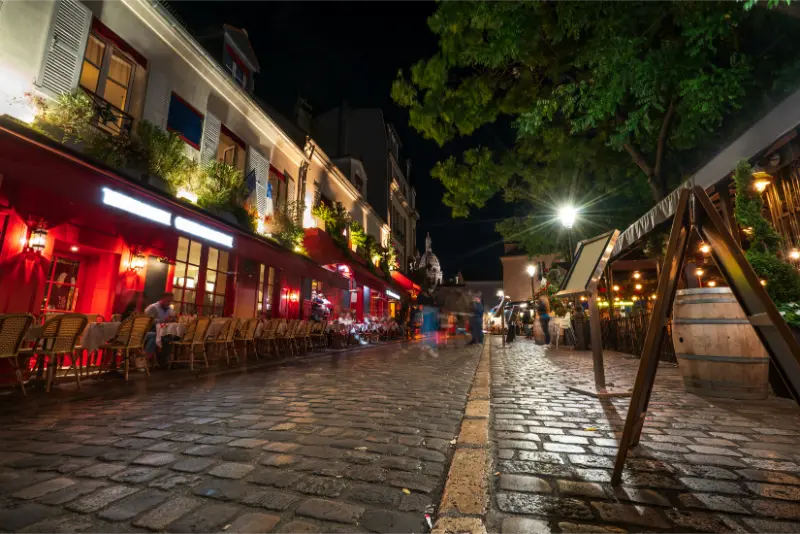
Paris 18th Arrondissement Guide: Montmartre, Goutte d’Or, Markets and the Northern Hills is for travelers who want to understand the district as more than a number on the Paris map. The 18th contains one of the most visited neighborhoods in Europe and some of the most misunderstood streets in Paris. Montmartre is only one part of the arrondissement; Goutte d’Or, Château Rouge, Jules Joffrin and the northern slopes add immigrant food culture, markets and everyday residential life.
This guide contains affiliate links. If you book through them, Dreaming of Paris may earn a commission at no extra cost to you.
Book the practical parts of your Paris trip
Compare accommodation first, then check tickets and experiences for the fixed parts of your itinerary.
Check Paris hotelsGetYourGuideTiqetsCivitatisAffiliate links: we may earn a commission at no extra cost to you.
Why explore the 18th arrondissement?
The 18th is especially rewarding for photographers, first-time visitors, walkers who enjoy hills, food travelers and repeat visitors willing to go beyond the Sacré-Cœur loop. It is less convincing for travelers with limited mobility who dislike steep streets, or visitors who want uniformly quiet nights near the busiest Montmartre corridors.
Do not let the arrondissement number turn into a boundary. The practical advantage of using it is simply that it gives your day a manageable scale. Walk a continuous route, cross into a neighboring district if it makes geographic sense, and avoid unnecessary transport.
What to see in Paris’s 18th arrondissement
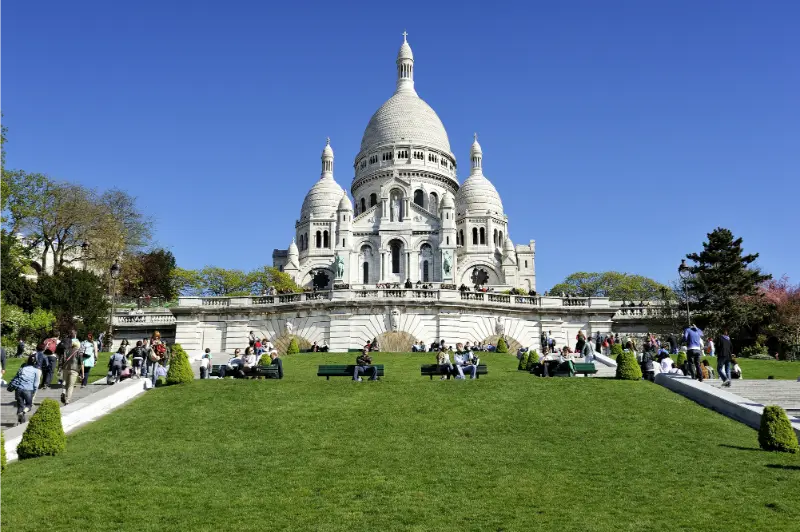
Sacré-Cœur and the summit
The basilica and terrace provide the obvious orientation point, but the summit can be overwhelmingly busy. Go early or late, then move quickly into side streets rather than spending the whole visit around souvenir routes. Use the stop as an orientation point. The adjacent streets are worth reading on the map before you automatically head for the next famous name.
Abbesses
This is the most convenient lower Montmartre hub, with cafés, shops and access to steep residential streets. The metro station is deep, so the stairs and lift situation matters if mobility is limited. Notice the contrast between the main frontage and the smaller streets around it. That contrast is often more revealing than the headline sight alone.
Lamarck-Caulaincourt and the northern slope
The quieter northern side offers vineyard history, small squares and a less compressed tourist flow. It is where Montmartre begins to feel like a real neighborhood again. Pair this place with the next highlight instead of treating both as separate missions. The walk between them is part of the experience.
Goutte d’Or and Château Rouge
These areas are shaped by African and other immigrant communities, with food shops, textiles and busy street life. The area is shaped by everyday commercial and community life, so street photography works best when it focuses on the streetscape unless people are happy to be photographed. If you are already tired, this is a sensible point to simplify the route. Continue only if the next street or stop genuinely adds something to your day.
Rue du Poteau and Jules Joffrin
Farther north, market streets and local services show a family-oriented side of the 18th that many visitors never see. Do not over-plan this stop. A flexible twenty or thirty minutes can be more rewarding than a tightly scheduled visit that makes every detour feel like a problem.
Rue des Martyrs connection
The street climbs from the 9th toward Montmartre and is one of the best food-focused approaches to the hill. It is more enjoyable than arriving only by funicular or tour bus. Approach it as part of the street network rather than a standalone pin, and continue on foot long enough to see the atmosphere change.
A practical walking route through the 18th
This itinerary works because the major anchors are connected by streets worth walking in their own right. You can shorten it after any stage without turning the remaining route into a transport puzzle.
Step 1. Start at Rue des Martyrs and climb gradually toward Abbesses, using food stops to break the ascent. Keep Sacré-Cœur and the summit as your first orientation point and avoid adding distant stops before the route has properly begun.
Step 2. Reach Sacré-Cœur, then leave the busiest summit streets via the northern slope toward Lamarck-Caulaincourt. The middle section is where the district’s character should become clearer; use Abbesses as a reference if you need to shorten or extend the walk.
Step 3. If you want a deeper visit, continue toward Château Rouge or Jules Joffrin rather than circling back through the same tourist lanes. At the end, decide whether the day should continue into dinner or finish here. Rue des Martyrs connection gives you a natural point from which to make that choice.
Where to eat and how to pace the day
The 18th offers enormous variety, from classic Montmartre bistros to West and North African food, bakeries and neighborhood markets. Around the summit, compare menus carefully; prices and quality vary. Château Rouge and Goutte d’Or are better approached for real food shopping and dining, not as novelty tourism.
Keep at least one meal unscheduled. Paris days rarely unfold exactly as a map suggests, and a flexible lunch makes it much easier to stay longer at a market, museum or park without stressing about a reservation.
Is the 18th arrondissement a good place to stay?
Montmartre can be wonderfully atmospheric, but street choice matters. Lower Pigalle is lively; upper Montmartre can be quiet after day-trippers leave; areas around major northern transport corridors feel different again. Map the exact route to the hotel, especially late at night and with luggage.
For accommodation, micro-location wins. Two properties only a kilometer apart can produce very different Paris days, so compare the actual street, connections and evening atmosphere rather than the arrondissement label alone. You can compare hotels in Paris on Booking.com and then compare recent guest comments before booking.
Getting around the 18th
Lines 2, 4 and 12 serve the arrondissement, with steep climbs between some stations and hilltop streets. The funicular saves part of the ascent to Sacré-Cœur but does not eliminate all walking.
An efficient neighborhood day often needs only two rail journeys: one to get there and one to leave. Everything between those journeys is better understood on foot whenever distances and mobility allow. For fares, passes and connections, use our Paris Métro and public transport guide.
How much time should you allow?
A half day is enough to understand the district if you resist over-scheduling. A full day works better when a ticketed attraction, shopping or dinner is part of the plan.
Short visits improve when you choose depth over coverage: two major stops plus one local street generally create a stronger memory than six hurried photo stops. If you need a compact version, prioritize Sacré-Cœur and the summit, Abbesses and Rue du Poteau and Jules Joffrin.
When to visit during the day
Season changes the rhythm: summer encourages longer evenings, while winter rewards using daylight for the outdoor legs first. In either case, check the current schedule of ticketed venues before building a day around them.
Whatever the season, verify the current opening day and reservation policy of any ticketed venue shortly before you go. Temporary exhibitions, maintenance and special events can change the best order even when the geography stays the same.
Who will enjoy this arrondissement most?
The district works best for curious travelers who are comfortable letting an itinerary breathe. If you prefer tightly timed landmark days, choose only the strongest two stops and save the rest for a later visit. In this case, the strongest fit is still photographers, first-time visitors, walkers who enjoy hills, food travelers and repeat visitors willing to go beyond the Sacré-Cœur loop.
Combine the 18th with nearby Paris
Useful related guides include Montmartre beyond Sacré-Cœur, Sacré-Cœur guide, Rue des Martyrs and Paris Metro guide. These guides connect either geographically or thematically with the route above, so they are useful for extending the day without wasting time on a cross-city transfer.
Tours and bookable experiences
Tours are most useful for interpretation rather than transportation. Look at the meeting point, duration, language and included stops, then decide whether the experience complements the self-guided route.
Common planning mistakes
Mistake 1: Spending ninety minutes at Sacré-Cœur and leaving without seeing the northern slope.
Mistake 2: Assuming all of the 18th is 'Montmartre'.
Mistake 3: Underestimating hills when planning with strollers, heavy luggage or mobility limitations.
Finally, do not treat the arrondissement boundary as a wall. Paris neighborhoods spill across administrative lines, and crossing one street into the next arrondissement is often the most logical way to finish the route.
Frequently asked questions
How much time for Montmartre?
At least half a day if you want more than Sacré-Cœur and Place du Tertre.
Is the 18th good for food?
Yes, especially when you include Goutte d’Or, Château Rouge and the market streets beyond tourist Montmartre.
Is it safe at night?
Conditions vary by street and time. Use normal big-city awareness, keep valuables secure and choose accommodation based on the exact route you will use.
What pairs best with it?
The 9th via Rue des Martyrs and the 17th via northern residential streets are easy continuations.
Official information and final tip
For seasonal events and current visitor information, consult official Paris tourism information. For a ticketed museum, monument or attraction, check that venue’s own official website as well before you commit the rest of the day to a fixed entry time.
The best itinerary is the one you can still enjoy at the end of it. Build around a few reliable anchors, keep transport simple and allow enough margin for Paris to interrupt your plan.