Disclosure: This article contains affiliate links or booking widgets. If you book through them, Dreaming of Paris may earn a commission at no extra cost to you. How our affiliate links work.
Spring in Paris is beautiful, but it is not a three-month sequence of blue skies, café terraces and cherry blossom. March can feel wintry, April can change weather several times in one day, and May can produce both warm afternoons and long wet periods. The advantage is not guaranteed sunshine; it is the way longer days, fresh gardens and outdoor life return to the city.
This guide treats March, April and May separately because they create very different trips. For a broad comparison across the year, read our best time to visit Paris guide.
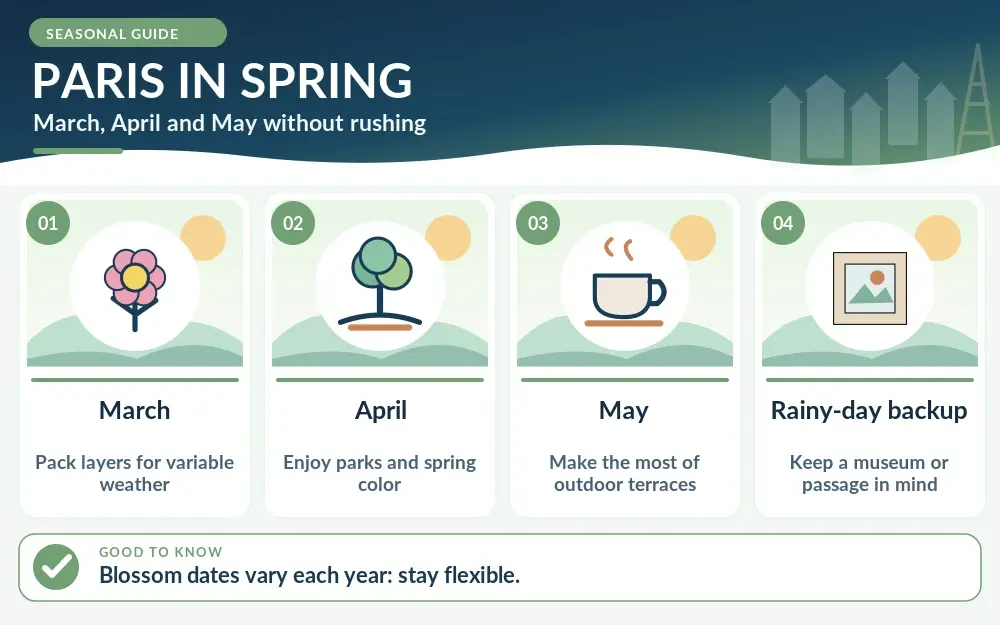
March: the transition month, not “spring” in the postcard sense
Early March often behaves more like late winter than like April. Trees may still be bare, wind along the Seine can feel sharp, and you need a real outer layer after sunset. The payoff is lower garden expectations: you come for museums, neighborhoods and architecture, then enjoy the first signs of spring as a bonus.
March works especially well for a museum-and-walking itinerary. Pair the Louvre or Orsay with short outdoor blocks around the Tuileries, Palais-Royal or Saint-Germain. If the weather turns, covered passages and churches give you alternatives without forcing an emergency museum booking.
Late March usually feels more noticeably springlike and the move to daylight-saving time extends the evening. Do not assume that longer daylight means warmth. A terrace at 18:30 can still require a coat.
April: the most changeable month
April is the month when visitors make the biggest packing mistake: they see spring photos and bring clothes for one temperature. Plan for layers, a water-resistant outer shell and shoes that tolerate wet pavement. A compact umbrella helps, but wind can make a hood more useful.
Gardens become much more rewarding. Luxembourg, Tuileries, Parc Monceau, Jardin des Plantes and the smaller neighborhood squares start to feel active rather than dormant. The exact timing of blossoms changes every year, so never build an expensive trip around a promise that one tree will flower on a specific date.
Instead, plan a spring landscape route: Jardin des Plantes for botanical variety, Luxembourg for formal garden life, Palais-Royal for roses and architecture later in the season, and neighborhood streets for wisteria and fresh foliage. You will find something seasonal even if the famous cherry blossoms are early or late.
May: the easiest spring month for long outdoor days
May usually offers the strongest combination of daylight and comfortable outdoor conditions, but it is also busier. Long weekends and French public holidays can change opening patterns, transport demand and restaurant availability. Check the exact date of any attraction rather than assuming that “Paris is always open.”
May is ideal for Montmartre, the Coulée Verte, Canal Saint-Martin, Bois de Vincennes, Buttes-Chaumont and evening Seine walks. It is also when a two-hour park walk stops feeling like a sacrifice of limited daylight.
The spring mistake: planning every garden at midday
Formal parks are not at their best only between 12:00 and 15:00. Morning gives softer light and fewer groups; late afternoon gives better atmosphere as Parisians use the gardens after work or school. Put ticketed museums in the middle of the day and gardens at the edges when possible.
What actually changes in the city during spring
Café terraces become more appealing, but that does not mean indoor rooms empty. Parks extend their usefulness into the evening. Riverbanks attract more picnics and casual gatherings. Seasonal opening hours at some monuments lengthen. Theme parks and day-trip gardens move into their main season. Most importantly, you gain flexibility: a neighborhood walk that would feel ambitious in January can be comfortable after dinner in May.
Best spring experiences by weather
Clear and cool: Eiffel Tower viewpoints, Montmartre, Arc de Triomphe, Parc Monceau and long river walks. Mild and overcast: neighborhoods such as Le Marais, Latin Quarter, Montorgueil and Canal Saint-Martin. Rainy: covered passages, Palais Garnier, Musée Carnavalet, Arts et Métiers, cafés and food markets. Warm: Coulée Verte, Bois de Vincennes, picnics and late-day Seine time.
Spring and the Eiffel Tower
Do not assume April or May means short queues. The tower is capacity-limited and popular year-round. If the summit matters, reserve according to the official ticket release window. If weather is poor, the best strategy may be to keep the ticket and accept a cloudier view; summit conditions can also change operationally. Our Eiffel Tower guide explains the ticket types.
Spring at Giverny and Versailles
Giverny is a genuinely seasonal day trip because Monet’s house and gardens do not operate like a year-round Paris museum. Spring visitors should verify the season opening and remember that flower displays evolve week by week. See our Giverny guide.
Versailles is different: the palace is the anchor, while garden programming and fountain days add seasonal layers. A spring trip can be excellent because walking the estate is more comfortable than during summer heat, but wind and rain matter across the enormous open garden. Use our Versailles day plan.
Spring with children
Children benefit from longer outdoor windows, but spring weather makes a mixed indoor/outdoor plan essential. Pair Jardin des Plantes with the Grande Galerie de l’Évolution; combine Cité des Sciences with Parc de la Villette; use Jardin d’Acclimatation on a stable-weather day rather than forcing it into rain.
For younger children, carry a light rain cover for the stroller. For older kids, keep one “energy release” park or playground between museum visits. Our Paris with kids guide organizes ideas by age and stamina.
Spring packing that solves real problems
- A light waterproof or water-resistant outer layer.
- One warmer layer for mornings and evenings, especially in March.
- Shoes with grip that remain comfortable on wet stone and 20,000-step days.
- A compact umbrella, but not as your only rain protection.
- Sunglasses: bright spring days on pale stone and water can be surprisingly intense.
- A small reusable water bottle; fountains are useful once you are walking more.
How to structure a spring day
A practical pattern is outdoor morning + indoor midday + flexible outdoor evening. For example: Palais-Royal at 8:30, Louvre 10:30–13:30, lunch, Le Marais in the afternoon, then the Seine if the weather stays good. If rain arrives, replace the river with Carnavalet or a covered passage.
This is better than assigning “museum day” and “park day” a month in advance. Spring rewards adaptable half-days.
Spring crowds: where they actually concentrate
The busiest zones remain the Eiffel Tower, Louvre, Notre-Dame/Île de la Cité, Sacré-Cœur and Versailles. A sunny Saturday in April can feel busier than a gray weekday in July in a small neighborhood. Move famous outdoor sights earlier, and use mid-morning for less obvious places such as Parc Monceau, Butte-aux-Cailles or Palais-Royal.
Is spring good for a first trip?
Yes, especially late April and May, because the city supports both classic sightseeing and outdoor wandering. March can also be excellent if you care more about museums and restaurants than gardens. The weak strategy is choosing spring only because social media promises blossoms.
March, April and May: a sample day for each month
March: start with a museum such as Orsay at opening, walk Saint-Germain at lunch, use Luxembourg Gardens only if conditions are pleasant, then book an early dinner and evening concert or river cruise. April: start outdoors at Palais-Royal, move to the Louvre or Carnavalet during the most unstable part of the day, then return outside in the Marais when a shower passes. May: begin at Montmartre, take a long lunch, spend the afternoon around Canal Saint-Martin or Buttes-Chaumont and use the extended evening for the Seine.
Spring day trips: which ones improve most with the season?
Giverny changes the most because gardens are central to the experience. Versailles gains value as the estate becomes comfortable to walk and seasonal garden programming expands. Fontainebleau is less weather-dependent because the palace interior remains the core. Reims works in almost any weather. If your spring date is rainy, switch from a garden-led excursion to a palace or Champagne day rather than forcing a landscape day you will not enjoy.
Photographing Paris in spring without chasing one blossom
Use layers: fresh leaves framing limestone façades, puddle reflections after showers, café terraces reopening, chairs returning to sunny parts of parks and evening light lasting longer. The city’s spring identity is broader than flowering trees. If you build a photography walk around light and color rather than a single botanical event, a late or early bloom season cannot “ruin” the trip.
Public holidays and closures
Spring includes several French public holidays. Some attractions remain open, others close, and transport or business hours can change. May has an especially dense holiday calendar. Do not rely on a generic statement such as “museums are open on holidays.” Check the official page for your exact date, particularly 1 May, when many museums and monuments close.
Frequently asked questions
Which spring month is best?
May is generally easiest for long outdoor days; April has more visible seasonal change; March often offers a calmer, cooler trip. The best choice depends on whether you prioritize gardens, crowd levels or museum time.
Does it rain all the time in April?
No, but showers and quick changes are common enough that you should plan for them. The important skill is not predicting rain perfectly; it is carrying layers and having a nearby indoor alternative.
Can I picnic in spring?
Yes when conditions are dry and local park rules allow it. Use our Paris picnic guide for practical locations and rules.
Spring events that can reshape the itinerary
April and late May can be especially event-heavy. If your dates overlap them, read our Paris Marathon guide and Roland-Garros guide before locking in transport and hotel plans.