A Paris picnic sounds effortless until you add lawns, weather, alcohol rules, bathrooms and food storage. The romantic version is simple; the practical version needs a little planning. City guidance says lawns in municipal green spaces are in principle authorized from 15 April to 15 October where not otherwise restricted, barbecues are forbidden, and larger gatherings require authorization. Rules can vary by park and temporary conditions, so signs on site take priority.
Choose the setting before the menu
For a monumental backdrop, Champ de Mars has obvious visual appeal but can be crowded. For more greenery, parks such as Buttes-Chaumont or the Bois de Vincennes create a different day. Along the Seine, use legal public seating and quays rather than assuming every patch of riverbank is a picnic lawn.
Understand the park rules
Municipal green-space rules matter more than social-media examples. Barbecues are not allowed in Paris municipal parks, lawns can have seasonal or maintenance restrictions, and group size changes the rules. City guidance for picnics in municipal green spaces also restricts alcoholic beverages, so do not assume wine is automatically permitted just because other people are drinking.
Build a menu that survives the journey
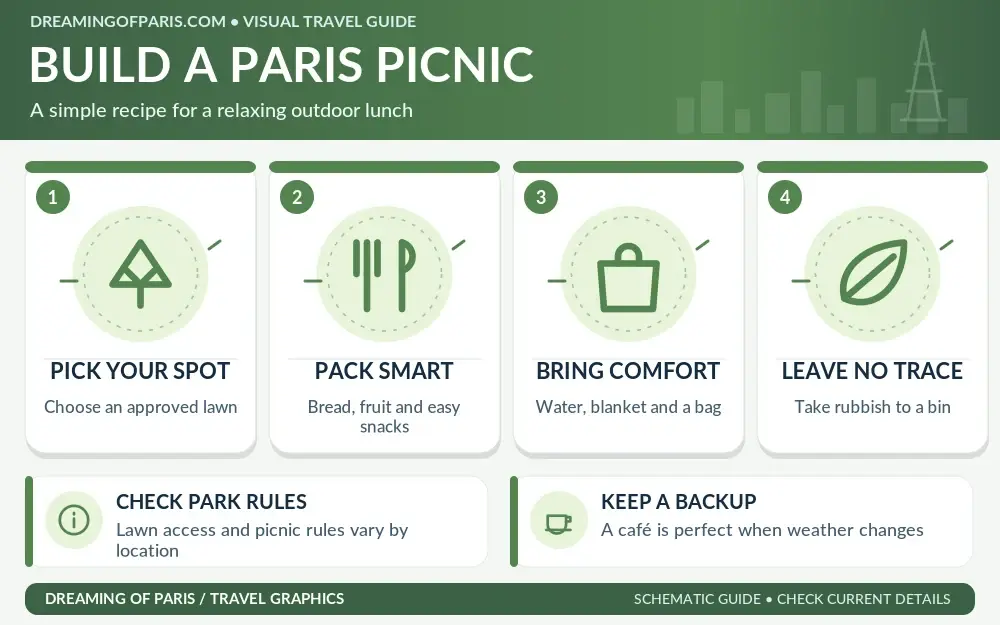
Bread, firm fruit, pastries, sandwiches and shelf-stable items are far easier than cream-heavy desserts or foods that must remain cold. If you buy cheese or charcuterie, keep food-safety time in mind, especially during summer heat. A small knife is unnecessary if you ask shops to slice items before you leave.
What to carry
A lightweight cloth, napkins, water, reusable cups and a bag for rubbish solve most problems. Avoid glass-heavy setups and oversized picnic equipment on the metro. Paris works best when the picnic can be carried in one bag and packed away quickly if weather changes.
Weather and backup plans
Wind and sudden showers can ruin a riverbank setup faster than expected. Before buying a full picnic, check the forecast and identify a nearby covered passage, café or museum. In hot weather, late afternoon or early evening is more comfortable than midday on exposed lawns.
Picnics with children
Families need shade, toilets and somewhere children can move without disturbing others. A park with play space often works better than the most famous postcard setting. Keep the meal simple and use the picnic as a reset between attractions rather than the main logistical challenge of the day.
Useful connections on Dreaming of Paris
Buy supplies using our markets and food streets guide. For a large green-space option, see Bois de Vincennes.
Can I barbecue in a Paris park?
No. City guidance states that barbecues are prohibited in municipal green spaces.
Are park lawns always open for picnics?
No. Lawn access is seasonal and can be restricted for maintenance or local reasons; obey signs and barriers.
Can a large group just meet for a picnic?
The City distinguishes individual or family picnics from larger gatherings; groups above the stated threshold require authorization, so check current rules before organizing an event.
A final planning note
The best Paris picnic is not the most elaborate one. Choose a legal, comfortable place; buy food nearby; keep the setup portable; and have an indoor alternative. That leaves the city, not the logistics, as the memorable part.
For picnic in Paris, one more practical point is worth keeping in mind. For a useful neighborhood comparison, notice who is shopping around you and what is being sold for everyday use. A place can be famous and still function locally, but the balance between residents, visitors and destination shoppers tells you when to linger and when to move on. Use this as a decision rule rather than a rigid instruction: the best version of the day is the one that keeps the route coherent and leaves enough energy for the place itself.
For picnic in Paris, one more practical point is worth keeping in mind. Carry a reusable bag and a small amount of payment flexibility. Many places accept cards, but small purchases, market stalls and temporary technical problems are easier when you have a backup. Tastings vary by stall, and it is usually best to check before handling produce or photographing a stall at close range. Use this as a decision rule rather than a rigid instruction: the best version of the day is the one that keeps the route coherent and leaves enough energy for the place itself.
For picnic in Paris, one more practical point is worth keeping in mind. Treat food stops as part of the route rather than a list to collect. Paris streets change character by the hour: produce markets are strongest earlier, lunch counters can become crowded quickly, and specialty shops may close between services. A flexible sequence usually works better than reserving every bite in advance. Use this as a decision rule rather than a rigid instruction: the best version of the day is the one that keeps the route coherent and leaves enough energy for the place itself.
Match the picnic to the place
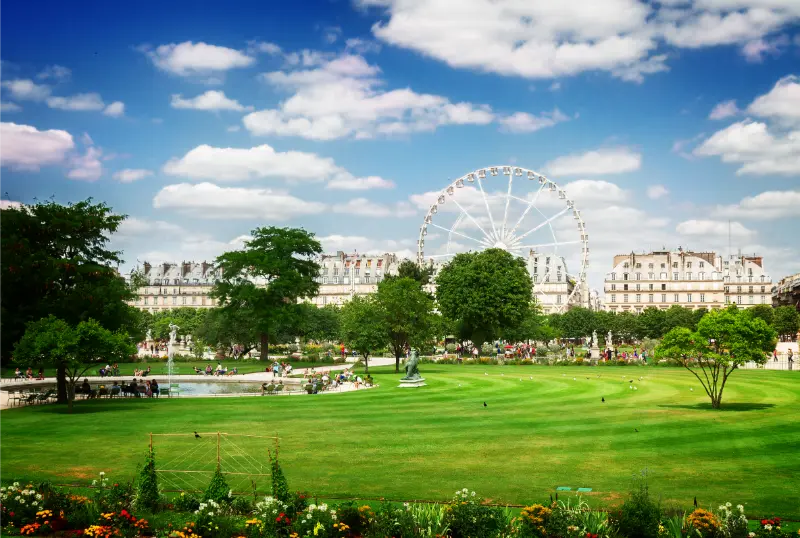
A successful Paris picnic begins with the surface and rules, not with the food. The Seine quays, a bench in a formal garden and an open lawn all create different experiences. In formal gardens such as the Tuileries or Luxembourg, some lawns are ornamental or seasonally closed, so use chairs, benches or areas explicitly open to sitting. In larger parks, lawn access can change with maintenance and weather. If the plan depends on sitting on grass, check the park page on the day rather than assuming every green area is available.
For a first-time visitor, the easiest picnic is usually a portable lunch rather than a full spread. A baguette sandwich, fruit, pastry and water survive transport far better than soft cheeses, elaborate salads and open containers. Bring napkins and a small rubbish bag. Glass, alcohol, amplified music and large group gatherings can be subject to local rules or temporary restrictions; never treat a public garden as if it were a private event space.
Three reliable picnic styles
- Seine lunch: choose a legal pedestrian quay, stay back from the water edge and keep valuables between you and the wall rather than behind you.
- Park break: use a bench or permitted lawn and combine the stop with a nearby attraction so the picnic saves time rather than creating a detour.
- Family picnic: prioritize toilets, shade and a playground over the “best view.” A less famous park often works better with children.
Weather changes the decision quickly. After rain, grass can remain wet long after pavements dry; on very hot days, stone quays become uncomfortable in direct sun. A useful backup is to buy food in a neighborhood with cafés or covered markets nearby. Marché d’Aligre works well for a Bastille/Coulée Verte day, while Rue des Martyrs can feed a Montmartre route.
The most common mistake is carrying the picnic through two museums before eating it. Build the day so you buy food close to the place where you will sit. That reduces food-safety problems, crushed pastries and the temptation to bring oversized bags into attractions with cloakroom restrictions. A picnic should simplify a Paris day, not become another logistics project.
A practical decision check for Picnic in Paris
A picnic is worth planning when it simplifies the day: it should replace a restaurant reservation, reduce backtracking and give you outdoor rest near the next sight. Before you give it a fixed slot, compare that reason with the strongest alternative already on your itinerary. If the alternative matters more, move this stop to an optional block instead of forcing both into the same half-day. That simple choice keeps the article useful for different travelers rather than implying that every reader needs the same Paris.
A realistic way to fit it into the day
Buy food within fifteen or twenty minutes of the picnic spot, sit for 45–60 minutes, dispose of rubbish and continue on foot. The best picnic is usually one you can cancel easily if rain or lawn rules change. Keep the previous and following stops close enough that a delay of twenty or thirty minutes does not create a cascade of missed reservations. Paris days become much easier when the route can absorb a longer lunch, a queue or a weather change without requiring a taxi across the city.
The trade-off worth making explicit
The scenic spot is not always the practical spot. A river edge may have no toilets or shade; a famous garden may restrict lawns; a less famous park can be better for children and a longer break. Making that trade-off deliberately is more useful than adding another item to a checklist. Ask what you would remove if this experience takes longer than expected; if the answer is “nothing,” the day is probably already too full.
Small details that prevent avoidable problems
Avoid foods that require refrigeration if they will sit in a bag for hours. Carry water, napkins and a rubbish bag, and avoid creating a spread so large that it blocks a bench, stair or path. Save the exact address or entrance you intend to use, keep enough phone battery for the return route and recheck any time-sensitive information on the official site. These are small steps, but they protect the part of the experience that actually matters from being swallowed by logistics.
Where it belongs in the wider Paris cluster
Use a picnic between nearby stops—Tuileries with Louvre/Orangerie, Seine with Île de la Cité, or a neighborhood park with a market. Do not carry the meal across half the city. Treat that pairing as a geographic or thematic cluster, not an obligation to complete everything. One strong connection is enough to make the day coherent; two or three distant add-ons usually reduce the value of the place you came to see.