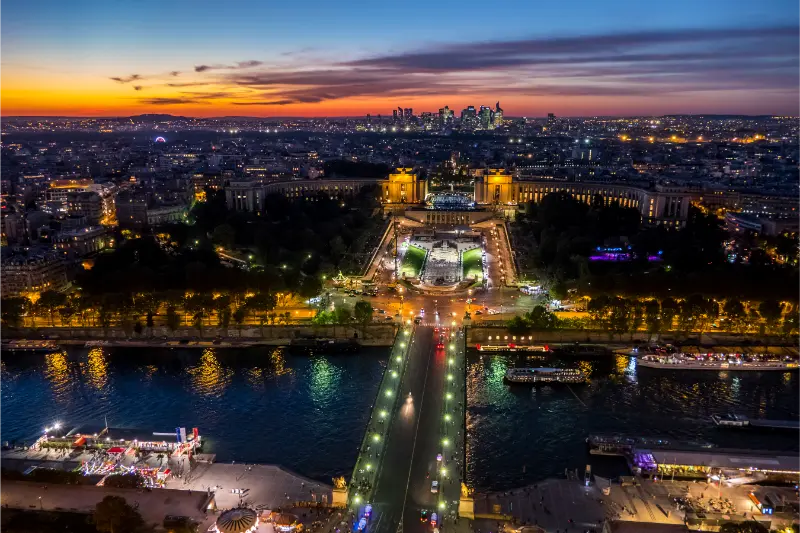
Palais de Tokyo is not the Paris museum to choose because you want to “see the famous works.” It is a contemporary art center built around changing exhibitions, installations, performances and ideas. The experience depends on the season, which means an old list of must-see objects is almost useless. That instability is exactly why some visitors love it and others leave confused.
Its position between Trocadéro and the Seine makes it easy to add to a western Paris day, but I would not treat it as a generic substitute for a closed museum. Read the current exhibition program first. Pair this guide with our Trocadéro guide and 16th arrondissement guide if you want to build a full half-day around the area.
Check tickets and Paris experiences
Compare current tours, timed-entry tickets and experiences before fixing your itinerary.
GetYourGuideTiqetsCivitatisViatorAffiliate links: we may earn a commission at no extra cost to you.
This guide contains affiliate links. If you book through them, Dreaming of Paris may earn a commission at no extra cost to you.
Understand the format before you buy a ticket
Palais de Tokyo is a large exhibition venue rather than a permanent collection arranged around an art-historical canon. Artists may use entire rooms, sound, video, performance, architecture or temporary structures. One season can feel completely different from the next. That means the best preparation is not memorizing masterpieces; it is reading the short descriptions of the current exhibitions and deciding whether the themes interest you.
This also means there is no shame in skipping it. If you have never visited Paris and have only one museum slot, the Louvre, Orsay or Orangerie may better match what you came to see. Palais de Tokyo becomes especially rewarding when you want contemporary work, experimentation and a museum experience that asks more questions than it answers.
Current 2026 opening hours: unusually good for evening planning
According to the venue’s current visitor rules, Palais de Tokyo is open 12 p.m. to 10 p.m. on Monday, Wednesday, Friday, Saturday and Sunday, with a Thursday late opening until midnight. Tuesday is the weekly closing day. It is normally closed on January 1, May 1 and December 25, with earlier closing on December 24 and 31.
These hours are one of the strongest reasons to choose it. You can spend daylight walking around Trocadéro or the Seine, then move indoors after dinner or when other museums have closed. The late schedule also reduces the temptation to squeeze the visit between two major daytime reservations.
Tickets and who gets reduced or free admission
The current full admission price is €13 and the reduced price is €9. The ticket provides access to the exhibitions for the day under the venue’s current system. Free admission categories include under-18s and several other eligible groups; visitors should check the official page because documentation requirements matter.
The venue’s ticketing information can change with programming and occasional events. Some performances may have separate conditions. Buy based on the exhibition season you actually want to see, not simply because a city pass or itinerary tells you a contemporary museum belongs in that time slot.
How long should a first visit take?
Allow around two hours as a starting point, then adjust to the season. Some installations reward ten minutes of slow attention; others communicate quickly. Video works can expand the visit far beyond what the floor plan suggests. If the current program strongly matches your interests, three hours is easy to justify. If it does not, forcing yourself to complete every exhibition rarely improves the experience.
The visitor education program currently includes guided formats at additional cost, and these can be useful if contemporary art often leaves you unsure where to begin. A mediator can give context without turning the visit into a lecture. Check the day’s schedule because programs change with the season.
The building and atmosphere are part of the reason to go
The raw scale and architectural character of the Palais de Tokyo suit large contemporary installations. You move through spaces that can feel industrial, theatrical or deliberately unfinished. This is very different from the domestic rooms of the Musée Jacquemart-André or the classical galleries of the Louvre.
If architecture is part of your interest, combine the visit with the Palais de Chaillot and Trocadéro area rather than arriving only for the exhibition doors. The contrast between monumental 1930s architecture, the Eiffel Tower view and contemporary installations makes the neighborhood more coherent than it first appears.
Important in hot weather: the venue is not air-conditioned
Palais de Tokyo states that it is not air-conditioned as part of its environmental commitments. In periods of extreme heat, it may adapt exhibition access or operating conditions. That is not a minor detail if you are visiting Paris during a heatwave. Check the day’s notices before using the venue as your default “cool indoor” plan.
Our Paris in summer guide explains how heat changes sightseeing strategy. On very hot days, a late-evening visit may be more comfortable than arriving at opening simply because the schedule says noon.
How to pair it with nearby museums and the Eiffel Tower
The Palais de Tokyo is next to the Musée d’Art Moderne de Paris but the institutions are separate; do not assume one ticket covers both. This proximity can be excellent for travelers with a strong art focus, but two substantial art venues back to back can also produce fatigue. Consider one museum plus a long outdoor break instead of turning the day into an indoor marathon.
The Eiffel Tower and Trocadéro are close enough to combine, but timed tower access should remain the fixed anchor. Use our Eiffel Tower guide and leave a buffer between activities. A good sequence is outdoor western Paris in daylight, dinner or a break, then Palais de Tokyo during its long evening hours.
Who will enjoy Palais de Tokyo—and who probably will not
- Choose it if you like contemporary art, installations, video, performance and changing exhibitions.
- Choose it if you want a museum that stays open later than most major Paris collections.
- Choose it on a repeat trip when you want current culture rather than another canonical checklist.
- Think twice if you want recognizable masterpieces and a chronological art-history route.
- Think twice if the current exhibition themes do not interest you; the building alone may not justify the ticket for everyone.
- Check heat notices in summer because the venue is not air-conditioned.
Contemporary art is not a test you pass by understanding every work. Give the exhibition enough time to make a case, read the curatorial text when useful, and move on when a work is not rewarding you. Palais de Tokyo is better when you treat attention as selective rather than compulsory.
Compare bookable experiences nearby
If you want to add a guided visit, Eiffel Tower experience or another ticketed activity, compare live availability rather than relying on an old static price. Check the exact meeting point, cancellation terms and what admission is included before paying.
Official information to check before your trip
Check the official Palais de Tokyo opening-hours and access page and official admission page before visiting. The hours and €13/€9 admission figures above were verified against the venue’s current 2026 information and visitor rules.
Palais de Tokyo is one of the best Paris choices for travelers who want current contemporary culture and a late museum schedule. It is not a universal must-see, and that is part of its strength: the value depends on the season and your interests rather than reputation alone.
Check the current exhibitions first, use the long evening hours strategically and combine the visit with Trocadéro or the Seine rather than another exhausting museum. If the program speaks to you, two or three hours can be one of the most distinctive cultural experiences of the trip.
A final way to fit this museum into your Paris itinerary
Do not judge the visit only by the number of galleries or the ticket price. Think about what comes immediately before and after it. A museum is more rewarding when you arrive with enough attention to read, look and pause, rather than after a three-hour walking tour or immediately before another timed attraction across the city.
Build in a short buffer after the visit. That gives you time for the shop, a garden or café break, and protects the next reservation if security, queues or an exhibition hold your attention longer than expected. In Paris, the most exhausting museum days usually fail because of over-scheduling rather than because one museum is inherently too large.
If you are deciding between this venue and another museum, choose by collection and mood rather than by reputation alone. A focused two-hour visit that matches your interests is usually better than forcing yourself through a more famous institution simply because it appears on every first-time checklist.
Before finalizing the plan, save the exact address, nearest transport entrance and cancellation deadline in the same trip note as your reservations. That small step makes it much easier to compare alternatives rationally and prevents a good booking from becoming inconvenient because one practical detail was overlooked. Recheck the plan a few days before travel as well: opening conditions, construction, transport works and neighborhood events can change the practical value of a location even when the address itself has not changed. A quick verification protects the time you have already invested in planning.