Disclosure: This article contains affiliate links or booking widgets. If you book through them, Dreaming of Paris may earn a commission at no extra cost to you. How our affiliate links work.
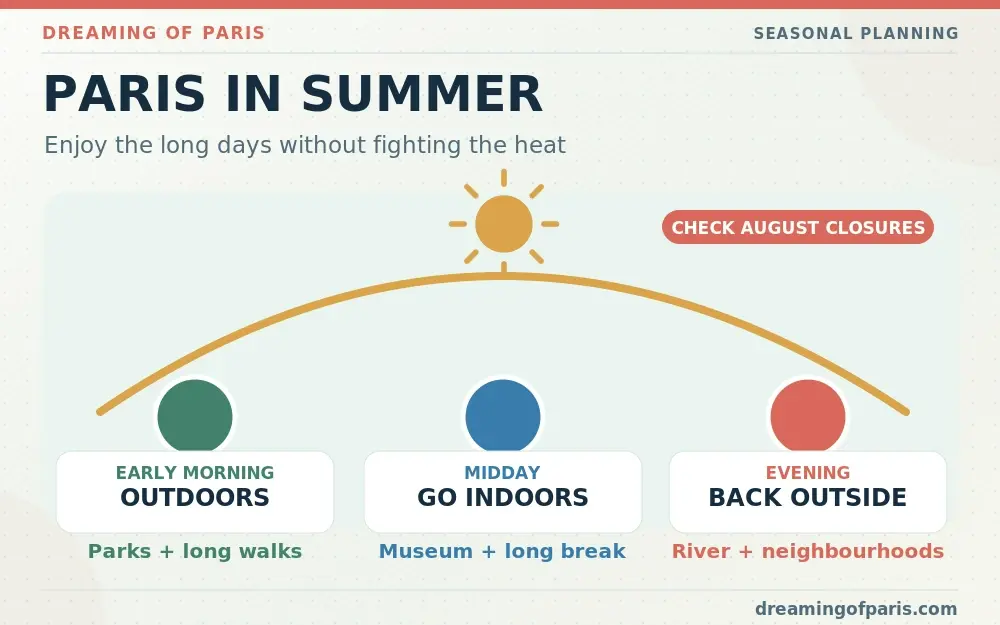
Summer makes Paris easier and harder at the same time. Long daylight expands the usable day, while heat and crowds punish anyone who treats 14:00 like the perfect hour for exposed gardens. The best summer rhythm moves serious outdoor sightseeing to mornings and evenings and uses the hottest hours for shade, lunch, museums or a hotel break.
Heat changes itinerary logic
Do not schedule only by opening hours. Stone plazas, riverbanks and formal gardens can feel much hotter than the forecast number. Check heat alerts, carry water and move strenuous walking away from peak afternoon heat.
Start early
Montmartre, Île de la Cité and classic photo areas are dramatically easier before the main visitor flow. An early breakfast plus a two-hour walk buys cooler temperatures and better light. Use Île de la Cité or Montmartre as morning routes.
Museums as climate breaks
A museum can protect the hardest part of the day without consuming it. Book a defined two-to-three-hour window and leave before fatigue. The Louvre guide and Orsay guide are structured for that approach.
Evening Paris
Long summer evenings are ideal for Canal Saint-Martin, Buttes-Chaumont, the Seine and neighborhood walking. A Seine cruise can also feel much better toward evening than in peak afternoon sun.
August reality
Paris does not “close” in August. Major attractions and tourist infrastructure continue operating, while some independent restaurants, bakeries and neighborhood businesses take annual holidays. Verify any small place that matters instead of repeating the cliché that everything is shut.
Families and heat
Children often tolerate heat worse than adults. Build in fountains, shade, indoor recovery and a hotel return. A late sunset can tempt adults to extend the day long after a child is finished.
Summer hotels
Air conditioning can matter more than a romantic balcony during a heat wave. Verify the room amenity rather than assuming every Paris property has modern cooling. Compare areas in our hotel guide and current options on Booking.com.
Frequently asked questions
Is Paris too hot in summer?
Heat waves happen, but the trip remains manageable when outdoor sightseeing moves to mornings and evenings.
Is Paris empty in August?
No. Tourist areas stay active, though some independent businesses close for annual holidays.
Should I book air conditioning?
If you are sensitive to heat, yes; verify the exact room amenity.
Is a Seine cruise better at night?
Evening often gives cooler temperatures and attractive light, though the best time depends on sunset and dinner plans.
Which day trips suit summer?
Giverny is seasonal and attractive, while exposed Versailles gardens can be tiring in heat. Use the day-trip comparison by conditions.
How this fits into our Seasonal Paris cluster
This guide is designed to connect with the rest of the site rather than sit alone. Continue with rain planning, evening Paris and viewpoints. Internal links are placed where the next decision naturally appears, so you can move from transport to neighborhood, attraction, season or day trip without rebuilding the plan from scratch.
The decision that matters most
Protect your energy rather than maximizing the number of daylight hours. Summer gives you enough time to slow down; use that advantage instead of sightseeing continuously from breakfast to midnight.
Build two versions of each day
For Paris in summer, create an outdoor-first version and an indoor-first version of the same geographic day. Keep the same neighborhood, restaurant area and evening plan, but swap the order when rain, heat or cold changes. This preserves reservations and minimizes transport while giving you real flexibility. Weather-aware planning works better when you rearrange a compact day than when you replace the entire itinerary every morning.
How to read the forecast usefully
Look beyond the headline temperature. Wind, rain intensity, cloud base, humidity and the timing of the worst conditions matter more to a traveler walking several hours. A cool dry morning can be perfect for Montmartre even if the daily icon says rain; a hot evening can remain uncomfortable if the pavement has stored heat all afternoon. Recheck the hourly forecast before leaving the hotel and move your most weather-sensitive activity accordingly.
Protect one flexible block every day
Leave at least two hours unscheduled. In good weather, use it for a park, river walk or neighborhood detour. In poor weather, use it for a small museum, covered passage, café or hotel break. This buffer also absorbs queues and transport disruption. The goal is not to leave Paris “unplanned”; it is to protect the trip from becoming brittle when the conditions do not match the original timetable.
Clothing strategy for a walking city
Paris rewards layers and footwear more than fashion-oriented overpacking. Shoes need grip and comfort on stone, stairs and long pavements. In cold seasons, choose layers you can remove indoors. In hot seasons, prioritize breathable clothing and sun protection. In rain, a waterproof outer layer can be more practical than relying only on an umbrella in crowded streets. Keep the day bag light enough that weather changes do not make it burdensome.
Food and breaks by season
Season changes the best break. In winter, a longer lunch or café stop can warm the middle of the day. In summer, lunch becomes a deliberate escape from peak heat. In rain, a covered market or restaurant can replace an outdoor picnic. Build meals into the geography rather than traveling across Paris for a specific address; the right break at the right moment often improves the afternoon more than a famous restaurant far away.
Photography and expectations
Bad weather does not mean bad photographs, and perfect blue sky is not always the most interesting light. Wet pavements, winter twilight and summer evening light create different versions of Paris. At the same time, accept that a paid panorama in low cloud may deliver very little. Spend money on weather-dependent experiences only when the conditions support what you actually want from them.
Seasonal verification checklist
Before each trip day, verify attraction closures, park opening times, strikes or transport works and any seasonal event you specifically care about. Christmas installations, summer events and maintenance periods change year to year. Treat dated social posts as inspiration, not operational information. The current official venue page should decide whether a specific seasonal stop belongs in your plan.
Morning decision routine
Before leaving the hotel, look at the next six hours rather than the whole day. Check rain timing, wind, heat or cold, then choose which part of the planned neighborhood should happen first. Keep the same lunch area and evening plan whenever possible. This minimizes cancellations and prevents the weather from forcing a citywide redesign. The best seasonal itineraries are modular: museum and street can swap order, park and café can swap duration, and the hotel break can move earlier or later without breaking reservations.
When to return to the hotel
A hotel break is not wasted vacation time when weather is draining energy. In winter it lets you dry shoes and warm up; in summer it avoids the hottest part of the day; in heavy rain it can save you from spending hours carrying wet layers through museums. A 60–90 minute reset often produces a much better evening than pushing through fatigue until dinner. This is especially true for families, older travelers and anyone who has already walked heavily for several days.
What to book and what to leave open
For Paris in summer, book the attractions that genuinely sell out and leave weather-sensitive walking flexible. Avoid stacking three nonrefundable timed entries so closely that you cannot react to conditions. One fixed indoor anchor per day is usually enough. Restaurants can be reserved when they matter to you, but neighborhood flexibility is useful when rain or heat changes your route. Seasonal Paris rewards a schedule with structure at the center and freedom at the edges.
Heat-wave days need a different definition of productivity
During a heat wave, finishing fewer sights can be the correct travel decision. Prioritize the one timed attraction that matters, move outdoor walking to early morning and evening, and use lunch plus an indoor stop as a protected midday block. Do not interpret a long hotel break as lost time if it prevents dehydration or exhaustion. Paris will still be lively after 19:00, and the long daylight gives you room to recover. The worst summer itineraries are often the ones that ignore conditions and then lose the following day to fatigue.
Water and shade as route criteria
When temperatures rise, choose routes by shade and refill opportunities rather than by the shortest line on a map. Tree-lined streets, covered passages, museums, markets and parks can create a much more comfortable sequence than exposed squares and riverside stone at midday. Carry a refillable bottle and top it up before entering areas where you may queue outside. Families should make hydration stops explicit rather than waiting for children to ask. This small change can determine whether a long summer afternoon remains enjoyable.
Choose the season first
For a month-by-month decision before planning a summer trip, compare the trade-offs in our best time to visit Paris guide.
Summer events worth planning around
June and July bring some of the city’s biggest public events. Continue with our guides to Fête de la Musique, Bastille Day and the Tour de France finish in Paris.