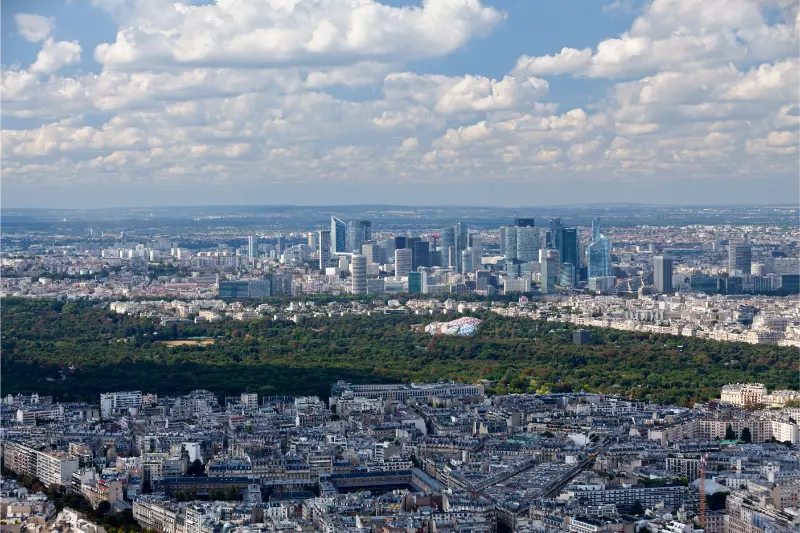
Bois de Boulogne is not one park in the way Luxembourg Garden is one park. It is an enormous western green area of roughly 846 hectares with lakes, wooded paths, gardens, sports facilities, roads, restaurants and separate attractions. If you arrive without deciding which part you want, you can spend more time walking between zones than enjoying them. The best visit begins with a specific destination: Lac Inférieur, Parc de Bagatelle, Pré Catelan, the Fondation Louis Vuitton/Jardin d’Acclimatation side, or a defined walking loop.
The City of Paris describes Bois de Boulogne and Bois de Vincennes together as the city’s great wooded lungs. Boulogne developed from former royal hunting land and was transformed in the nineteenth century into a landscaped recreational space with curving paths, lakes, streams and planted scenery. That history explains why parts feel like an English-style landscape park rather than a formal French garden.
Is Bois de Boulogne open all the time?
The City currently lists the main Bois de Boulogne area as accessible 24 hours a day, but that does not mean every garden, attraction, café or facility inside it is open 24/7. Parc de Bagatelle, the Jardin d’Acclimatation, museums, restaurants and enclosed gardens all have their own schedules and ticket rules.
For sightseeing, daytime is the sensible default. The wood is vast, lighting and foot traffic vary dramatically by area, and an empty-looking path can be far from a transport exit. Plan a route with a known endpoint rather than wandering until dark.
The lakes: the easiest introduction
Lac Inférieur and Lac Supérieur form one of the most recognizable landscapes in the wood. Paths around the water offer an easy way to experience the park without committing to a cross-forest trek. Islands, bridges, trees and changing reflections create a completely different atmosphere from dense central Paris.
If your goal is simply “a green break,” the lake area is usually a better first choice than trying to see every named garden. Give yourself at least 90 minutes for a relaxed loop and more if you stop for a picnic or combine the walk with another nearby attraction.
Parc de Bagatelle: the formal garden inside the larger wood
Parc de Bagatelle is one of the most beautiful distinct gardens within Bois de Boulogne and part of the Paris botanical-garden network. It is known for formal planting, seasonal flowers and its rose garden. Because it is enclosed and managed separately, opening hours and possible admission conditions differ from the surrounding wood.
Bagatelle is worth prioritizing in the rose season, but it is not only a flower checklist. The contrast between designed garden rooms and the more naturalistic larger wood is part of the appeal. If Bagatelle is your main destination, choose transport for that side of the park rather than entering from the opposite end.
Pré Catelan and the quieter landscaped core
The Pré Catelan area and associated gardens offer another more structured landscape within the wood. Paths, mature trees and planted spaces make this zone useful for a slower walk. The Jardin Shakespeare, when open, adds a literary theme through planting connected to Shakespearean works.
These smaller gardens have their own seasonal hours. A common planning mistake is seeing “Bois de Boulogne: open 24h” and assuming every gate inside will be open. Always check the specific garden if it is the reason you are traveling there.
Fondation Louis Vuitton and Jardin d’Acclimatation
On the northeastern edge of the wood, the Fondation Louis Vuitton and Jardin d’Acclimatation create a very different type of day. The Fondation is a major contemporary-art and architecture destination, while the Jardin d’Acclimatation is oriented toward families and leisure. Both are ticketed attractions with their own schedules.
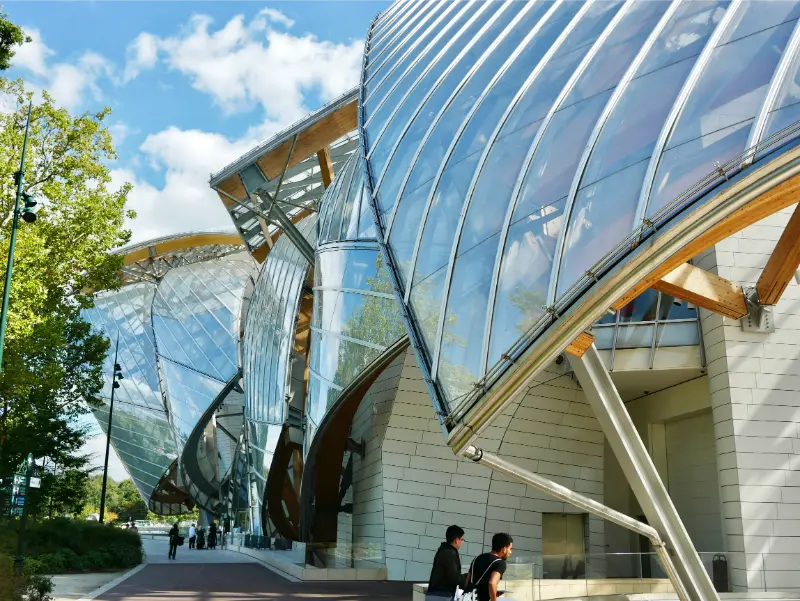
This side of the wood is easier to combine with Porte Maillot and the urban edge of the 16th arrondissement. If you already plan to visit one of these attractions, add a short wooded walk rather than trying to cross the entire Bois afterward.
How to get there without choosing the wrong entrance
There is no single “Bois de Boulogne Metro station.” Useful stations vary by destination: Les Sablons, Porte Maillot, Porte Dauphine, Ranelagh and Porte d’Auteuil all serve different edges. RER C at Avenue Foch can also be useful for some routes. Buses reach deeper or more convenient points than the Metro for certain gardens.
Choose the attraction first, then choose transport. This one decision can save an hour. If you are visiting Bagatelle, do not navigate to a generic “Bois de Boulogne” pin. If you are walking around Lac Inférieur, choose a station or bus stop that serves the lake side you actually want.
A half-day route for first-time visitors
For a straightforward first visit, enter near the eastern side of the lakes, walk around Lac Inférieur, continue through a landscaped section toward Pré Catelan, then exit on the side that matches your next transport connection. This gives you water, woodland and designed landscape without trying to cover the full 846 hectares.
A second option is a Bagatelle-focused half-day: travel directly to the garden, spend 90 minutes to two hours inside, then walk a defined route back through the wood. A family version can center on Jardin d’Acclimatation with only a short nature walk before or after.
Is it safe? A realistic daytime strategy
Bois de Boulogne is a large urban woodland, not a small fenced city garden. Different areas have different levels of activity, and the atmosphere changes after dark. For ordinary sightseeing, visit in daylight, stay aware of your route and belongings, and avoid isolated detours simply because a map shows a path.
This is practical urban advice, not a reason to avoid the park. Thousands of people use the wood for walking, running, cycling and recreation. The point is to plan it like a large landscape rather than assuming central-Paris levels of foot traffic and lighting everywhere.
Families, runners and cyclists
Families benefit from choosing a specific attraction or lake area instead of attempting a long undirected walk. Runners have enormous space, and the City even describes a 2.5-kilometre exercise circuit with fitness stations in the wood. Cyclists should follow current path and road rules because not every pedestrian route is intended for bikes.
Bring water, particularly in warm weather. The City lists drinking-water points in the wood, but facilities are not distributed like they are on a central shopping street. A picnic can work well, but use designated spaces and take litter with you.
Heat, fire risk and weather
In hot, dry periods the City may issue fire-risk warnings for the Paris woods and parks. Open flames and discarded cigarettes are obviously dangerous, and storms can also trigger temporary closures of wooded areas because of falling branches. Check city notices on extreme-weather days before traveling across Paris for a park visit.
For summer planning, early morning and late afternoon are usually more comfortable than the hottest part of the day. Our Paris in summer guide explains how heat can change otherwise sensible sightseeing plans.
How to combine the Bois with western Paris
Use our 16th arrondissement guide if you want to connect the wood with Passy, Auteuil or Trocadéro. Do not try to walk from the Eiffel Tower through every part of the 16th and then across the entire wood in one day; distances are larger than they look on a simplified tourist map.
A better combination is one neighborhood plus one defined park section. For example: morning in Passy, lunch, then Lac Inférieur; or Fondation Louis Vuitton followed by a wooded loop. Keep the day coherent rather than turning green space into another endurance challenge.
Who should prioritize Bois de Boulogne?
- Repeat visitors who want a very different side of Paris.
- Runners, walkers and cyclists looking for serious green space.
- Families if they anchor the day around Jardin d’Acclimatation or a lake route.
- Garden lovers who specifically want Bagatelle or seasonal planting.
- First-time visitors with only two days should go only if parks and landscape are personal priorities; central sights consume far less travel time.
Compare activities in western Paris
Guided bike tours, museum tickets and family attractions can work well around the wood, but check the meeting point carefully. “Bois de Boulogne” is too large to function as a precise address.
Official information
Use the official City of Paris Bois de Boulogne page for current opening notices, facilities and weather warnings. The City currently lists the main wood as 24-hour access and describes its lakes, paths, recreational facilities and botanical sites.
Frequently asked questions
Is Bois de Boulogne free?
The main woodland is public green space, but several gardens, museums and family attractions within or beside it have their own admission rules.
Can I walk across the whole park?
Yes in principle, but the distances are substantial and roads interrupt some routes. A defined loop or point-to-point walk is usually more enjoyable than trying to cover everything.
Is there one best Metro station?
No. The correct station depends on your destination inside the wood. Choose the lake, Bagatelle, Fondation Louis Vuitton or another specific area first, then select transport.
Should I go after dark?
For ordinary sightseeing, daytime is much more practical. The woodland is large and different zones can be quiet or poorly connected late in the day.
Final planning advice
Bois de Boulogne becomes much easier once you stop trying to “see the Bois” and choose one zone. Pick a lake, garden or attraction, map the entrance and exit before leaving your hotel, visit in daylight and leave time to enjoy the landscape rather than measuring distance covered. That approach turns an intimidating green mass on the map into one of western Paris’s most relaxing half-days.