Disclosure: This article contains affiliate links or booking widgets. If you book through them, Dreaming of Paris may earn a commission at no extra cost to you. How our affiliate links work.
A good Paris food tour is not simply a sequence of samples. Its value comes from access, context, neighborhood knowledge and the confidence to understand what you are tasting afterward.
Check tickets and Paris experiences
Compare current tours, timed-entry tickets and experiences before fixing your itinerary.
GetYourGuideTiqetsCivitatisViatorAffiliate links: we may earn a commission at no extra cost to you.
Quick planning summary
What you are paying for
The raw cost of cheese, bread, chocolate or wine rarely explains the tour price. You are paying for curation, a guide’s local knowledge, logistics, reservations and the ability to compare products in a coherent sequence. If a tour feels like six unrelated snacks and a memorized speech, the premium is harder to justify. Look for a clear neighborhood or craft focus.
Neighborhood matters more than a generic ‘Paris food tour’ label
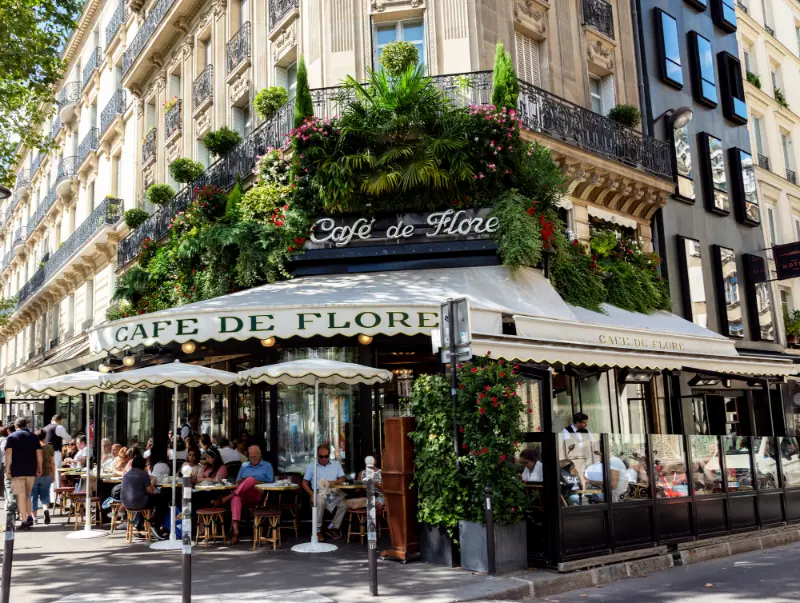
Montmartre works for village streets and pastry stops; Le Marais mixes historic layers with Jewish food traditions and contemporary shops; Saint-Germain suits pastry, chocolate and classic Left Bank atmosphere; market-based tours give more direct contact with produce and vendors. Pick the neighborhood you want to understand, not only the menu photographed on the booking page.
Tasting quantity and meal planning
Most food tours provide enough food to affect lunch or dinner, but not every tour replaces a full meal. Read the number and size of tastings and plan accordingly. Booking a tasting tour at 11:00 and a large lunch at 13:00 is a common mistake. Leave room before and after, especially when wine, cheese and sweets are part of the route.
Group size changes the experience
Small groups move more easily through narrow shops and markets and give you more opportunity to ask questions. Larger groups can still work when logistics are strong, but they may spend more time regrouping on pavements. Private tours make most sense for families, dietary restrictions or travelers who want to focus on one craft such as pastry or wine.
Dietary restrictions
French food tours can involve dairy, gluten, alcohol, nuts, pork and other ingredients that are difficult to substitute spontaneously. Contact the operator before booking rather than assuming every stop can improvise. A responsible tour should tell you what can and cannot be adapted. Travelers with severe allergies should be particularly cautious about cross-contact in small artisan shops.
Wine and alcohol
A wine component can add context, but it should not turn the tour into a drinking session unless that is explicitly the product. If you do not drink, check whether non-alcoholic substitutions preserve value. Families should also verify age rules and whether the pace is comfortable for children.
Food tour or self-guided walk?
Choose a guided tour when you want explanation, introductions and a structured first exposure to French food. Choose a self-guided route when you prefer flexibility, already know the products, or want to spend more time in one market. Our Rue des Martyrs and Marché d’Aligre guides are designed precisely for travelers who prefer to explore independently.
The best time in your trip
A food tour works particularly well on the first or second full day. What you learn can improve every bakery, market and restaurant visit that follows. Booking it on your final morning gives you less opportunity to use that knowledge. It also helps nervous first-time visitors learn basic ordering and shopping habits early.
What to ask the guide
Ask why a producer is distinctive, how locals use the product and what seasonality changes. Those questions produce more useful answers than asking for an absolute best croissant or cheese in Paris. A good guide should help you build judgment rather than simply hand you a list.
How to compare current tours
Tour operators, meeting points and inclusions change. Compare the current product description, cancellation terms, language, walking distance and recent reviews. Use the booking widget below to see live options rather than relying on a static recommendation that may no longer operate in the same format.
How this article fits into the Dreaming of Paris cluster
For a deeper plan, continue with Eating in Paris, Paris markets and food streets, Rue des Martyrs, Marché d’Aligre. These guides are linked because they share geography or a real planning decision, not simply because they mention Paris.
Compare current bookable experiences
Official information
For the details most likely to change, use the Paris je t’aime food tours. Recheck it shortly before the visit rather than relying on a screenshot saved weeks earlier.
Practical checklist before you leave the hotel
- Recheck opening hours, closures or transport work.
- Save the exact entrance or meeting point, not only the attraction name.
- Carry water and keep enough phone battery for navigation.
- Know one nearby alternative in case the main plan changes.
- Allow more time if you have luggage, children or reduced mobility.
- Avoid scheduling another major timed attraction immediately afterward.
Are Paris food tours worth it?
They are worth it when the guide provides context, neighborhood knowledge and access you would not easily reproduce alone.
Will a food tour replace lunch?
Sometimes, but not always. Check the number and size of tastings before planning another meal.
Which neighborhood is best for a food tour?
There is no universal winner: choose Montmartre, Le Marais, Saint-Germain or a market area based on the atmosphere and food traditions you want.
Can food tours handle allergies?
Some can, but substitutions are not guaranteed. Contact the operator before booking, especially for severe allergies.
Final planning advice
The best way to use this guide to Paris food tours is to place it inside a coherent day rather than treat it as an isolated checklist item. Paris becomes easier when every reservation has a reason, every journey has a nearby second purpose and at least one part of the day remains flexible. That approach protects you from queues, weather changes and simple fatigue while leaving space for the unplanned café, street or view that often becomes the strongest memory.
Choose a tour for access to knowledge, not for the number of tastings
The best food tour is not automatically the one promising the most samples. A useful guide should explain why a neighborhood became associated with certain foods, how to recognize product quality, how French shop categories differ and what you can return to buy independently later. If the tour is simply a sequence of prepaid bites at businesses you could identify from Google Maps, the value is much lower.
Before booking, check group size, walking distance, dietary accommodations, whether alcohol is included, how much food replaces a meal and where the tour ends. Those details determine whether the activity fits your day. A three-hour tasting that ends across town five minutes before a Louvre slot is poor planning even if the tour itself is excellent.
When a food tour is most useful
- On the first or second day, when the vocabulary and ordering habits can improve the rest of the trip.
- For travelers who want context but do not enjoy researching individual shops.
- For solo visitors who like a small social activity built into the day.
If you already love independent food shopping, a self-guided route may be better. Compare Marché d’Aligre, Rue des Martyrs and our boulangerie guide before paying for a tour. A guided tasting should add interpretation, introductions or convenience—not duplicate a walk you would rather make alone.
A practical decision check for Paris Food Tours
Book a food tour when interpretation, introductions or social experience matter more than independent discovery. Before you give it a fixed slot, compare that reason with the strongest alternative already on your itinerary. If the alternative matters more, move this stop to an optional block instead of forcing both into the same half-day. That simple choice keeps the article useful for different travelers rather than implying that every reader needs the same Paris.
A realistic way to fit it into the day
Place the tour early in the trip, keep the next two hours free and note shops you want to revisit. Let the tour replace a meal if the tasting volume justifies it. Keep the previous and following stops close enough that a delay of twenty or thirty minutes does not create a cascade of missed reservations. Paris days become much easier when the route can absorb a longer lunch, a queue or a weather change without requiring a taxi across the city.
The trade-off worth making explicit
The trade-off is price versus context. A good guide can explain products and neighborhood history; a weak tour merely prepays food you could order yourself. Making that trade-off deliberately is more useful than adding another item to a checklist. Ask what you would remove if this experience takes longer than expected; if the answer is “nothing,” the day is probably already too full.
Small details that prevent avoidable problems
Read dietary policy before booking, not after meeting the guide. Cross-contamination or alcohol substitutions may be limited even when a tour advertises alternatives. Save the exact address or entrance you intend to use, keep enough phone battery for the return route and recheck any time-sensitive information on the official site. These are small steps, but they protect the part of the experience that actually matters from being swallowed by logistics.
Where it belongs in the wider Paris cluster
Independent food travelers should compare Aligre, Rue des Martyrs and Montorgueil first. Guided tours add more value when you want a curated introduction. Treat that pairing as a geographic or thematic cluster, not an obligation to complete everything. One strong connection is enough to make the day coherent; two or three distant add-ons usually reduce the value of the place you came to see.
Prepare before a tasting tour
The tour makes more sense if you already know the vocabulary: read what to eat in Paris, the Paris cheese guide and the Paris wine guide before choosing a tasting format.
Food tour or cooking class?
If you would rather learn a technique than walk between tastings, compare this experience with our Paris cooking classes guide.