Disclosure: This article contains affiliate links or booking widgets. If you book through them, Dreaming of Paris may earn a commission at no extra cost to you. How our affiliate links work.
Paris nightlife is not one district. A strong evening starts by choosing the type of night you want, then staying in a neighborhood where several compatible options are close together.
Check tickets and Paris experiences
Compare current tours, timed-entry tickets and experiences before fixing your itinerary.
GetYourGuideTiqetsCivitatisViatorAffiliate links: we may earn a commission at no extra cost to you.
Quick planning summary
Choose the night before the address
Decide whether you want wine, cocktails, live music, clubbing, cabaret or simply late streets and cafés. Then choose the neighborhood. This avoids the common pattern of traveling 35 minutes for one bar, deciding it is not your scene and spending the rest of the night on the Metro.
Oberkampf and the 11th
Oberkampf is useful when you want density: bars, restaurants and music venues sit close together, and the atmosphere becomes lively after dinner. It is more about energy than postcard Paris. Pair it with our dedicated 11th-arrondissement guide so you understand the streets in daylight before returning at night.
Bastille and rue de Lappe
Bastille combines history, transport connections and a large evening scene. Rue de Lappe and surrounding streets can be loud and youthful; quieter wine bars and restaurants exist a few blocks away. The advantage is choice. The disadvantage is that you need to move away from the most obvious strips if you want conversation rather than crowds.
Pigalle and South Pigalle
Pigalle contains several different nightlife identities: cabaret heritage, concert venues, cocktail bars and the more polished SoPi scene. Do not treat the entire area as one red-light stereotype. Montmartre above it becomes much quieter late at night, while Boulevard de Clichy stays busier.
Canal Saint-Martin
The canal suits an earlier, social evening: waterside drinks, bistros and a transition toward République and Oberkampf. In warm weather the outdoor atmosphere is part of the attraction. It is less useful if your goal is a large nightclub and more useful for people who want dinner, a few drinks and a walk.
Cabaret: what are you really buying?
A cabaret is a staged performance and a specific Paris entertainment tradition, not a general nightlife substitute. Compare show-only and dinner packages, seating categories, dress guidance and finish times. If the show ends late, plan your return before the curtain goes up.
Clubs and door policies
Paris clubs vary from mainstream dance venues to electronic and niche music scenes. Lineups, entry policies and opening hours change, so check the specific night rather than assuming a venue’s reputation guarantees the same experience every weekend. Bring valid ID and avoid arriving visibly intoxicated.
Getting home
Metro service ends late but not all night. Night buses, regulated taxis and app-based rides can fill the gap. The key is to know your fallback before leaving the hotel, especially if your accommodation requires a transfer. Save the address offline and keep enough battery for navigation.
Safety without paranoia
Use the same habits you would in any large city: watch drinks, keep valuables controlled, avoid isolated streets when very tired and do not let a stranger pressure you into an unfamiliar venue. The biggest practical risk for many visitors is simply losing judgment after alcohol and making the journey home harder than necessary.
Bookable evening experiences
Cabarets, cruises, tasting experiences and guided nightlife walks are easier to compare with live availability than static recommendations. Use the widget below to see current options, then judge them by start time, duration, neighborhood and how they fit the rest of your evening.
How this article fits into the Dreaming of Paris cluster
For a deeper plan, continue with Paris at night, Canal Saint-Martin, Paris safety and scams, Montmartre. These guides are linked because they share geography or a real planning decision, not simply because they mention Paris.
Compare current bookable experiences
Official information
For the details most likely to change, use the Paris je t’aime nightlife guide. Recheck it shortly before the visit rather than relying on a screenshot saved weeks earlier.
Practical checklist before you leave the hotel
- Recheck opening hours, closures or transport work.
- Save the exact entrance or meeting point, not only the attraction name.
- Carry water and keep enough phone battery for navigation.
- Know one nearby alternative in case the main plan changes.
- Allow more time if you have luggage, children or reduced mobility.
- Avoid scheduling another major timed attraction immediately afterward.
What area has the best nightlife in Paris?
There is no single best area: Oberkampf is dense and lively, Bastille is varied, Pigalle mixes cabaret and bars, and Canal Saint-Martin suits a more relaxed evening.
Does the Paris Metro run all night?
No. Check the last trains for your lines and keep a night-bus or taxi fallback.
Is Paris nightlife safe for tourists?
Generally yes with normal big-city precautions, especially around drinks, valuables and late-night transport.
Should I book a cabaret in advance?
For popular dates and well-known shows, advance booking is sensible because seating and show times can sell out.
Final planning advice
The best way to use this guide to Paris nightlife is to place it inside a coherent day rather than treat it as an isolated checklist item. Paris becomes easier when every reservation has a reason, every journey has a nearby second purpose and at least one part of the day remains flexible. That approach protects you from queues, weather changes and simple fatigue while leaving space for the unplanned café, street or view that often becomes the strongest memory.
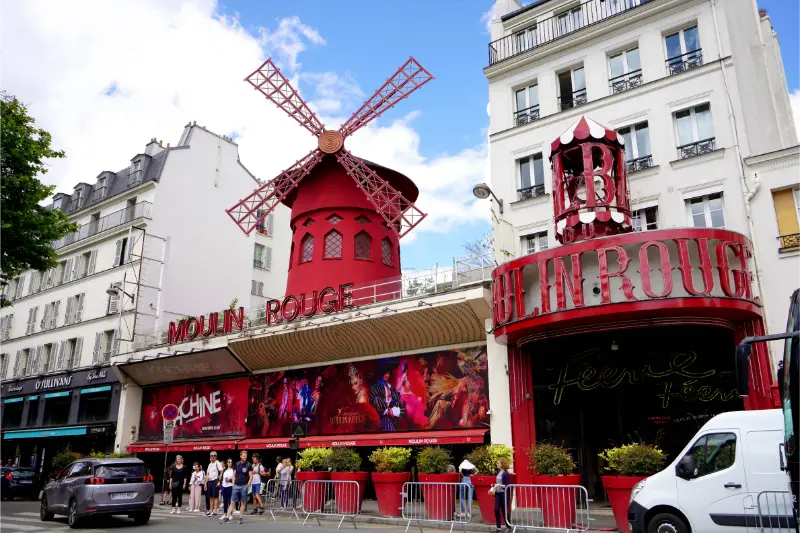
Moulin Rouge
If you are considering Paris’s most famous cabaret, our Moulin Rouge 2026 guide explains show times, dress code, seating and dinner-show tradeoffs.
Choose the neighborhood before the venue
Paris nightlife is fragmented. Wine bars, cocktail bars, live music, cabaret and clubs often sit in different social ecosystems, so choosing a single “best nightlife district” is misleading. Start with the type of evening you want, then choose a neighborhood where two or three backup options are within walking distance. That matters because a bar can be full, a concert can sell out or a club door policy may not suit your group.
For an early, food-led evening, the 11th arrondissement and areas around Oberkampf can work well because dinner, wine and bars connect naturally. For classic cabaret, Montmartre/Pigalle is a separate category and should be planned around the show time. For cocktails, research current specialist bars rather than assuming the most famous nightlife street is the right place.
Build the return journey into the plan
Late Metro and RER service varies by day, line and disruption. Check the last realistic connection before leaving the hotel, not when you are already standing outside at 1 a.m. Night buses and taxis can be alternatives, but the most comfortable strategy is often to finish in a district with a direct route back to your accommodation.
Drink-spiking precautions, phone theft and opportunistic pickpocketing deserve the same common-sense attention they would in any major nightlife city. Keep your drink with you, avoid leaving a phone on the edge of a terrace table and do not follow strangers to unofficial ticket sellers or private after-parties you did not plan.
If your evening is sightseeing rather than bars, use Paris at Night instead. For cabaret-specific logistics, the Moulin Rouge guide covers dress code, arrival and dinner-show tradeoffs in detail.
A practical decision check for Paris Nightlife
Nightlife planning should start with music, drink style or show type, not a ranking of neighborhoods. Before you give it a fixed slot, compare that reason with the strongest alternative already on your itinerary. If the alternative matters more, move this stop to an optional block instead of forcing both into the same half-day. That simple choice keeps the article useful for different travelers rather than implying that every reader needs the same Paris.
A realistic way to fit it into the day
Eat in the same district as the first venue, keep one backup bar saved and check the last practical route home before the evening begins. Keep the previous and following stops close enough that a delay of twenty or thirty minutes does not create a cascade of missed reservations. Paris days become much easier when the route can absorb a longer lunch, a queue or a weather change without requiring a taxi across the city.
The trade-off worth making explicit
The trade-off is spontaneity versus transport certainty. Leaving every decision open is fun until the group is across town after the Metro closes. Making that trade-off deliberately is more useful than adding another item to a checklist. Ask what you would remove if this experience takes longer than expected; if the answer is “nothing,” the day is probably already too full.
Small details that prevent avoidable problems
Ticketed clubs, concerts and cabarets may have dress, age, ID or entry rules. Read the venue’s own terms before paying a reseller. Save the exact address or entrance you intend to use, keep enough phone battery for the return route and recheck any time-sensitive information on the official site. These are small steps, but they protect the part of the experience that actually matters from being swallowed by logistics.
Where it belongs in the wider Paris cluster
Use the 11th/Oberkampf for a flexible bar-led evening, Pigalle for cabaret, and Paris-at-Night for illuminated sightseeing rather than nightlife. Treat that pairing as a geographic or thematic cluster, not an obligation to complete everything. One strong connection is enough to make the day coherent; two or three distant add-ons usually reduce the value of the place you came to see.
Compare the three major cabarets
If a cabaret is part of the night, compare show style, dress code and dinner formats in our Moulin Rouge vs Crazy Horse vs Paradis Latin guide.