Disclosure: This article contains affiliate links or booking widgets. If you book through them, Dreaming of Paris may earn a commission at no extra cost to you. How our affiliate links work.
Winter is when Paris stops behaving like a postcard and becomes a city of museums, food, short daylight and long evenings. Around Christmas the decorations add spectacle; in January and February the reward is a calmer rhythm. The trade-off is simple: daylight and weather must shape the itinerary more aggressively.
Short daylight changes the order
Put outdoor neighborhoods in the brightest part of the day and use late afternoon for museums, cafés and interiors. A 16:00 museum slot can be smarter than spending a clear 10:00 morning indoors. Reverse the plan when rain is forecast later.
Christmas lights are an evening layer
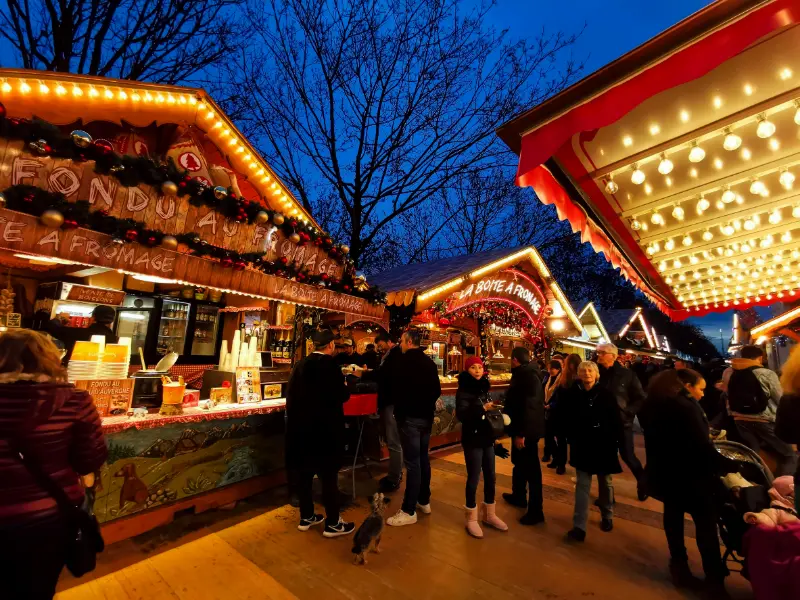
Holiday displays around department stores and major shopping streets change every year. Treat them as an evening addition to a good neighborhood day and verify 2026 dates from the venue or district instead of copying last year’s social-media list.
Markets: seasonal versus everyday
Christmas markets vary by operator, location and date. Traditional food markets are a more stable part of Paris life. Use our markets guide for the everyday layer and add a verified seasonal market only when it fits the route.
Best winter neighborhoods
Le Marais is strong for small museums and cafés; Saint-Germain for galleries, churches and food; the Grands Boulevards for department stores and passages. Montmartre is excellent on a clear cold morning but much less pleasant in driving rain.
Museums without overload
Winter is not a reason to do Louvre + Orsay + another museum in one day. Use our Louvre plan or Orsay plan, then return to the city. For repeat visitors, small museums are even better.
Where to stay
In cold rain, a long walk from the metro matters more than it does in June. Prioritize a well-connected hotel with dinner options nearby. Compare neighborhoods in our guide and current rates on Booking.com.
Compare hotels for your stay in Paris
Check current availability, location and prices before choosing the exact neighborhood.
Check Paris hotels on Booking.comAffiliate link: we may earn a commission at no extra cost to you.
What to pack
Water-resistant shoes with grip, removable warm layers, gloves, a compact umbrella or waterproof shell and a small day bag are more useful than a huge winter wardrobe. Paris interiors can be warm even when the street is cold.
Frequently asked questions
Is Paris worth visiting in winter?
Yes, especially for museums, food, neighborhoods and evening atmosphere. Short daylight is the main planning constraint.
Does it snow often?
Snow is possible but should not be treated as a normal trip feature; plan for cold rain and wind.
When do Christmas lights start?
Dates vary by street, store and year. Verify the specific 2026 display before travel.
Is Versailles good in winter?
The Palace remains important, but garden conditions and seasonal schedules change the day.
What area is good for a winter hotel?
A well-connected neighborhood with nearby restaurants is particularly valuable in winter.
How this fits into our Seasonal Paris cluster
This guide is designed to connect with the rest of the site rather than sit alone. Continue with rain planning, Paris at night and covered passages. Internal links are placed where the next decision naturally appears, so you can move from transport to neighborhood, attraction, season or day trip without rebuilding the plan from scratch.
The decision that matters most
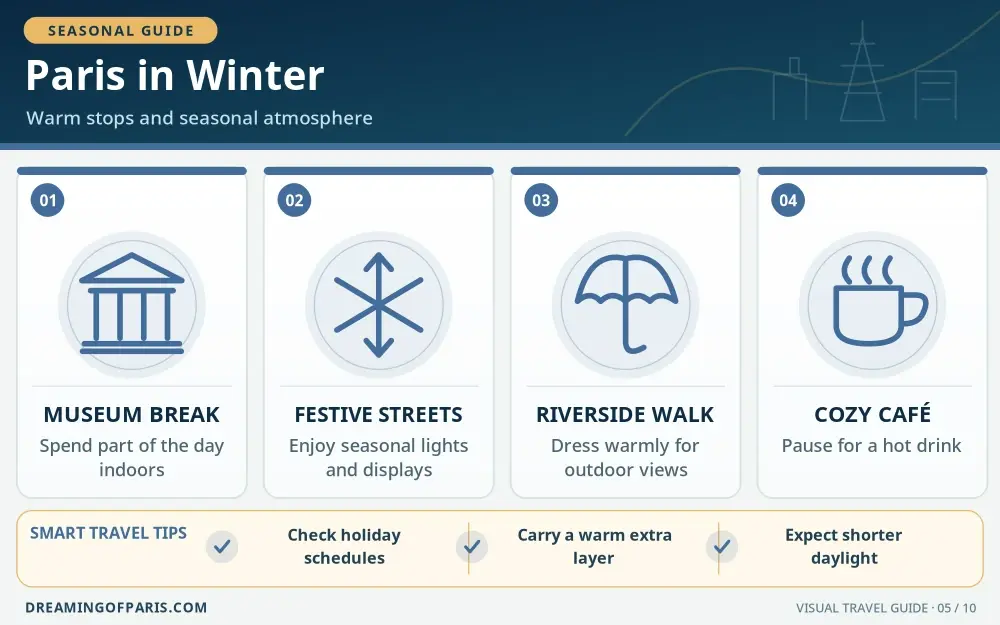
Use daylight as a scarce resource: streets and river in the bright hours, museums and food after the light fades. That one change makes a winter trip feel intentional rather than compromised.
Build two versions of each day
For Paris in winter, create an outdoor-first version and an indoor-first version of the same geographic day. Keep the same neighborhood, restaurant area and evening plan, but swap the order when rain, heat or cold changes. This preserves reservations and minimizes transport while giving you real flexibility. Weather-aware planning works better when you rearrange a compact day than when you replace the entire itinerary every morning.
How to read the forecast usefully
Look beyond the headline temperature. Wind, rain intensity, cloud base, humidity and the timing of the worst conditions matter more to a traveler walking several hours. A cool dry morning can be perfect for Montmartre even if the daily icon says rain; a hot evening can remain uncomfortable if the pavement has stored heat all afternoon. Recheck the hourly forecast before leaving the hotel and move your most weather-sensitive activity accordingly.
Protect one flexible block every day
Leave at least two hours unscheduled. In good weather, use it for a park, river walk or neighborhood detour. In poor weather, use it for a small museum, covered passage, café or hotel break. This buffer also absorbs queues and transport disruption. The goal is not to leave Paris “unplanned”; it is to protect the trip from becoming brittle when the conditions do not match the original timetable.
Clothing strategy for a walking city
Paris rewards layers and footwear more than fashion-oriented overpacking. Shoes need grip and comfort on stone, stairs and long pavements. In cold seasons, choose layers you can remove indoors. In hot seasons, prioritize breathable clothing and sun protection. In rain, a waterproof outer layer can be more practical than relying only on an umbrella in crowded streets. Keep the day bag light enough that weather changes do not make it burdensome.
Food and breaks by season
Season changes the best break. In winter, a longer lunch or café stop can warm the middle of the day. In summer, lunch becomes a deliberate escape from peak heat. In rain, a covered market or restaurant can replace an outdoor picnic. Build meals into the geography rather than traveling across Paris for a specific address; the right break at the right moment often improves the afternoon more than a famous restaurant far away.
Photography and expectations
Bad weather does not mean bad photographs, and perfect blue sky is not always the most interesting light. Wet pavements, winter twilight and summer evening light create different versions of Paris. At the same time, accept that a paid panorama in low cloud may deliver very little. Spend money on weather-dependent experiences only when the conditions support what you actually want from them.
Seasonal verification checklist
Before each trip day, verify attraction closures, park opening times, strikes or transport works and any seasonal event you specifically care about. Christmas installations, summer events and maintenance periods change year to year. Treat dated social posts as inspiration, not operational information. The current official venue page should decide whether a specific seasonal stop belongs in your plan.
Morning decision routine
Before leaving the hotel, look at the next six hours rather than the whole day. Check rain timing, wind, heat or cold, then choose which part of the planned neighborhood should happen first. Keep the same lunch area and evening plan whenever possible. This minimizes cancellations and prevents the weather from forcing a citywide redesign. The best seasonal itineraries are modular: museum and street can swap order, park and café can swap duration, and the hotel break can move earlier or later without breaking reservations.
When to return to the hotel
A hotel break is not wasted vacation time when weather is draining energy. In winter it lets you dry shoes and warm up; in summer it avoids the hottest part of the day; in heavy rain it can save you from spending hours carrying wet layers through museums. A 60–90 minute reset often produces a much better evening than pushing through fatigue until dinner. This is especially true for families, older travelers and anyone who has already walked heavily for several days.
What to book and what to leave open
For Paris in winter, book the attractions that genuinely sell out and leave weather-sensitive walking flexible. Avoid stacking three nonrefundable timed entries so closely that you cannot react to conditions. One fixed indoor anchor per day is usually enough. Restaurants can be reserved when they matter to you, but neighborhood flexibility is useful when rain or heat changes your route. Seasonal Paris rewards a schedule with structure at the center and freedom at the edges.
Christmas expectations versus winter reality
A December trip can include lights and seasonal displays, but not every street looks festive and not every market is open for the full month. Build a trip you would still enjoy without a single Christmas stall: museums, neighborhoods, food, churches, passages and evening walks. Then add verified seasonal elements on top. This avoids disappointment when weather, event dates or renovation changes a display. January and February are even easier to plan this way because you are choosing Paris itself rather than a temporary holiday program.
Cold evenings without ending the day too early
Winter evenings can be long but do not have to mean returning to the hotel at 18:00. Choose compact evening areas where dinner, a covered passage, a church exterior, a short Seine segment or a department-store interior sit close together. The goal is to avoid 40-minute exposed walks after sunset. A well-chosen winter evening can feel more atmospheric than summer because lights appear early and cafés become part of the experience rather than simply a break from sightseeing.
New Year’s Eve needs its own plan
If your winter trip includes 31 December, use our New Year’s Eve in Paris guide for the Champs-Élysées celebration, dinners, cruises, transport and getting home after midnight.