Disclosure: This article contains affiliate links or booking widgets. If you book through them, Dreaming of Paris may earn a commission at no extra cost to you. How our affiliate links work.
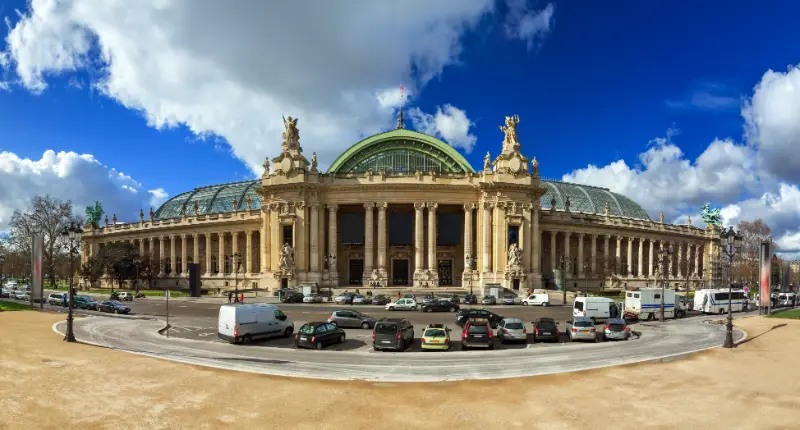
The Grand Palais is once again one of the essential cultural buildings in Paris, but it is not a museum with one permanent collection that you can visit in the same way every day. It is an event-driven monument: exhibitions, fairs, family programs and large cultural events use different spaces, opening hours and ticket rules. That distinction matters because travelers often arrive expecting a simple “Grand Palais ticket” and discover that access depends on what is happening that week.
Check tickets and Paris experiences
Compare current tours, timed-entry tickets and experiences before fixing your itinerary.
GetYourGuideTiqetsCivitatisViatorAffiliate links: we may earn a commission at no extra cost to you.
After the major renovation campaign, the building has returned to the center of Paris cultural life. Its location between the Champs-Élysées and the Seine makes it easy to combine with the Petit Palais, Pont Alexandre III, Invalides or the lower Champs-Élysées. The best visit therefore starts with the program, not with the façade.
What you are actually visiting at the Grand Palais
The Grand Palais is famous for its vast glass-and-steel nave, but the public experience changes according to exhibitions and events. Some programs use galleries, some emphasize the nave, and some create temporary installations that alter circulation completely. Before building an itinerary around the building, check the official cultural program and confirm which spaces are included in your ticket.
This is especially important for architecture-focused travelers. A photograph of the exterior does not guarantee that the nave is freely accessible at that moment. Treat the Grand Palais as a live cultural venue whose interior access is programmed rather than permanently open in one fixed format.
2026 opening pattern and why event hours matter
The Grand Palais currently indicates a general Tuesday-to-Sunday operating framework, with Friday late opening, but individual exhibitions publish their own schedules and last-entry times. For many major exhibitions, online booking is strongly recommended. The official practical-information page also notes exceptional closing dates and shorter hours on certain holidays.
Instead of copying one timetable into your entire trip plan, reserve the exhibition first and use the time printed on that ticket as the anchor. This avoids a common mistake: arriving during general building hours when the specific event you wanted is already closed or sold out.
Grand Palais or Petit Palais?
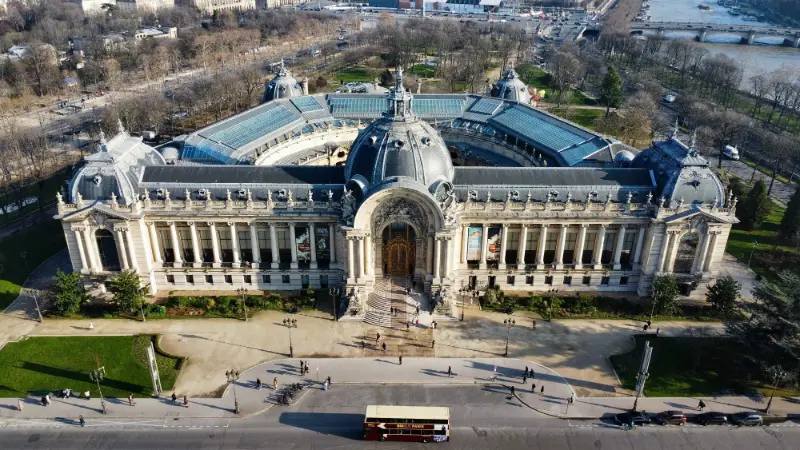
The two buildings face each other across Avenue Winston Churchill, but the visitor experience is very different. The Grand Palais is the place for headline temporary exhibitions and large-scale events. The Petit Palais has a permanent fine-arts collection that is free to enter and works well as a flexible, lower-pressure museum stop.
If your schedule allows only one, choose based on the current Grand Palais program. If there is a temporary exhibition you genuinely care about, book it. If not, the Petit Palais may deliver more value for a spontaneous visit.
How long should you allow?
For a major exhibition, 90 minutes to two hours is a useful baseline, but the real answer depends on the show. Large installations and family programming can require more time, while some focused exhibitions work well in an hour. Add security and entry time, especially at busy weekend slots.
Do not automatically pair a major Grand Palais exhibition with the Louvre or Musée d’Orsay on the same half-day. Paris museum fatigue is real. A better combination is one substantial exhibition plus a walk across Pont Alexandre III, a garden break or an easy visit to the free permanent collection at Petit Palais.
A smart half-day around the Grand Palais
Start with the Grand Palais at your booked time, then cross to Petit Palais if you still want art without another demanding ticketed visit. Continue toward Pont Alexandre III for one of the city’s most theatrical river crossings. From there, either walk to Invalides or turn east along the Seine toward Place de la Concorde.
This compact geography links naturally with our Les Invalides guide and Arc de Triomphe and Champs-Élysées guide. The advantage is that you spend the day in one sector instead of commuting between unrelated attractions.
Families and the Palais des enfants
The Grand Palais now includes family-oriented programming through the Palais des enfants. Current 2026 scheduling lists the “Transparency” experience through August 2027, with operating hours that differ between weekdays, weekends and school holidays. Family programs are capacity-controlled, so check age recommendations and book before promising the experience to children.
For a broader family plan, combine this with our Paris with kids guide. The key is to balance one structured indoor activity with outdoor time rather than stacking museums.
Should you take a guided tour?
A guide adds most value when the building itself is part of the story or when you want historical context around the 1900 Exposition Universelle, the architecture and the surrounding monumental axis. For a temporary art exhibition, an official audio guide or exhibition mediation may be more relevant than a general city tour.
If you prefer to compare bookable Paris architecture and museum experiences, the widget below can surface current options rather than relying on a static affiliate link.
Official information before you go
Use the official Grand Palais practical-information page for the current program, prices, closures and exhibition-specific hours. Because this is an event venue, details change more frequently than at museums with fixed permanent collections.
The best rule is simple: never travel across Paris solely to “see the Grand Palais inside” without checking what is open. The exterior and neighborhood are always worth seeing; interior access is program-dependent.
Who should prioritize the Grand Palais
Prioritize it if a current exhibition matches your interests, if architecture is central to your trip, or if you are already spending time around the Champs-Élysées and Invalides. Deprioritize it if you are visiting on a short first trip and nothing on the program excites you. Paris has too many exceptional permanent collections to buy a ticket only because a building appears on a checklist.
Photography and security
Large cultural events can apply specific rules for bags, tripods and photography. Keep equipment minimal and read the event conditions. Even when photography is allowed, crowded exhibitions are easier to enjoy with a phone or small camera than with equipment that turns every room into a setup.
A final planning rule
A useful final test for Grand Palais Paris is whether the visit improves the day around it. Paris itineraries become weaker when every famous name is treated as mandatory. Check opening hours, place the visit beside nearby sights, leave time for security and walking, and keep one flexible block in the half-day. That small amount of margin is what protects the plan when queues, weather or energy levels differ from expectations. If a ticket is timed, arrive early enough to find the correct entrance without turning the previous activity into a race. If admission is free or flexible, use that flexibility rather than creating an artificial deadline. The goal is not to maximize the number of doors you enter; it is to remember what you saw and still enjoy the streets between attractions.
How the 1900 exhibition context changes what you see
The Grand Palais and Petit Palais were created for the Exposition Universelle of 1900, a moment when Paris was presenting itself as a modern capital through architecture, engineering and spectacle. Remembering that context makes the glass roof more than a photogenic backdrop. It was part of a deliberate statement about scale, technology and civic display. Walk outside after the exhibition and look across Avenue Winston Churchill: the two palaces and the Alexandre III bridge belong to the same monumental sequence. That urban composition is one reason the area rewards walking even when you do not hold a ticket for every building.
When not to book the Grand Palais
Skip a paid exhibition if the subject does not interest you, especially on a short first trip. The Grand Palais is important, but importance does not create personal value. You can still appreciate the exterior, cross to Petit Palais, walk Pont Alexandre III and spend your museum budget somewhere more meaningful. This is also a useful rainy-day decision: a strong current exhibition makes the Grand Palais an excellent indoor anchor; a weak fit for your interests can turn it into an expensive way to stay dry. Use the program, not reputation, to decide.
Day-of-visit check
Before leaving the hotel, recheck the official website for the day rather than relying on a screenshot saved weeks earlier. Paris institutions can change rooms, access routes, security rules or opening times for events. Keep the reservation email accessible offline, arrive with only the bags you need, and know the nearest alternative activity in the same neighborhood. This small preparation is especially useful during strikes, exceptional closures or exhibition changeovers. It also protects your internal itinerary: if one venue changes, you can remain in the same district instead of losing an hour crossing the city.
Frequently asked questions
Is the Grand Palais open every day?
No. The current framework is generally Tuesday to Sunday, with event-specific schedules. Always check the program for your exact date.
Can I enter the Grand Palais just to see the nave?
Not necessarily. Access to interior spaces depends on the event and program in operation.
Is the Grand Palais included in the Paris Museum Pass?
Do not assume so. Temporary exhibitions and events have their own ticketing; verify the current pass list and event conditions.
What should I combine with the Grand Palais?
Petit Palais, Pont Alexandre III, Invalides and the lower Champs-Élysées form the most efficient nearby cluster.