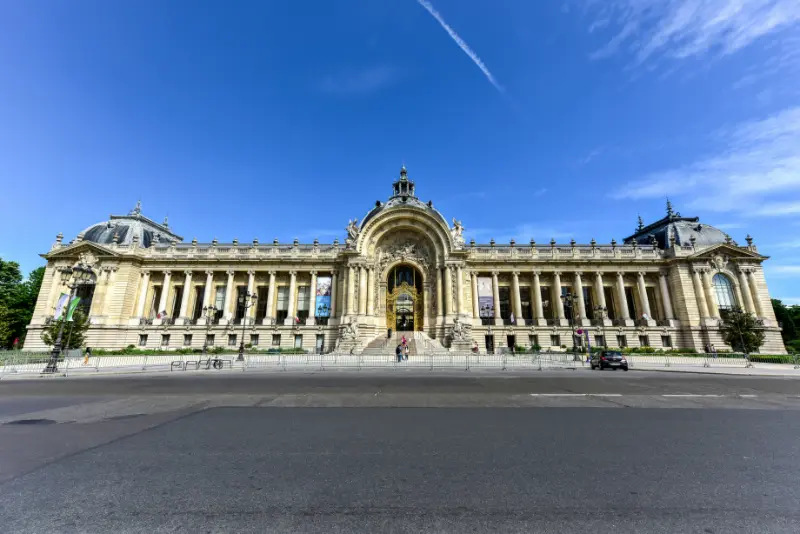
The Petit Palais is one of the best-value cultural stops in central Paris because its permanent collection is free. That single fact changes how you should use it. You do not need to force a three-hour “museum day” to justify a ticket. You can enter for 45 minutes, focus on a few rooms, step into the courtyard, and continue your walk.
Built for the 1900 Universal Exhibition and facing the Grand Palais, the museum combines Beaux-Arts architecture, painting, sculpture, decorative arts and a surprisingly calm internal garden. For first-time visitors, it is an excellent antidote to the idea that every important Paris museum requires advance booking and half a day.
Check tickets and Paris experiences
Compare current tours, timed-entry tickets and experiences before fixing your itinerary.
GetYourGuideTiqetsCivitatisViatorAffiliate links: we may earn a commission at no extra cost to you.
What is free and what is paid?
The permanent collection of the Petit Palais is free to enter. Temporary exhibitions generally require a paid ticket, and their late-opening arrangements can differ from the rest of the museum. This makes the building ideal for flexible sightseeing: you can decide on the day whether the permanent collection is enough or whether a temporary show is worth adding.
Free entry does not mean the museum is insignificant. The collection spans antiquity through the early twentieth century and includes paintings, sculpture, icons, decorative arts and works associated with major French and European artists.
Opening hours in 2026
The museum currently opens Tuesday to Sunday from 10 a.m. to 6 p.m., with last admission before closing. Temporary exhibitions have late opening on selected Friday and Saturday evenings under the current schedule. Monday is the regular closing day.
Because the permanent collection is free, late morning and early afternoon can attract visitors who add it spontaneously. If you want the courtyard and galleries at a gentler pace, try opening time or later in the afternoon, checking temporary-exhibition hours separately.
The courtyard is part of the visit, not just a café stop
One of the pleasures of the Petit Palais is the transition from monumental avenue to internal garden. The curved courtyard, colonnades, mosaics and planting create a very different mood from the traffic outside. Even travelers who are not deeply interested in art can enjoy the building as an architectural stop.
In good weather, treat the courtyard as the break between gallery sections. That rhythm makes the museum particularly useful on a first trip when attention is already being divided among monuments, streets and views.
What to see if you only have 45 minutes
Do not try to cover every room. Start with the architecture and main circulation spaces, choose one painting section, look at the sculpture galleries and spend a few minutes in the courtyard. If a specific artist or period matters to you, use the museum map before entering rather than wandering until time runs out.
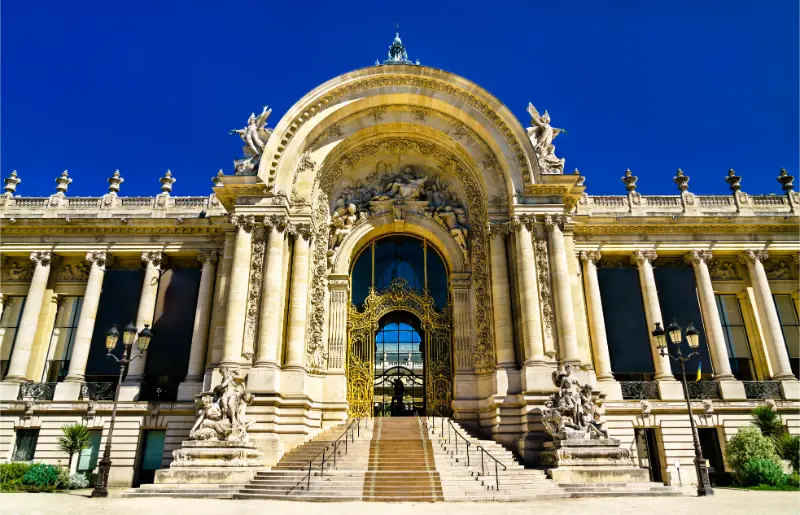
The Petit Palais works best as a curated short visit. If you want a more concentrated Impressionist experience, our Musée d’Orsay guide and Orangerie guide explain how those collections differ.
Petit Palais + Grand Palais: the obvious pairing
Because the two institutions face each other, combining them requires almost no transit. The key is to avoid treating both as equally demanding. If you have a timed Grand Palais exhibition, make that the main event and use Petit Palais as the flexible second stop. If the Grand Palais program does not interest you, spend more time in the free permanent collection instead.
Read our Grand Palais 2026 guide before deciding, because access there is driven by the exhibition and event calendar.
A free-museum strategy for Paris
The Petit Palais belongs in a broader category of excellent Paris cultural experiences that do not require a permanent-collection ticket. The Musée Carnavalet is another major example. Free collections are especially useful on rainy days or arrival/departure days when you do not want to gamble on a timed ticket.
Our free things to do in Paris guide puts these options into a wider budget itinerary, including parks, viewpoints and neighborhood walks.
When the Petit Palais is better than another headline museum
Choose it when you want culture without committing your entire half-day, when your group has mixed interest in art, or when your itinerary is already centered on the Champs-Élysées/Invalides sector. It is also an excellent backup if rain interrupts an outdoor walk nearby.
Choose the Louvre, Orsay or a specialist museum instead when you have a specific collection priority. “Free” should not override what you actually want to see; it simply makes the Petit Palais unusually easy to fit intelligently into a Paris day.
Official information
Check the official Petit Palais website for current temporary exhibitions, special closures and late-opening details. The permanent collection is currently free, but temporary exhibition conditions change throughout the year.
If you are visiting for a particular exhibition rather than the permanent collection, reserve around that show and treat the free galleries as a bonus rather than assuming they follow the same schedule.
Why this museum is excellent on arrival day
Arrival days are unpredictable: flights are late, rooms are not ready and energy is variable. A free museum that does not require a permanent-collection reservation is ideal because you can shorten the visit without losing money. If you are staying nearby, Petit Palais can fill an uncertain 60–90 minute window far better than a prepaid blockbuster attraction.
Accessibility and pacing
The museum publishes accessibility information and provides a more compact experience than the city’s largest institutions. Travelers with limited stamina can choose one wing, sit in the courtyard area and leave without the psychological pressure of “finishing” an expensive ticket.
A final planning rule
A useful final test for Petit Palais Paris is whether the visit improves the day around it. Paris itineraries become weaker when every famous name is treated as mandatory. Check opening hours, place the visit beside nearby sights, leave time for security and walking, and keep one flexible block in the half-day. That small amount of margin is what protects the plan when queues, weather or energy levels differ from expectations. If a ticket is timed, arrive early enough to find the correct entrance without turning the previous activity into a race. If admission is free or flexible, use that flexibility rather than creating an artificial deadline. The goal is not to maximize the number of doors you enter; it is to remember what you saw and still enjoy the streets between attractions.
A low-pressure museum for mixed-interest couples and families
The Petit Palais is especially useful when one person loves art and another is less enthusiastic. Because the permanent collection is free, nobody needs to justify a long visit. Agree on a short route, meet in the courtyard, and leave when interest drops. That flexibility is rare in a city where major timed tickets can make people feel obligated to stay. Families can use the same strategy: focus on visually strong rooms, architecture and sculpture, then move outdoors before children reach museum fatigue.
What to notice in the building itself
Look beyond the paintings. The entrance sequence, ironwork, staircases, mosaic decoration, curved galleries and garden-facing colonnade were designed to make the building a work of art in its own right. The contrast between the monumental façade facing the avenue and the quieter internal garden is one of the museum’s most memorable features. If you enjoy Art Nouveau and Belle Époque Paris, combine this architectural attention with our Art Nouveau walking guide rather than treating the Petit Palais as only a free collection.
Day-of-visit check
Before leaving the hotel, recheck the official website for the day rather than relying on a screenshot saved weeks earlier. Paris institutions can change rooms, access routes, security rules or opening times for events. Keep the reservation email accessible offline, arrive with only the bags you need, and know the nearest alternative activity in the same neighborhood. This small preparation is especially useful during strikes, exceptional closures or exhibition changeovers. It also protects your internal itinerary: if one venue changes, you can remain in the same district instead of losing an hour crossing the city.
A useful 60-minute route
Enter without trying to map the whole collection. Spend the first ten minutes on the architecture and central circulation, then choose one painting gallery and one sculpture/decorative-arts section. Move to the garden courtyard around the halfway point and decide there whether you want another room or whether the museum has already done its job. This deliberately short route works because the permanent collection is free: you are not optimizing euros per room. If you discover a temporary exhibition that genuinely interests you, treat that as a separate visit with its own ticket and timing. The result is a museum experience that supports the day instead of swallowing it. Afterward, cross toward Pont Alexandre III or walk to the Seine before deciding on the next indoor stop.
Frequently asked questions
Is the Petit Palais really free?
Yes. Access to the permanent collection is currently free; temporary exhibitions are generally ticketed.
How long should I spend there?
About 45–90 minutes works well for a focused permanent-collection visit; longer if you add a temporary exhibition.
Is it worth visiting if I do not love museums?
Yes, especially for the architecture, courtyard and the ability to make the visit short and flexible.
What is the easiest nearby combination?
Grand Palais, Pont Alexandre III and the Seine are all within an easy walk.
A private-mansion contrast
After the public grandeur of the Petit Palais, compare it with Musée Jacquemart-André, where the house itself is part of a private collecting story.