
Disclosure: This article contains affiliate links or booking widgets. If you book through them, Dreaming of Paris may earn a commission at no extra cost to you. How our affiliate links work.
The Louvre is not a museum you “finish.” It is a former royal palace containing collections large enough to overwhelm even experienced museum visitors. The best first visit is not the one where you cover the most rooms. It is the one where you leave remembering specific works, spaces and connections rather than a blur of frames.
Check tickets and Paris experiences
Compare current tours, timed-entry tickets and experiences before fixing your itinerary.
GetYourGuideTiqetsCivitatisViatorAffiliate links: we may earn a commission at no extra cost to you.
For most first-time visitors, I recommend planning two to three focused hours. Choose two or three collection priorities before you enter, accept that you will miss most of the museum, and use the palace itself as part of the visit. If you love art history, stay longer—but do so because you want to, not because the ticket creates an obligation to “get your money’s worth.”
Louvre opening hours in 2026
The Louvre is open from 9 a.m. to 6 p.m. on Monday, Thursday, Saturday and Sunday, and from 9 a.m. to 9 p.m. on Wednesday and Friday. It is closed on Tuesday. Last entry is one hour before closing and rooms begin clearing thirty minutes before closing. The museum is closed on January 1, May 1 and December 25. Check the official Louvre hours page before your visit because exceptional closures can occur.
2026 ticket prices and who gets in free
As of January 14, 2026, the Louvre publishes a general admission rate of €22 for EEA residents/citizens and €32 for non-EEA visitors. Admission remains free for under-18s and for eligible EEA citizens/residents under 26 with appropriate identification. The museum also offers free admission to all visitors on the first Friday of the month after 6 p.m., except in July and August, and on July 14. Time-slot booking is recommended even for visitors entitled to free entry.
Do not assume a free-admission category means you can simply walk in. Bring the required proof and reserve a time when the museum recommends it. The official rules are more reliable than old travel posts because eligibility and pricing can change.
Which entrance should you use?
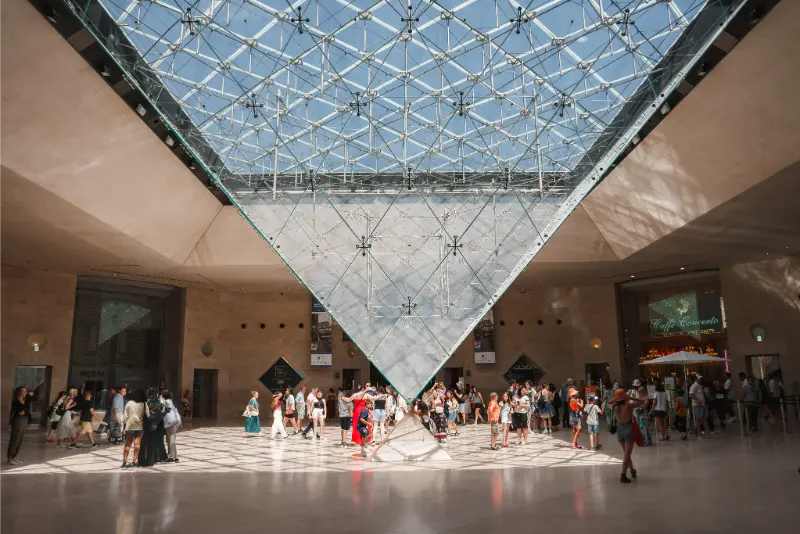
The Pyramid is the main entrance and the one most visitors know. At peak times, the Louvre notes that the Carrousel or Porte des Lions entrances may also be available. Entrance operation can change, so check your ticket and the museum’s live guidance rather than following an outdated “secret entrance” hack.
The idea of a permanently queue-free entrance is misleading. Security, ticket type, capacity and temporary operating changes matter. A better strategy is to arrive with a reservation, know your entrance options, and avoid building the day around a promise that one door will have “no line.”
A realistic first-visit route: three themes, not 35,000 objects
The route below is deliberately selective. Gallery locations can change because rooms close or works move, so use the official map on the day.
1. Begin with the palace, not the Mona Lisa
Before racing to Leonardo, notice that you are inside a building with centuries of royal history. The medieval Louvre foundations help explain that the museum began as a fortress long before it became the palace complex you see today. If this history interests you, spending a short time with the archaeological remains gives context to everything above.
2. Choose one major collection zone
For many first-timers, Italian paintings make sense because they include the Mona Lisa and other Renaissance works. Others may prefer Egyptian antiquities, Greek sculpture, French painting or decorative arts. Pick the collection that genuinely interests you and let the famous works inside it become anchors rather than compulsory trophies.
3. Add one “surprise” section
After your main priority, choose something different in scale or medium. If you have been looking at paintings, go to sculpture or decorative arts. This reduces visual fatigue. The Louvre becomes more memorable when you create contrast.
The Mona Lisa: how to make it a stop, not the entire visit
The Mona Lisa is small relative to the room and is protected behind glass, with a crowd-management system that can make the encounter feel more like a major attraction than an intimate artwork. Go if you want to see it—it is historically important and culturally fascinating—but do not let the queue consume the logic of your visit.
Look around the room and nearby galleries too. Many visitors photograph Leonardo and immediately leave, which means nearby masterpieces receive a fraction of the attention. The Louvre is one of the rare places where stepping ten meters away from the most famous object can transform the experience.
Why two to three hours is often the sweet spot
Museum fatigue is real. After a few hours, concentration drops even if your legs still work. If you are in Paris for only four or five days, an eight-hour Louvre session also has a high opportunity cost. A two-to-three-hour visit lets you leave while you still care about what you are seeing.
If you discover that you are energized rather than exhausted, stay. The point is to create permission to stop. You do not fail Paris by leaving the Louvre before closing.
Best time to visit
Early opening can give you a cleaner start, especially if the museum is your first activity. Wednesday and Friday evening hours are useful if you enjoy museums after dinner time or want to preserve daylight for outdoor neighborhoods. Late opening does not guarantee emptiness, but it expands your scheduling options.
A smart combination is Louvre in the morning, then Palais-Royal and the covered passages in the afternoon. The route stays geographically compact, and the shift from giant museum galleries to small nineteenth-century arcades makes the day feel varied.
What to do with bags, coats and comfort
Travel light. Museum security and cloakroom rules can change, and carrying a heavy daypack through hours of galleries is tiring. Wear shoes that are comfortable on hard floors. Bring water if permitted under current rules, but check the museum’s visitor regulations for container and food restrictions before arriving.
If you are visiting with children, do not force them through your adult masterpiece checklist. Egyptian objects, monumental sculpture and palace spaces may hold attention better than a sequence of paintings. The Louvre offers family activities, guided tours and educational resources; our Paris with kids guide builds the museum into a realistic family day.
Navigation: use room numbers, not only masterpiece names
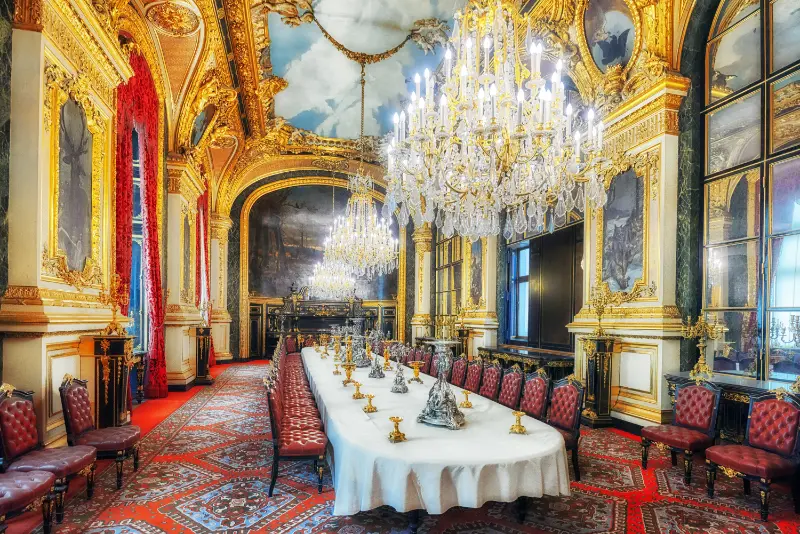
The Louvre has multiple wings, levels and internal routes that can be altered by closures. A list saying “Mona Lisa → Venus de Milo → Napoleon III Apartments” may look simple online but require significant backtracking depending on room access. Use the official map and current signs, and group works by wing or level where possible.
If a room you wanted is closed, treat it as a reason to explore something nearby rather than a crisis. Flexibility is one of the most valuable skills in a museum this large.
Five things worth noticing beyond the headline masterpieces
- The building itself: ceilings, staircases, courtyards and changing architectural styles tell the story of the Louvre as a palace.
- Scale: moving between tiny objects and monumental sculpture changes how you perceive the collection.
- Windows: some galleries offer views into the courtyards and toward Paris that help you reorient physically.
- Transitions: the museum’s divisions reflect historical categories that are worth questioning; art history is not a single chronological hallway.
- Quiet rooms: the most meaningful artwork for you may not be one you recognized before arriving.
Should you take a guided tour?
A good guide can reduce decision fatigue and explain why selected works matter. It is especially useful if you want art-historical context but do not know where to start. Self-guided visitors have more freedom to linger or leave. Neither approach is objectively better; the key is whether you want interpretation or autonomy.
If booking a third-party tour, verify meeting point, group size, duration, admission inclusion and cancellation terms. Avoid any seller promising to “skip security”; security procedures apply regardless of ticket source.
Can you leave and re-enter?
The Louvre’s official admission information states that any exit is final. Plan meals, breaks and your visit sequence with that in mind. Do not assume you can pop out to the Tuileries for lunch and return on the same ticket later.
A sample 2.5-hour Louvre plan
- 0:00–0:20: enter, orient yourself, lockers/coat needs, short palace context.
- 0:20–1:20: your main collection priority.
- 1:20–1:45: Mona Lisa or another famous anchor if desired.
- 1:45–2:20: contrasting second section—sculpture, antiquities or decorative arts.
- 2:20–2:30: final room, exit deliberately rather than squeezing in five more galleries.
This is not a universal route; it is a structure that protects attention.
What to do immediately after the Louvre
Do not schedule another giant indoor attraction. Walk through the Tuileries, sit in Palais-Royal, or continue to Galerie Vivienne and the covered passages. If the weather is good, cross the Seine and let the next hour be unstructured. Your brain will remember the museum better if you give it contrast.
For a full first-trip plan, see our 4-day Paris itinerary. It deliberately places the Louvre as the only major museum commitment that day.
Louvre FAQ
Is the Louvre closed on Tuesday?
Yes. In 2026 the museum is closed every Tuesday, as well as January 1, May 1 and December 25.
How much is a Louvre ticket in 2026?
The official general admission prices are €22 for EEA residents/citizens and €32 for non-EEA visitors, with free admission for several eligible groups including under-18s and eligible EEA visitors under 26.
Do free visitors need a reservation?
The Louvre recommends time-slot bookings even for visitors entitled to free admission.
How long should a first visit last?
Two to three focused hours works well for many first-time visitors. Art enthusiasts can stay much longer, but there is no need to see everything.
Can I re-enter after leaving?
No. According to the Louvre’s current visitor information, exit is final.
The best Louvre visit is selective. Decide what you care about before entering, use the current map, allow yourself to ignore hundreds of rooms, and leave while the works still feel distinct.
Paris Museum Pass planning
If you plan several paid museums and monuments, see our Paris Museum Pass 2026 guide before buying individual admissions.
Recover in the Tuileries
After a focused museum visit, continue with our Tuileries Garden guide rather than heading straight back underground.
Compare Louvre tours and ticketed visits
The live options below are useful if you want a guided visit, reserved experience or packaged activity for this specific part of the trip. Compare the exact inclusions, meeting point, language and cancellation terms before booking.