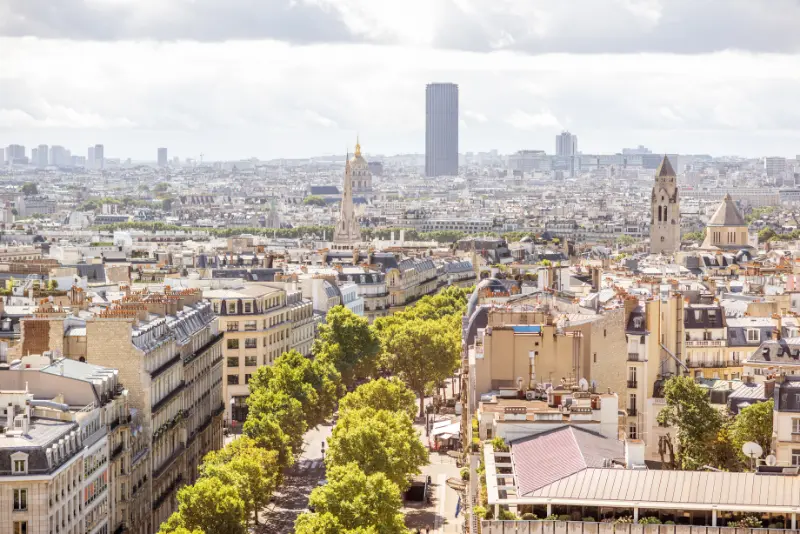
Montparnasse matters less for one blockbuster monument than for the way twentieth-century art, cafés, cemeteries, studios and ordinary Left Bank life overlap within a compact district.
Quick planning summary
Why Montparnasse is worth a half-day
The neighborhood rewards travelers interested in artistic history and city texture. Picasso, Modigliani, Man Ray and many others were associated with the broader Montparnasse scene, and the traces survive in cafés, studios and institutions rather than a single museum. It is also easier to walk than many monument-heavy districts because the story unfolds along streets.
The tower situation in 2026
The Montparnasse Tower observation deck closed on 31 March 2026 for a major renovation project, so older guides that send you straight to the panorama are outdated. That closure is a reason to rethink the neighborhood rather than skip it. Use our Paris viewpoints guide for current alternatives and spend Montparnasse time at ground level.
Historic cafés: context over consumption
Le Dôme, La Coupole, La Rotonde and nearby institutions are tied to the artistic mythology of the district. You do not need to eat a full meal in every famous room. Choose one if the history interests you, then continue into quieter streets. Paying for a coffee can be worthwhile when you understand what you are there to notice.
Montparnasse Cemetery
The cemetery offers a calmer historical counterpoint to Père-Lachaise. Writers, artists and intellectuals are buried here, and the geometry is easier to integrate into a short neighborhood walk. Because it remains an active cemetery, the atmosphere is quieter than a conventional sightseeing stop, and a map is useful if a specific grave matters to you.
Musée Bourdelle
This city museum, associated with sculptor Antoine Bourdelle, is one of the strongest cultural reasons to stop in the area. It combines studios, sculpture and garden-like spaces and fits naturally into an art-focused walk. Check current exhibition access because temporary shows may be ticketed even when permanent municipal collections are free.
Rue Campagne-Première and artist history
Side streets south of Boulevard du Montparnasse preserve fragments of the area’s studio culture. The value is not that every doorway has a famous plaque; it is the transition from major boulevards to quieter residential fabric. Walk slowly and read façades rather than trying to photograph every address connected with a famous name.
Catacombs connection
The Catacombs are farther south near Denfert-Rochereau but pair well geographically. If you have a timed Catacombs slot, use Montparnasse before or after instead of crossing the city. The two experiences are very different, which is exactly why the combination works.
Food and crepes
The area around Gare Montparnasse has a strong Breton presence and is famous for crêperies. This is a better reason to eat locally than choosing the first tourist-facing restaurant on a major boulevard. If you are catching a train to western France, the meal also fits the historical geography of the station.
How to arrive and leave
Montparnasse-Bienvenüe is served by several Metro lines and the major SNCF station dominates the western edge. Be aware that transfers inside the station complex can involve long corridors. If you are walking with luggage, allow more time than a simple map pin suggests.
A realistic route
Start near the cemetery, work north through artistic streets and the Bourdelle area, stop at one historic café, then continue toward Luxembourg or Saint-Germain. Reverse it if you have a train. The route works because it moves from quieter to busier spaces without forcing you to backtrack.
How this article fits into the Dreaming of Paris cluster
For a deeper plan, continue with Paris Catacombs, Luxembourg Gardens, Saint-Germain-des-Prés, current Paris viewpoints. These guides are linked because they share geography or a real planning decision, not simply because they mention Paris.
Official information
For the details most likely to change, use the Paris je t’aime Montparnasse page. Recheck it shortly before the visit rather than relying on a screenshot saved weeks earlier.
Practical checklist before you leave the hotel
- Recheck opening hours, closures or transport work.
- Save the exact entrance or meeting point, not only the attraction name.
- Carry water and keep enough phone battery for navigation.
- Know one nearby alternative in case the main plan changes.
- Allow more time if you have luggage, children or reduced mobility.
- Avoid scheduling another major timed attraction immediately afterward.
Is Montparnasse Tower open in 2026?
The observation deck closed on 31 March 2026 for major renovation works, so check current official information before planning a viewpoint visit.
Is Montparnasse worth visiting without the tower?
Yes, especially for artistic history, cafés, the cemetery, Musée Bourdelle and a less monument-focused Left Bank walk.
How long do I need in Montparnasse?
Three to five hours is enough for a focused walk with one museum or cemetery stop.
Can I combine Montparnasse with the Catacombs?
Yes. Denfert-Rochereau is close enough that the combination is efficient, especially with a timed Catacombs ticket.
Final planning advice
The best way to use this guide to Montparnasse Paris is to place it inside a coherent day rather than treat it as an isolated checklist item. Paris becomes easier when every reservation has a reason, every journey has a nearby second purpose and at least one part of the day remains flexible. That approach protects you from queues, weather changes and simple fatigue while leaving space for the unplanned café, street or view that often becomes the strongest memory.
Walk Montparnasse as a network of lives, not a nostalgia set
Montparnasse matters because artists, writers and political exiles lived and worked around a rapidly changing district; it is not preserved as a single bohemian museum. Start around boulevard du Montparnasse, then move into quieter streets and the cemetery. Famous cafés can be useful historical markers, but sitting in one is optional. The story is stronger when you connect studios, street names, cafés and burial places rather than expecting one venue to recreate the 1920s.
Montparnasse Cemetery deserves at least an hour if literary and artistic history is central to the visit. Use a map for a few graves you genuinely care about and leave space to notice sculpture and less famous names. As at Père-Lachaise, it remains an active cemetery, so the visit feels more like a historical walk than a conventional photo stop; current funerals and family visits can also affect how some areas feel or are accessed.
What to combine nearby
The Catacombs pair naturally on geography but create a very different mood and require timed planning. The Luxembourg Gardens connect Montparnasse to a more classical Left Bank day. If you are interested in modern architecture, the neighborhood also gives a useful contrast between older streets and large twentieth-century interventions.
Because the Montparnasse Tower observation deck is not a dependable current option during its long closure/redevelopment period, do not build the neighborhood around a panoramic visit. Treat the district itself as the attraction. Use the Catacombs guide or Luxembourg Gardens to extend the day according to interest.
A practical decision check for Montparnasse Beyond the Tower
Montparnasse is for travelers interested in artists, writers, cemetery history and the Left Bank beyond Saint-Germain. Before you give it a fixed slot, compare that reason with the strongest alternative already on your itinerary. If the alternative matters more, move this stop to an optional block instead of forcing both into the same half-day. That simple choice keeps the article useful for different travelers rather than implying that every reader needs the same Paris.
A realistic way to fit it into the day
Walk boulevard Montparnasse, choose one café/history stop, visit the cemetery and continue toward Luxembourg or Denfert-Rochereau depending on interests. Keep the previous and following stops close enough that a delay of twenty or thirty minutes does not create a cascade of missed reservations. Paris days become much easier when the route can absorb a longer lunch, a queue or a weather change without requiring a taxi across the city.
The trade-off worth making explicit
The trade-off is historical imagination versus surviving fabric. Much has changed, so the neighborhood requires context more than photogenic preserved interiors. Making that trade-off deliberately is more useful than adding another item to a checklist. Ask what you would remove if this experience takes longer than expected; if the answer is “nothing,” the day is probably already too full.
Small details that prevent avoidable problems
Do not build current plans around the old tower observation experience while the tower is closed/redeveloping. Verify any future reopening from the operator. Save the exact address or entrance you intend to use, keep enough phone battery for the return route and recheck any time-sensitive information on the official site. These are small steps, but they protect the part of the experience that actually matters from being swallowed by logistics.
Where it belongs in the wider Paris cluster
Catacombs and Luxembourg are natural extensions. Saint-Germain works if literary history is the main thread. Treat that pairing as a geographic or thematic cluster, not an obligation to complete everything. One strong connection is enough to make the day coherent; two or three distant add-ons usually reduce the value of the place you came to see.