If you want to understand Paris rather than simply photograph it, the Musée Carnavalet is one of the most useful museums in the city. Its permanent collections trace the history of Paris through archaeology, paintings, signs, interiors, objects, revolutionary material and everyday life. The museum also occupies two historic Marais mansions, so the building itself becomes part of the story.
The permanent collection is currently free and does not require a reservation. That makes Carnavalet one of the strongest “second layer” recommendations in Paris: after seeing Notre-Dame, the Louvre and the grand boulevards, this is where many of those places begin to make historical sense.
Check tickets and Paris experiences
Compare current tours, timed-entry tickets and experiences before fixing your itinerary.
GetYourGuideTiqetsCivitatisViatorAffiliate links: we may earn a commission at no extra cost to you.
Why Carnavalet belongs in a Paris history itinerary
Many Paris museums organize art by artist, period or medium. Carnavalet organizes the city. You move through versions of Paris: ancient Lutetia, medieval and early-modern development, the Revolution, the nineteenth-century transformation of streets and interiors, and later urban life. The result is especially valuable after you have already walked the city for a day or two.
Instead of treating the museum as background homework, use it as a bridge between sightseeing and context. A street sign, shopfront or reconstructed room can make the Marais or Haussmannian Paris feel less abstract when you return outside.
Opening hours and free access
The museum currently opens Tuesday to Sunday from 10 a.m. to 6 p.m. The permanent collection is free and accessible without booking. Temporary exhibitions may require a separate ticket and can have different last-entry rules.
Because luggage is not accepted and security checks apply, do not plan Carnavalet as a “between hotel and station” stop with suitcases. Visit after dropping bags, then use the free access to keep the visit as long or short as your interest allows.
A focused 90-minute route
Begin with the early history of Paris so the chronology makes sense, then prioritize the French Revolution and nineteenth-century city if this is your first visit. Add interiors and shop signs if you enjoy design and everyday history. You do not need to inspect every room for the museum to be rewarding.
If you are especially interested in medieval Paris, continue another day with our Musée de Cluny guide. Carnavalet tells the story of the city across periods; Cluny goes much deeper into medieval art and the surviving Roman baths.
The Marais before or after the museum?
Visit the neighborhood first if you want the museum to explain what you have just seen. Visit Carnavalet first if you enjoy walking with historical context already in mind. Both approaches work, but do not separate the two experiences by a cross-city commute.
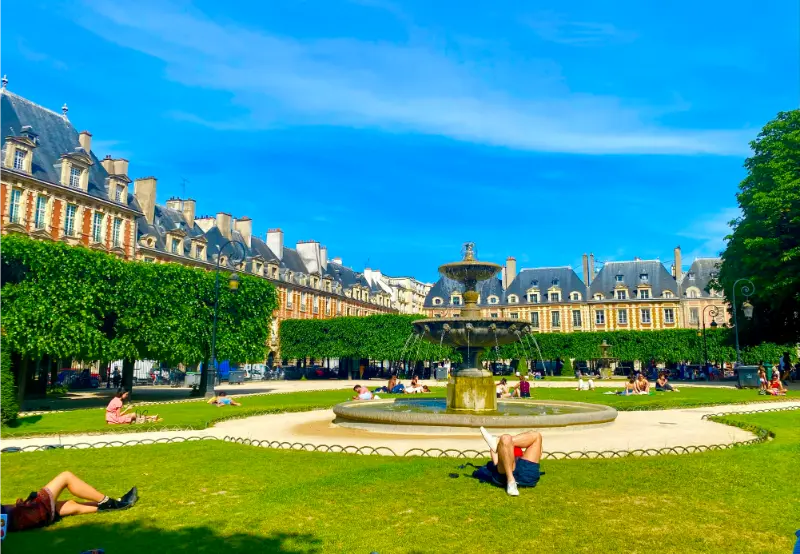
Our Le Marais walking route connects Place des Vosges, historic streets and quieter courtyards. Carnavalet sits naturally in that cluster and can replace a café break if the weather turns.
What families can get from Carnavalet
For children, the strongest sections are often visual: old signs, models, rooms, objects and dramatic historical material. A chronological adult-style museum marathon is less effective. Give children a small mission — find a shop sign, a model, an unusual room — and keep the visit focused.
Because the permanent collection is free, parents can leave when attention fades without feeling they “wasted” an expensive ticket. That flexibility is one reason we include it in broader Paris with kids planning.
Carnavalet vs. the Louvre for Paris history
The Louvre contains objects of extraordinary global importance, but it is not designed to tell the story of Paris as a city. Carnavalet is. If your interest is the French Revolution, streets, urban change and Parisian daily life, Carnavalet can be more directly relevant than another hour in a general art collection.
Use our focused Louvre route for the global masterpiece experience, and Carnavalet for the urban story. They complement each other rather than compete.
Free museum, paid temporary exhibition: how to decide
If you arrive without a reservation, start with the permanent collection. Only add the temporary exhibition if the subject genuinely interests you and you still have time. Do not let a paid exhibition crowd out the free city-history rooms that make Carnavalet distinctive.
This same rule applies to Petit Palais: permanent collections can provide a complete visit on their own. In a city with so many ticketed attractions, strategically using free museums makes an itinerary more resilient and less expensive.
Official information
Use the official Carnavalet practical-information page for current hours, temporary exhibitions, security and accessibility. Check again close to the visit because special events can modify normal operations.
For most travelers, the important facts are stable and simple: Tuesday–Sunday opening, free permanent collections, and a Marais location that makes it easy to build a coherent half-day.
The museum after Haussmann
One of Carnavalet’s strengths is showing that Paris is not a timeless postcard. Streets were demolished, rebuilt, renamed and reorganized. Seeing models, plans and interiors before walking the grand boulevards helps explain why central Paris feels simultaneously old and highly planned.
Why repeat visitors may appreciate it more
On a first morning in Paris, a historic shop sign may seem like another object in a case. After several days walking streets and noticing plaques, façades and squares, the same object has context. If your first trip is very short, save Carnavalet for day three or for a return visit rather than forcing it into the opening hours of the trip.
A final planning rule
A useful final test for Musée Carnavalet is whether the visit improves the day around it. Paris itineraries become weaker when every famous name is treated as mandatory. Check opening hours, place the visit beside nearby sights, leave time for security and walking, and keep one flexible block in the half-day. That small amount of margin is what protects the plan when queues, weather or energy levels differ from expectations. If a ticket is timed, arrive early enough to find the correct entrance without turning the previous activity into a race. If admission is free or flexible, use that flexibility rather than creating an artificial deadline. The goal is not to maximize the number of doors you enter; it is to remember what you saw and still enjoy the streets between attractions.
Revolutionary Paris without turning the museum into a textbook
Carnavalet’s French Revolution material is among the sections that can absorb far more time than expected. Instead of reading every label, choose a few objects that connect political events to everyday experience: symbols, portraits, printed material or objects associated with public life. Then return to the city and notice how revolutionary names, monuments and memory remain embedded in streets. The museum is most effective when it changes the way you look at Paris outside, not when you memorize a timeline inside.
The historic interiors are a different kind of evidence
Reconstructed rooms and decorative ensembles may seem less dramatic than paintings of major events, but they show how wealthy Parisians actually inhabited space. Furniture, wall decoration and room proportions reveal social life in a way that maps cannot. These interiors are especially valuable if you enjoy architecture or design. Compare them mentally with the hôtels particuliers you see while walking the Marais; suddenly the closed façades outside feel less mysterious because you have a sense of what historic domestic spaces could contain.
Day-of-visit check
Before leaving the hotel, recheck the official website for the day rather than relying on a screenshot saved weeks earlier. Paris institutions can change rooms, access routes, security rules or opening times for events. Keep the reservation email accessible offline, arrive with only the bags you need, and know the nearest alternative activity in the same neighborhood. This small preparation is especially useful during strikes, exceptional closures or exhibition changeovers. It also protects your internal itinerary: if one venue changes, you can remain in the same district instead of losing an hour crossing the city.
A practical route through the Marais after the museum
Exit toward Rue de Sévigné and resist the temptation to turn the rest of the Marais into a shopping sprint. Walk toward Place des Vosges, then use smaller streets to reconnect with Rue des Rosiers or the Seine depending on energy. If the museum has already given you a heavy dose of history, let the next hour be simple: architecture, a bakery, a square and people-watching. That contrast is important. The Marais becomes tiring when every mansion, museum and boutique is treated as mandatory. Carnavalet should deepen the neighborhood rather than make it denser. On a rainy day, reverse the balance: spend longer inside the museum and keep the street section short. On a sunny day, use the free museum as a concentrated 60–90 minute anchor and give more time to the district outside.
Frequently asked questions
Is Musée Carnavalet free?
Yes. The permanent collections are currently free and can be entered without a reservation.
How long do you need?
Around 90 minutes is a good focused visit, but history enthusiasts can easily spend several hours.
Is Carnavalet good for a first trip?
Yes, especially after one or two days of sightseeing, when the city-history context becomes meaningful.
What should I combine with it?
Le Marais, Place des Vosges, the Jewish quarter and nearby historic streets form the natural cluster.