Paris 8th Arrondissement Guide: Champs-Élysées, Grand Palais, Madeleine and Parc Monceau is for travelers who want to understand the district as more than a number on the Paris map. The 8th arrondissement is often reduced to the Champs-Élysées, but its real range runs from monumental squares and exhibition halls to Parc Monceau, Madeleine, luxury fashion streets and some of the grandest Haussmannian perspectives in Paris.
This guide contains affiliate links. If you book through them, Dreaming of Paris may earn a commission at no extra cost to you.
Book the practical parts of your Paris trip
Compare accommodation first, then check tickets and experiences for the fixed parts of your itinerary.
Check Paris hotelsGetYourGuideTiqetsCivitatisAffiliate links: we may earn a commission at no extra cost to you.
Why explore the 8th arrondissement?
The 8th is especially rewarding for first-time visitors, architecture lovers, luxury shopping travelers, museum-goers and anyone who enjoys broad avenues, formal public spaces and polished city scenery. It is less convincing for travelers seeking village-scale streets, low prices or an alternative local atmosphere; parts of the 8th are business-heavy and highly commercial.
The number on the arrondissement map is only a starting point. The useful planning question is where its character changes from one quarter to another. A route built around those transitions usually feels richer than one built only around famous sights.
What to see in Paris’s 8th arrondissement
Champs-Élysées
The avenue is worth seeing, but walking every meter from Arc de Triomphe to Concorde is not automatically the best use of time. Focus on the sections and side streets that interest you, and use the gardens at the eastern end to soften the experience. If you are already tired, this is a sensible point to simplify the route. Continue only if the next street or stop genuinely adds something to your day.
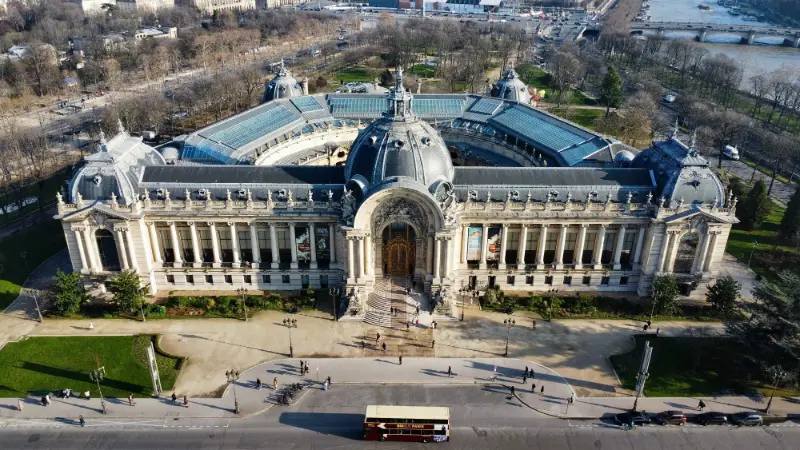
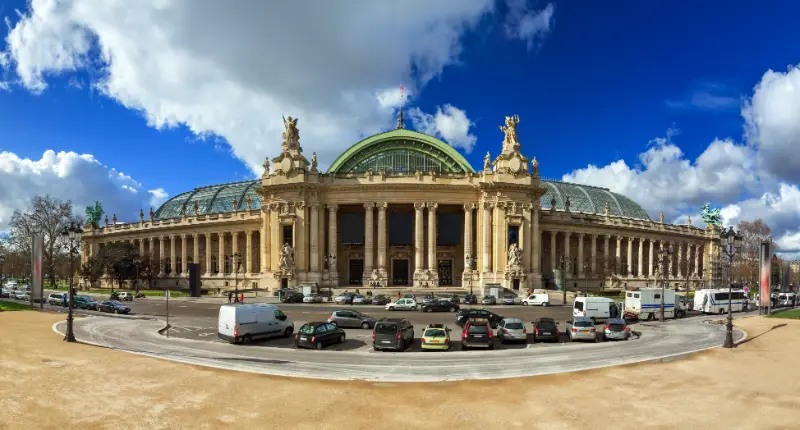
Grand Palais and Petit Palais
These buildings make the lower Champs-Élysées far more interesting than the retail stretch alone. Exhibition schedules change, so check current programming rather than assuming a permanent visit format. Do not over-plan this stop. A flexible twenty or thirty minutes can be more rewarding than a tightly scheduled visit that makes every detour feel like a problem.
Place de la Concorde
The square is a major urban hinge between the Tuileries, Champs-Élysées and Madeleine. It is visually impressive but traffic-heavy, so use official crossings and do not treat it like a pedestrian plaza. Approach it as part of the street network rather than a standalone pin, and continue on foot long enough to see the atmosphere change.
Madeleine
The church and surrounding gourmet-food streets offer a different kind of 8th-arrondissement experience. This is a good transition toward Opéra and the 9th. Use the stop as an orientation point. The adjacent streets are worth reading on the map before you automatically head for the next famous name.
Parc Monceau
The park is compact, elegant and genuinely useful if you need a break from museums and shopping. Morning and late afternoon are especially pleasant for seeing neighborhood life. Notice the contrast between the main frontage and the smaller streets around it. That contrast is often more revealing than the headline sight alone.
The Golden Triangle
Avenue Montaigne, George V and surrounding streets are about fashion, hotels and grand urban design. Even if you are not shopping, the area works as an architecture walk between the Seine and Arc de Triomphe. Pair this place with the next highlight instead of treating both as separate missions. The walk between them is part of the experience.
A practical walking route through the 8th
The route below favors continuity over maximum coverage. It is designed so that each section leads naturally into the next, while still leaving enough slack for a café, gallery or longer-than-expected stop.
Step 1. Start at Parc Monceau for a calmer beginning, then walk south through Haussmannian streets toward the Champs-Élysées. Keep Champs-Élysées as your first orientation point and avoid adding distant stops before the route has properly begun.
Step 2. Use the Arc de Triomphe as a viewpoint or orientation point, then descend only the sections of the avenue that interest you. The middle section is where the district’s character should become clearer; use Grand Palais and Petit Palais as a reference if you need to shorten or extend the walk.
Step 3. Finish around Grand Palais, Place de la Concorde and Madeleine, which leaves you close to the 1st and 9th arrondissements. At the end, decide whether the day should continue into dinner or finish here. The Golden Triangle gives you a natural point from which to make that choice.
Where to eat and how to pace the day
The 8th has everything from palace restaurants to chain-heavy tourist corridors. Avoid making the Champs-Élysées your only dining search zone. Madeleine and streets north of the avenue offer more variety, while Parc Monceau is useful for a simple bakery picnic nearby.
Keep at least one meal unscheduled. Paris days rarely unfold exactly as a map suggests, and a flexible lunch makes it much easier to stay longer at a market, museum or park without stressing about a reservation.
Is the 8th arrondissement a good place to stay?
The arrondissement works for travelers who value prestige, wide avenues and easy taxi access. It can feel less intimate than the Marais or Saint-Germain, and hotel prices can be high. Areas near Madeleine or Saint-Augustin are often more practical than a room directly on the Champs-Élysées.
Hotel location should be judged by the first and last journey of the day. Check the nearest line, the walk after dinner and recent comments about street noise before choosing between two otherwise similar properties. You can compare hotels in Paris on Booking.com and then compare recent guest comments before booking.
Getting around the 8th
Lines around Charles de Gaulle–Étoile, Franklin D. Roosevelt, Champs-Élysées–Clemenceau, Concorde, Madeleine and Saint-Augustin provide strong coverage. Distances are larger than in the 2nd or 4th, so use transit strategically rather than walking every grand avenue end to end.
Paris buses can be scenic, but traffic makes them harder to predict. For a reservation with a fixed entry time, favor the Métro and add a walking buffer from the station. For fares, passes and connections, use our Paris Métro and public transport guide.
How much time should you allow?
Allow roughly half a day if you are exploring independently. Families, photographers and anyone planning a sit-down lunch should give the same route more breathing room.
If your schedule is crowded, identify the one place you would regret missing, then build two nearby stops around it. This produces a coherent mini-itinerary rather than a scattered sampler. If you need a compact version, prioritize Champs-Élysées, Grand Palais and Petit Palais and Parc Monceau.
When to visit during the day
Season changes the rhythm: summer encourages longer evenings, while winter rewards using daylight for the outdoor legs first. In either case, check the current schedule of ticketed venues before building a day around them.
Whatever the season, verify the current opening day and reservation policy of any ticketed venue shortly before you go. Temporary exhibitions, maintenance and special events can change the best order even when the geography stays the same.
Who will enjoy this arrondissement most?
Repeat visitors will find the most value because the route adds context beyond the classic first-trip circuit, but first-timers can use it too when the highlighted sights already match their priorities. In this case, the strongest fit is still first-time visitors, architecture lovers, luxury shopping travelers, museum-goers and anyone who enjoys broad avenues, formal public spaces and polished city scenery.
Combine the 8th with nearby Paris
Useful related guides include Champs-Élysées walking guide, Arc de Triomphe guide, Parc Monceau and Tuileries Garden. Nearby planning works best when the second area begins where the first walk ends. The following guides were chosen with that principle in mind.
Tours and bookable experiences
Tours are most useful for interpretation rather than transportation. Look at the meeting point, duration, language and included stops, then decide whether the experience complements the self-guided route.
Common planning mistakes
Mistake 1: Treating the Champs-Élysées as the entire arrondissement.
Mistake 2: Eating only on the avenue without comparing nearby streets.
Mistake 3: Skipping Parc Monceau because it looks slightly detached from the main tourist axis.
Finally, do not treat the arrondissement boundary as a wall. Paris neighborhoods spill across administrative lines, and crossing one street into the next arrondissement is often the most logical way to finish the route.
Frequently asked questions
Is the Champs-Élysées worth visiting?
Yes, but it works best as part of a broader 8th-arrondissement route rather than a shopping-only destination.
Is the 8th a good place to stay?
It is convenient and prestigious, but often expensive and less intimate than smaller historic districts.
How long do you need?
Half a day covers the main axis; a full day makes sense if you add museums, exhibitions or serious shopping.
What pairs best with it?
The 1st via Concorde, the 9th via Madeleine and the 17th via Parc Monceau are natural extensions.
Official information and final tip
For seasonal events and current visitor information, consult official Paris tourism information. For a ticketed museum, monument or attraction, check that venue’s own official website as well before you commit the rest of the day to a fixed entry time.
The practical goal is not to ‘complete’ the arrondissement. It is to understand one coherent slice of it well enough that the streets make sense when you look back at the map later.
Hôtel de la Marine at Place de la Concorde
Place de la Concorde now has a much stronger interior visit than many older guides suggest. Our Hôtel de la Marine guide covers the restored Intendants’ apartments, state rooms, loggia, Al Thani exhibitions and current ticket strategy.