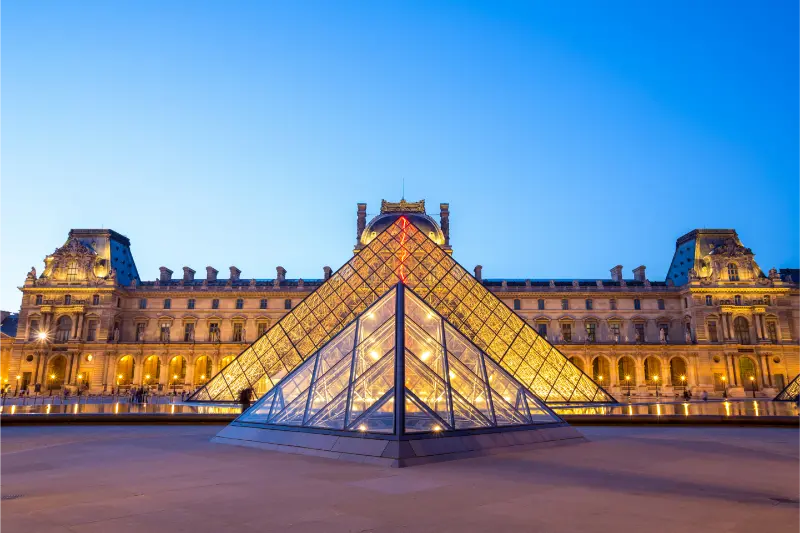
Staying near the Louvre is one of the easiest ways to make a short Paris trip feel longer. You are not only close to the museum; you are inside a compact zone where the Tuileries, Palais-Royal, the Seine, Île de la Cité, the covered passages and much of the historic center can be reached on foot. The trade-off is price. The 1st arrondissement is one of the least forgiving places in Paris if you book by hotel photo rather than by exact street, because a room that seems “near the Louvre” can mean anything from a palace opposite the museum to a small property closer to Les Halles or Opéra.
Compare hotels for your stay in Paris
Check current availability, location and prices before choosing the exact neighborhood.
Check Paris hotels on Booking.comAffiliate link: we may earn a commission at no extra cost to you.
This guide is for travelers who already know that centrality matters to them and want to decide which side of the Louvre gives the best balance. For a broader comparison, start with our where to stay in Paris for a first visit and the 1st arrondissement guide.
This guide contains affiliate links. If you book through them, Dreaming of Paris may earn a commission at no extra cost to you.
The four micro-areas that matter
Palais-Royal and Rue de Rivoli are the classic answer. You are beside the museum, close to Metro lines 1 and 7 at Palais-Royal/Musée du Louvre, and within an easy walk of the Palais-Royal gardens, Place Vendôme and the Seine. This is the strongest micro-location for a first-time visitor with a short stay and a high sightseeing priority. It is also the part of the area where hotel rates can rise sharply for relatively small rooms.
Tuileries and Saint-Roch, west of the Louvre, feel slightly calmer at night and make sense if your itinerary extends toward Place de la Concorde, the Orangerie, Madeleine and Opéra. Pont Neuf and the eastern Louvre are better for the Seine, Samaritaine, Île de la Cité and the Left Bank. Châtelet/Les Halles is less elegant but more transport-oriented, with a huge network of rail and Metro connections that can be useful for airport days and cross-city journeys.
How close do you really need to be to the Louvre entrance?
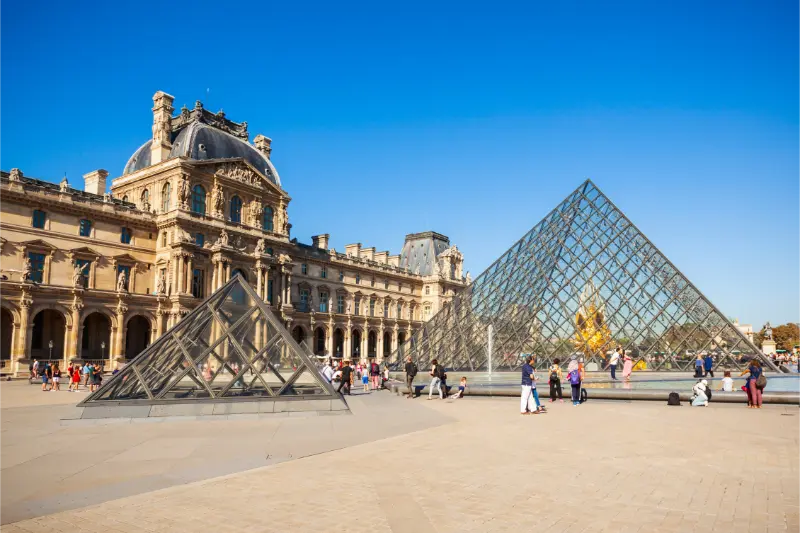
Do not pay a premium simply because a hotel advertises “Louvre” in its name. The museum is large, the visible palace frontage stretches for hundreds of meters and your practical entrance may not be the point closest to the hotel. The official Louvre transport guidance identifies Palais-Royal/Musée du Louvre on lines 1 and 7 and Pyramides on line 14 as useful stations. A hotel within a ten-minute walk of either can be functionally excellent even if you cannot see the pyramid from the door.
If the Louvre is the main reason for the trip, staying close has a real benefit on the morning of your reservation: you remove the risk of a cross-city delay and can use the early or late part of the day around the museum. But if you will visit once and spend the rest of the trip in Montmartre, the Marais and eastern Paris, paying the highest 1st-arrondissement premium for every night may not be the best use of the budget.
Palais-Royal: best for a classic first visit
Palais-Royal is my first choice for travelers who want the most “Paris outside the door” experience without being directly on a major nightlife street. The arcades and garden create a calmer counterpoint to Rue de Rivoli, and the position works well for walking north toward the covered passages or south to the river. It is particularly strong for couples, first-time visitors and people staying only two or three nights.
The weakness is that this is not a value district. Even midrange properties can price like upscale hotels during fashion weeks, major exhibitions or peak weekends. Room size can be modest. If you choose this micro-area, compare square meters, air-conditioning and lift access carefully; location is already the feature you are paying for, so you should not assume the room itself will be large.
Tuileries and Saint-Roch: best for a quieter central base
The streets between Rue de Rivoli, Rue Saint-Roch and Avenue de l’Opéra often give a more polished, less frantic evening atmosphere than Châtelet. You remain near the Louvre but gain easier access to the Tuileries, Place Vendôme, Opéra Garnier and the shopping corridors around Saint-Honoré. Travelers who like to walk early in the morning or return to a relatively calm street after dinner often prefer this side.
This is also a good compromise for travelers mixing museums with shopping. The downside is similar to Palais-Royal: rates can be high, and some hotels sell “central Paris” at a premium without exceptional rooms. Look at the exact distance to a Metro entrance and not only the distance to the Louvre on a map.
Pont Neuf and the eastern Louvre: best for river walks
The eastern edge of the 1st arrondissement puts the Seine at the center of the stay. From here, evening walks to Pont Neuf, the tip of Île de la Cité, Notre-Dame and Saint-Germain are natural rather than planned excursions. This location works especially well for photographers and couples who value the river after dark more than immediate access to Opéra or the Champs-Élysées.
The streets can change character quickly as you move toward Châtelet. Some are elegant and quiet; others are busy late into the evening. Read recent reviews for noise, deliveries and nearby bars. A few hundred meters can matter more here than the arrondissement number.
Châtelet and Les Halles: choose transport over romance
Châtelet-Les Halles is one of the most useful transport zones in Paris, but it is not the answer for everyone. It works for travelers who want easy connections, late-evening food and fast access to several parts of the city. It is particularly practical if your itinerary includes frequent journeys rather than slow neighborhood days.
The streets around the hub can feel busy, commercial and crowded. If your mental image of a Louvre stay is quiet arcades, elegant cafés and early-morning walks through palace courtyards, choose west or north of the museum instead. If your priority is practical movement, this side can save meaningful time.
Hotel examples worth comparing
Instead of declaring one “best” hotel, use a small shortlist that represents different positions. The official Paris tourism directory currently lists properties such as Hôtel du Louvre at Place André Malraux, Hôtel de la Place du Louvre on Rue des Prêtres Saint-Germain l’Auxerrois, Hôtel La Tamise opposite the Tuileries and Le Pradey near Rue Saint-Roch. These names are useful reference points because they illustrate how different a “Louvre hotel” can feel even within the same small district.
Check current prices and room types rather than treating star category as a complete quality measure. A three-star on a quiet side street may work better for a sightseeing-heavy trip than a grander property facing traffic. Use Booking.com to compare the exact dates, but always open the map and check the street before paying.
Who should pay the Louvre premium?
- First-time visitors on a 2–4 night trip: centrality converts directly into more usable sightseeing time.
- Museum-focused travelers: especially if the Louvre, Orangerie and Orsay are major priorities.
- Couples: the Seine, Palais-Royal and Tuileries make spontaneous evening walks easy.
- Travelers with limited walking endurance: if the central sights dominate the itinerary, reducing daily transport can matter more than room size.
- People who value early mornings: the area before tour groups arrive is one of the strongest reasons to stay here.
Who may be happier elsewhere?
Families who need connecting rooms or apartment space can often get more room in the 12th, 14th or 15th. Nightlife-oriented travelers may prefer the Marais, Oberkampf or Pigalle. Repeat visitors planning neighborhood-heavy days in eastern Paris may resent paying for a Louvre location they use only at bedtime. And budget travelers should compare the whole trip: the 1st can reduce transport time, but the room-price difference can be much larger than the Metro savings.
If your daily plan consistently starts outside central Paris, centrality becomes theoretical. Plot the first stop of each day before choosing the hotel. The best base is the place from which your actual itinerary is easy, not the point that looks most central on a tourist map.
Families, accessibility and luggage
The Louvre area is flat by Paris standards and has many bus routes, which can help families and travelers who prefer to avoid stairs. However, old buildings may still have tiny lifts, split-level corridors or steps between the lobby and elevator. Ask the hotel directly if step-free access matters; “elevator available” is not the same as a completely step-free route.
With luggage, the easiest hotel may be the one close to a taxi drop-off or a station entrance you can actually use with suitcases. If arriving from Gare du Nord or an airport, do not assume every Metro transfer is comfortable with large bags. A taxi can be worth the extra cost on arrival even if you use public transport for the rest of the trip.
A realistic budget strategy
Do not anchor on one nightly price because this district is unusually sensitive to dates. Compare the same room for several nearby nights if your travel dates have any flexibility. Then compare the 1st arrondissement with Saint-Germain, the Marais, the 9th and a well-connected residential district. The right comparison is not “Louvre expensive, elsewhere cheap”; it is the value of walking time, room comfort and cancellation terms on your exact dates.
If the price gap is modest, I would usually keep the Louvre location for a short first visit. If the gap is large enough to fund a major part of the trip, move one or two Metro stops away. Paris is compact enough that you do not need to sleep beside every monument you plan to see.
Booking mistakes to avoid
- Booking a “Louvre” hotel without checking which side of the museum it is on.
- Paying for a “view” without confirming the exact room category and whether the view is direct or partial.
- Ignoring recent comments about street noise, construction, air-conditioning and lift size.
- Choosing the cheapest non-refundable rate months ahead when the saving is small.
- Assuming central Paris eliminates all transport; Montmartre, Père-Lachaise and the outer parks still require journeys.
Official sources and final recommendation
For museum access, verify current entrances and transport on the official Louvre website. For accommodation by neighborhood, the Paris je t’aime accommodation directory is a useful independent reference and was updated in August 2026.
For most first-time visitors who can afford the premium, I would choose Palais-Royal or the Tuileries/Saint-Roch side rather than the busiest part of Châtelet. You keep the walking advantage but gain a more coherent evening atmosphere. The Louvre area is not automatically the “best place to stay in Paris”; it is the best place when central sightseeing time is worth more to you than extra room space.