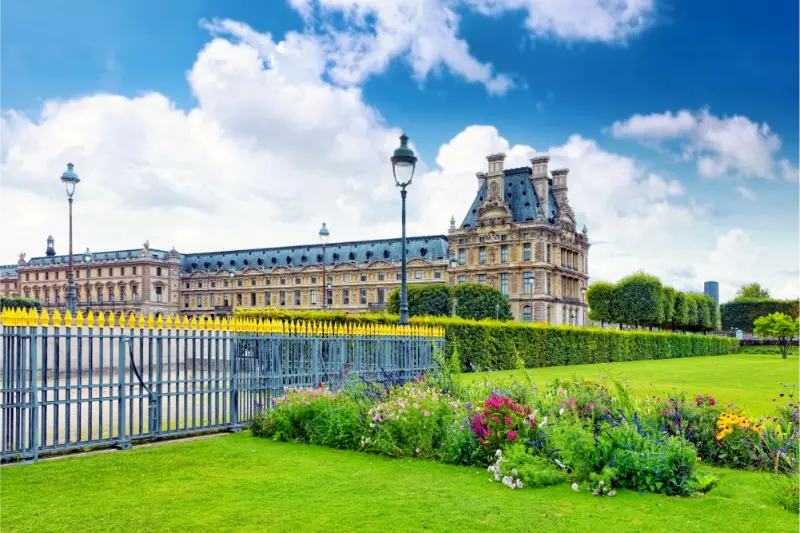
Paris 1st Arrondissement Guide: Louvre, Palais-Royal, Tuileries and the Historic Center is for travelers who want to understand the district as more than a number on the Paris map. The 1st arrondissement is where monumental Paris and everyday central Paris overlap. It contains the Louvre and Tuileries, but it also includes arcades, gardens, market streets, transport hubs and pieces of the Île de la Cité that are easy to miss when the day is built around a single museum reservation.
This guide contains affiliate links. If you book through them, Dreaming of Paris may earn a commission at no extra cost to you.
Book the practical parts of your Paris trip
Compare accommodation first, then check tickets and experiences for the fixed parts of your itinerary.
Check Paris hotelsGetYourGuideTiqetsCivitatisAffiliate links: we may earn a commission at no extra cost to you.
Why explore the 1st arrondissement?
The 1st is especially rewarding for first-time visitors who want to stay extremely central, art lovers, walkers who enjoy formal gardens and architecture, and travelers with only a short visit who value being able to reach many sights on foot. It is less convincing for travelers looking for late-night neighborhood energy or bargain accommodation; the area is convenient and beautiful, but it can feel polished, busy and expensive around its biggest landmarks.
Treat the arrondissement as a sequence of micro-neighborhoods rather than one destination. Pick two anchors, walk between them, and let side streets supply the detail. This keeps the day coherent and reduces the temptation to zigzag across Paris for isolated pins.
What to see in Paris’s 1st arrondissement
The Louvre district
Treat the Louvre as the anchor rather than the whole day. The Cour Carrée, Cour Napoléon and river frontage already explain several centuries of royal and civic Paris before you enter a gallery. If you visit the museum, keep the rest of the day deliberately lighter so the arrondissement does not become an exercise in museum fatigue. Spend a few minutes beyond the obvious viewpoint; the surrounding blocks often explain why this stop matters to the neighborhood.
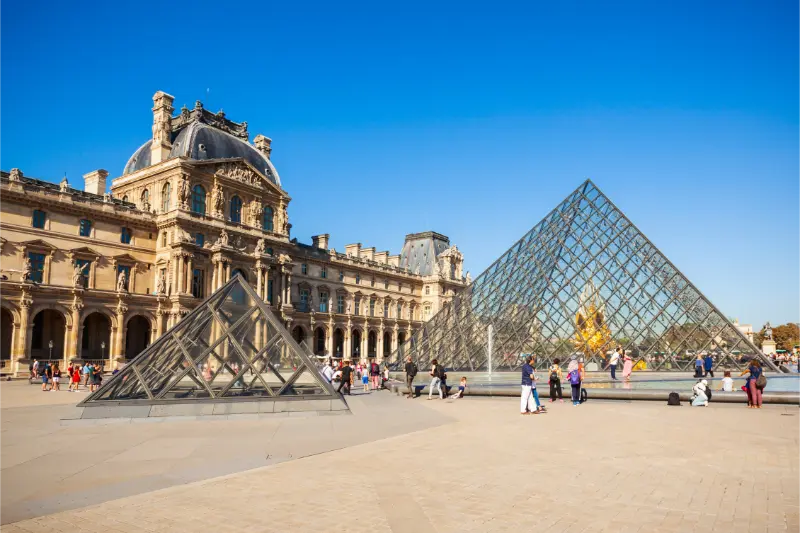
Palais-Royal
The garden and arcades immediately north of the Louvre are one of the best decompression zones in central Paris. The Buren columns provide the obvious visual hook, but the real pleasure is walking the arcades, looking into the courtyards and then sitting in the formal garden away from the traffic. This is a good place to slow the pace and decide whether the next section needs more time or can remain a short pass-through.
Tuileries and the western axis
The Tuileries give the arrondissement breathing room. Walk west with the Louvre behind you and the perspective opens toward Place de la Concorde and the Arc de Triomphe. The garden works especially well after a museum because it asks almost nothing of you: benches, sculpture, ponds and long views. If this becomes the longest stop of the day, shorten a later section rather than rushing here; the route is designed to remain coherent after a cut.
Les Halles and Saint-Eustache
The modern transport and shopping complex can feel confusing, but the neighborhood around Saint-Eustache connects central Paris to Rue Montorgueil and the 2nd arrondissement. Use it as a food-and-street-life transition rather than as a destination mall. Keep the camera away for the first few minutes and look at how people actually move through the space; it helps separate a functioning neighborhood from a tourist stop.
Place Vendôme and Rue Saint-Honoré
This side of the arrondissement is elegant rather than intimate. Place Vendôme, luxury shops and grand façades are best appreciated as part of a walk linking the Tuileries to Palais-Royal, not as a separate half-day. Allow enough margin for an unexpected closure or queue. The surrounding area gives you alternatives without forcing a complete itinerary change.
The western tip of Île de la Cité
The Conciergerie and Sainte-Chapelle sit within the 1st arrondissement on the island. They pair naturally with a Notre-Dame walk, but timed entry and security can make the island much slower than it looks on a map. The value here is context. Read the place in relation to the arrondissement’s history, scale and daily life rather than only its most photographed detail.
A practical walking route through the 1st
Use this as a framework rather than a timetable. The walking direction is intentional because it limits backtracking, but the day should still have room for spontaneous stops.
Step 1. Start early at Palais-Royal, when the courtyard is quieter, then cross toward the Louvre courtyards before the heaviest museum traffic builds. Keep The Louvre district as your first orientation point and avoid adding distant stops before the route has properly begun.
Step 2. Walk through the Tuileries toward Place de la Concorde, but turn back through Rue Saint-Honoré and Place Vendôme rather than continuing all the way up the Champs-Élysées. The middle section is where the district’s character should become clearer; use Palais-Royal as a reference if you need to shorten or extend the walk.
Step 3. Finish around Les Halles and Saint-Eustache, then continue to Rue Montorgueil if you still have energy and want a less monumental final hour. At the end, decide whether the day should continue into dinner or finish here. The western tip of Île de la Cité gives you a natural point from which to make that choice.
Where to eat and how to pace the day
The smartest food strategy in the 1st is to move one or two streets away from the biggest monument entrances. Around Les Halles and the edges of Rue Montorgueil you have more casual choice than directly beside the Louvre. For a picnic, the Tuileries are obvious, but remember that formal gardens have rules about lawns and seating, so use designated benches and open areas rather than assuming every green patch is available.
Reserve only when the meal itself is a priority. Otherwise, protect flexibility: a good bakery, market counter or neighborhood bistro close to the route is often more useful than an acclaimed address that forces a forty-minute detour.
Is the 1st arrondissement a good place to stay?
Staying here minimizes transport on a first trip and is especially useful if you plan early Louvre access, evening walks by the Seine or a short city break. The trade-off is price and a lower sense of residential Paris after business and shopping hours. Compare exact addresses, not just the arrondissement number: a hotel near Châtelet feels very different from one near Place Vendôme.
The arrondissement name is too broad to judge a hotel by itself. Read the map around the exact address and identify the nearest station, late-night food options and whether the room is likely to face a busy road or courtyard. You can compare hotels in Paris on Booking.com and then compare recent guest comments before booking.
Getting around the 1st
Châtelet–Les Halles gives extraordinary connectivity but can be overwhelming with luggage. Palais Royal–Musée du Louvre, Tuileries and Pyramides are simpler for many sightseeing days. Walking is usually the winning mode inside the arrondissement; use the metro to arrive, not to hop two stops between landmarks.
The fastest option is not always the best one inside a neighborhood. One extra station can save little while costing the street experience, so walk short gaps and reserve the Métro for larger transfers. For fares, passes and connections, use our Paris Métro and public transport guide.
How much time should you allow?
Three to five hours is a sensible first-visit range when the priority is walking. Add a full museum visit or long meal and the same route can easily become a complete day.
If time is tight, reduce the plan to three anchors and keep them in one direction. The point is to preserve the neighborhood logic, not to collect every highlighted place. If you need a compact version, prioritize The Louvre district, Palais-Royal and Place Vendôme and Rue Saint-Honoré.
When to visit during the day
Late morning is often the easiest starting point because cafés and shops are awake without forcing an early alarm. Continue through lunch and let the final stop determine whether the walk should end before dinner or flow naturally into the evening.
Whatever the season, verify the current opening day and reservation policy of any ticketed venue shortly before you go. Temporary exhibitions, maintenance and special events can change the best order even when the geography stays the same.
Who will enjoy this arrondissement most?
Photographers, walkers and food-focused travelers can stretch the itinerary easily. Anyone with limited walking capacity should keep the same anchors but connect the longer gaps by Métro, bus or taxi. In this case, the strongest fit is still first-time visitors who want to stay extremely central, art lovers, walkers who enjoy formal gardens and architecture, and travelers with only a short visit who value being able to reach many sights on foot.
Combine the 1st with nearby Paris
Useful related guides include Louvre strategy, Palais-Royal guide, Tuileries guide and Rue Montorgueil. The links below are the most practical extensions because they share a border, transport corridor or strong theme with this arrondissement.
Tours and bookable experiences
A guided walk earns its place when it adds context you would not get from a map—history, food tastings, architecture or access to specialist stories. Compare the exact route before booking so you do not pay to repeat your independent walk.
Common planning mistakes
Mistake 1: Booking the Louvre, Sainte-Chapelle and another major museum on the same day because the map looks compact.
Mistake 2: Walking straight from the Louvre to the Champs-Élysées and missing Palais-Royal, Saint-Eustache and the smaller streets that give the center texture.
Mistake 3: Choosing a hotel only for the postcode without checking the nearest station, street noise and whether the immediate block feels pleasant at night.
Finally, do not treat the arrondissement boundary as a wall. Paris neighborhoods spill across administrative lines, and crossing one street into the next arrondissement is often the most logical way to finish the route.
Frequently asked questions
Is the 1st arrondissement good for a first trip?
Yes. It is one of the easiest bases for a short first visit because so many major sights are walkable, but the convenience usually comes with higher hotel prices.
How much time do you need?
A focused neighborhood walk takes half a day; a Louvre visit turns it into a full day. Do not count museum time as walking time.
Is it too touristy?
Around the Louvre and Tuileries, yes, it is heavily visited. Around Palais-Royal early, Saint-Eustache and the side streets, the experience is calmer.
What should I pair it with?
The 2nd arrondissement and Rue Montorgueil are the easiest extension, while Île de la Cité works if you have a timed Sainte-Chapelle or Notre-Dame plan.
Official information and final tip
For seasonal events and current visitor information, consult official Paris tourism information. For a ticketed museum, monument or attraction, check that venue’s own official website as well before you commit the rest of the day to a fixed entry time.
Paris rewards selective attention. Pick the places that fit your interests, preserve the walking order, and let the neighborhood—not the checklist—decide where the extra half hour goes.
Two more museums around Palais-Royal and the Louvre
For contemporary art and architecture, see our Fondation Cartier guide; since 2025 the foundation has been at Place du Palais-Royal. For design, interiors, jewelry and fashion, continue with the Musée des Arts Décoratifs guide in the Louvre complex.
\n\nWhere to stay beside the Louvre
\n\n\nIf this district is becoming your base rather than only a sightseeing stop, compare the micro-areas in our where to stay near the Louvre guide.
\n