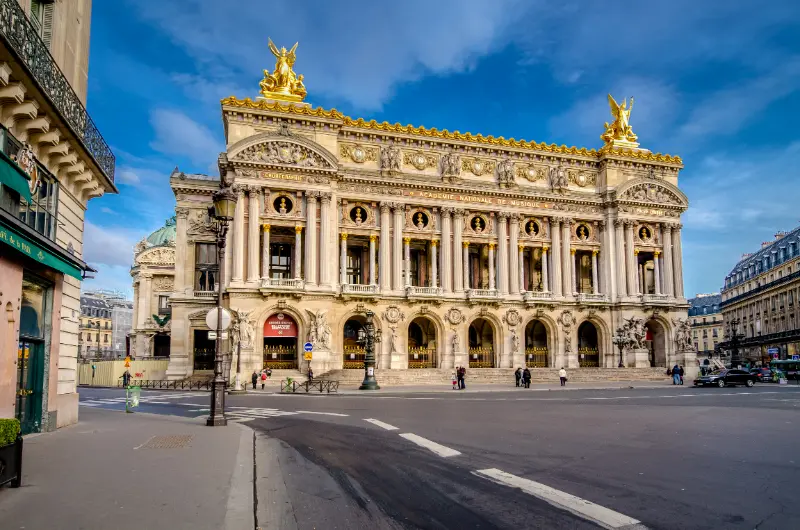
Paris 9th Arrondissement Guide: Opéra, Grands Boulevards, South Pigalle and Hidden Passages is for travelers who want to understand the district as more than a number on the Paris map. The 9th arrondissement changes character every few blocks. Around Opéra it is grand and commercial; near the Grands Boulevards it becomes theatrical and entertainment-focused; toward Rue des Martyrs and South Pigalle it feels more like a neighborhood of food shops, small museums and evening addresses.
This guide contains affiliate links. If you book through them, Dreaming of Paris may earn a commission at no extra cost to you.
Book the practical parts of your Paris trip
Compare accommodation first, then check tickets and experiences for the fixed parts of your itinerary.
Check Paris hotelsGetYourGuideTiqetsCivitatisAffiliate links: we may earn a commission at no extra cost to you.
Why explore the 9th arrondissement?
The 9th is especially rewarding for shoppers, architecture fans, theatre lovers, food travelers and visitors who want a central base with lively evenings and strong transport. It is less convincing for travelers seeking large parks or quiet residential streets; some areas are busy with office, shopping and nightlife traffic.
Paris becomes easier to understand when the itinerary follows streets instead of a checklist. In this arrondissement, the most efficient plan is to connect a few strong places on foot and reserve the Métro for the beginning or end of the outing.
What to see in Paris’s 9th arrondissement
Palais Garnier
The opera house is the arrondissement’s architectural centerpiece. Visit the interior if decoration and theatre history interest you, but check access conditions because rehearsals and performances can affect parts of the route. Spend a few minutes beyond the obvious viewpoint; the surrounding blocks often explain why this stop matters to the neighborhood.
Department stores and rooftop views
Galeries Lafayette and Printemps create a major shopping zone, but their real usefulness for non-shoppers may be architecture, food halls and rooftop perspectives when accessible. This is a good place to slow the pace and decide whether the next section needs more time or can remain a short pass-through.
Grands Boulevards
Theatres, cinemas, brasseries and historic passages make this one of the best evening corridors in central Paris. It is more interesting if you move in and out of the side passages rather than remaining on the boulevard. If this becomes the longest stop of the day, shorten a later section rather than rushing here; the route is designed to remain coherent after a cut.
Rue des Martyrs
The lower part of this food street belongs to the 9th and climbs toward Montmartre. Walk uphill slowly, using bakeries and specialty shops as planned stops instead of turning the street into a tasting marathon. Keep the camera away for the first few minutes and look at how people actually move through the space; it helps separate a functioning neighborhood from a tourist stop.
South Pigalle
The area around Notre-Dame-de-Lorette and farther north has become a major restaurant and nightlife zone. It is lively, but the tone varies street by street, so choose accommodation carefully. Allow enough margin for an unexpected closure or queue. The surrounding area gives you alternatives without forcing a complete itinerary change.
Small museums
Musée de la Vie Romantique and Musée Gustave Moreau offer focused collections in atmospheric buildings. They are useful alternatives to another huge museum day. The value here is context. Read the place in relation to the arrondissement’s history, scale and daily life rather than only its most photographed detail.
A practical walking route through the 9th
Rather than hopping between stations, this route uses one long neighborhood thread. That makes it easier to understand how architecture, shops and street life change inside the same arrondissement.
Step 1. Start at Palais Garnier and the department-store district before shopping crowds peak. Keep Palais Garnier as your first orientation point and avoid adding distant stops before the route has properly begun.
Step 2. Move east through the Grands Boulevards and one or two covered passages, then loop north rather than continuing into the 2nd. The middle section is where the district’s character should become clearer; use Department stores and rooftop views as a reference if you need to shorten or extend the walk.
Step 3. Finish along Rue des Martyrs and South Pigalle, which makes the route naturally better in late afternoon and early evening. At the end, decide whether the day should continue into dinner or finish here. Small museums gives you a natural point from which to make that choice.
Where to eat and how to pace the day
The 9th is excellent for food because you can choose between classic brasseries, modern restaurants and specialist shops. Rue des Martyrs is best treated as a spine, not a list. Around South Pigalle, reserve high-demand restaurants if one matters to you, but keep a second option nearby.
Reserve only when the meal itself is a priority. Otherwise, protect flexibility: a good bakery, market counter or neighborhood bistro close to the route is often more useful than an acclaimed address that forces a forty-minute detour.
Is the 9th arrondissement a good place to stay?
This is one of the most practical central arrondissements for transport and evening choice. Opéra is convenient but busy; South Pigalle is livelier and can be noisy; quieter streets around Saint-Georges can offer a better balance.
When comparing hotels, zoom in to street level. A five-minute difference to the nearest Métro entrance, a nightlife strip under the window or a steep final block can matter more than a small price difference. You can compare hotels in Paris on Booking.com and then compare recent guest comments before booking.
Getting around the 9th
Opéra, Auber, Chaussée d’Antin–La Fayette, Notre-Dame-de-Lorette, Saint-Georges and Pigalle cover the district. Airport and train connections can be convenient, especially if your itinerary uses Saint-Lazare or the RER network nearby.
An efficient neighborhood day often needs only two rail journeys: one to get there and one to leave. Everything between those journeys is better understood on foot whenever distances and mobility allow. For fares, passes and connections, use our Paris Métro and public transport guide.
How much time should you allow?
Think in blocks rather than hours: one block for walking, one for a museum or attraction, and one for food. Three blocks make a relaxed half day; adding an evening block turns it into a full experience.
The easiest way to shorten the day is to skip one anchor, not to compress every stop. That protects the quality of the places you keep. If you need a compact version, prioritize Palais Garnier, Department stores and rooftop views and South Pigalle.
When to visit during the day
Late morning is often the easiest starting point because cafés and shops are awake without forcing an early alarm. Continue through lunch and let the final stop determine whether the walk should end before dinner or flow naturally into the evening.
Whatever the season, verify the current opening day and reservation policy of any ticketed venue shortly before you go. Temporary exhibitions, maintenance and special events can change the best order even when the geography stays the same.
Who will enjoy this arrondissement most?
This route suits independent travelers who prefer a neighborhood narrative to a string of headline attractions. It can be adapted for children by cutting one long section and protecting regular rest stops. In this case, the strongest fit is still shoppers, architecture fans, theatre lovers, food travelers and visitors who want a central base with lively evenings and strong transport.
Combine the 9th with nearby Paris
Useful related guides include Palais Garnier, Rue des Martyrs, Covered passages and Montmartre guide. These guides connect either geographically or thematically with the route above, so they are useful for extending the day without wasting time on a cross-city transfer.
Tours and bookable experiences
Before reserving, check whether the experience is a true small-area walk or a citywide itinerary. For this guide, the first type usually integrates better with the rest of the day.
Common planning mistakes
Mistake 1: Spending the entire visit inside department stores and missing the passages and small museums.
Mistake 2: Treating Rue des Martyrs only as a route to Montmartre instead of a destination in its own right.
Mistake 3: Booking a hotel in South Pigalle without checking nighttime noise on the exact street.
Finally, do not treat the arrondissement boundary as a wall. Paris neighborhoods spill across administrative lines, and crossing one street into the next arrondissement is often the most logical way to finish the route.
Frequently asked questions
Is the 9th arrondissement central?
Yes. It sits just north of the 1st and 2nd, with excellent access to Opéra, Montmartre and the Grands Boulevards.
Is it good for shopping?
Very. The department stores are the biggest draw, but smaller fashion and food shops extend far beyond them.
How long do you need?
Half a day is enough for Opéra and Rue des Martyrs; a full day works if you add museums or shopping.
What pairs best with it?
The 2nd for covered passages, the 8th around Madeleine and the 18th via Montmartre.
Official information and final tip
For seasonal events and current visitor information, consult official Paris tourism information. For a ticketed museum, monument or attraction, check that venue’s own official website as well before you commit the rest of the day to a fixed entry time.
Use this guide as scaffolding, not a script. The major anchors protect the shape of the day, while the spaces between them are where you can respond to weather, appetite and curiosity.
Musée Grévin and the covered passages
For a classic entertainment stop on the Grands Boulevards, our Musée Grévin guide covers dynamic 2026 ticket pricing, the Hall of Mirrors, family planning and the easiest way to combine the museum with Passage Jouffroy and nearby arcades.