Disclosure: This article contains affiliate links or booking widgets. If you book through them, Dreaming of Paris may earn a commission at no extra cost to you. How our affiliate links work.
Passy and Auteuil show a side of western Paris that many first-time visitors never see: affluent, residential, architecturally varied and surprisingly quiet despite being close to the Eiffel Tower. This is not the district to choose for maximum monument density. It is the district to choose when you want Art Nouveau, local shopping streets, gardens, literary history and a walk that feels detached from the central tourist current.
Start in Passy, not at Trocadéro
Trocadéro is the obvious gateway because it gives the famous Eiffel Tower view, but the purpose of this route is to move away from that crowd. Walk toward Passy’s commercial streets and residential fabric rather than staying on the esplanade. Within minutes, the visitor profile changes and the neighborhood begins to feel lived-in.
Rue de Passy and local shopping
Rue de Passy is useful because it functions as a real neighborhood shopping street. It is not hidden in the sense of being unknown to Parisians; it is simply outside the standard sightseeing circuit. Use it for a coffee, food stop or everyday shopping before continuing toward quieter residential streets.
Maison de Balzac
The former home associated with Honoré de Balzac gives Passy a literary anchor. As part of the City of Paris museum network, its permanent collection is generally free under the municipal policy. The visit is compact, which is ideal: it adds context without taking over the neighborhood day. Verify temporary exhibition access and current opening before you go.
Auteuil and Art Nouveau
Auteuil is particularly rewarding for architecture lovers because Hector Guimard and other designers left important Art Nouveau work in the area. This is not a route where every façade is labeled for tourists, so preparation helps. Look closely at entrances, ironwork, curves and the relationship between decorative detail and the quieter streets.
Jardin des Serres d’Auteuil
The botanical garden and greenhouses provide a strong green stop in the 16th arrondissement. Opening conditions can vary around events or works, so check current municipal information if the greenhouses are a priority. Even without a long botanical visit, the area changes the pace of a day dominated by streets and architecture.
Bois de Boulogne: add selectively
The Bois de Boulogne is vast. Do not add it casually as if it were one more square on the route. If you want a park extension, choose a specific destination and daylight window. Otherwise, finish around Auteuil and return by metro. A large urban wood requires different planning from a central garden.
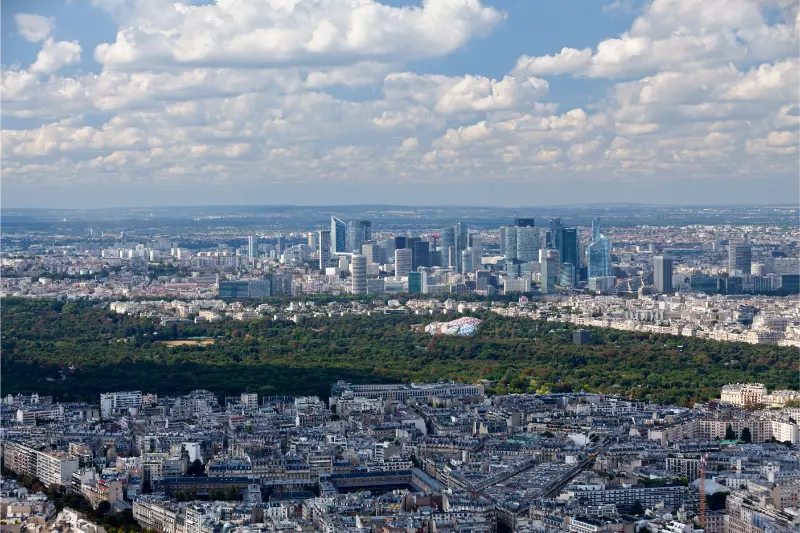
Passy with the Eiffel Tower
This neighborhood is ideal after an early Eiffel Tower visit because it lets you leave the monument crowds without crossing the city. Our Eiffel Tower guide explains the tower visit itself; Passy then becomes the “what next?” answer for travelers who do not want Champs de Mars followed by another blockbuster attraction.
Where to eat
Choose by neighborhood convenience rather than fame. Passy has bakeries, cafés, restaurants and food shops that serve residents as well as visitors. If you are using the day as a slower alternative to central Paris, preserve that advantage by not commuting 40 minutes for lunch.
Should you stay in the 16th arrondissement?
The 16th can suit travelers who prefer quiet nights, larger residential streets and proximity to western Paris. The trade-off is that evening atmosphere can be calmer and some classic sights are farther away. Compare it with central neighborhoods in our where to stay guide and hotel rates on Booking.com.
A half-day Passy–Auteuil route
- Begin near Trocadéro but leave the esplanade promptly.
- Walk through Passy and Rue de Passy.
- Visit Maison de Balzac if open and relevant.
- Continue toward Auteuil’s residential Art Nouveau streets.
- Pause at Jardin des Serres d’Auteuil.
- Finish near a convenient metro rather than forcing a long Bois de Boulogne extension.
Frequently asked questions
Is Passy worth visiting?
Yes for repeat visitors, architecture lovers and travelers who enjoy residential neighborhoods. It is less compelling if you have only one or two days for Paris’s major sights.
Is Passy close to the Eiffel Tower?
Yes. The district begins west of the central Eiffel Tower/Trocadéro tourist zone.
What is there to see in Auteuil?
Art Nouveau architecture, residential streets and the Jardin des Serres d’Auteuil are among the main reasons to explore.
Is Maison de Balzac free?
Its permanent collection falls under the City of Paris municipal museum free-access policy, while temporary exhibitions can have separate conditions.
Is the 16th arrondissement good for hotels?
It can be excellent for quiet and comfort, but compare transport and evening atmosphere with more central areas before booking.
How this fits into our Neighborhood Paris cluster
This guide is designed to connect with the rest of the site rather than sit alone. Continue with Eiffel Tower, small museums and second-trip guide. Internal links are placed where the next decision naturally appears, so you can move from transport to neighborhood, attraction, season or day trip without rebuilding the plan from scratch.
The decision that matters most
Passy and Auteuil are not places to “complete.” They are places to notice. Come for architecture, a literary house, a garden and the pleasure of seeing how quickly Paris changes when you walk west from one of its busiest viewpoints.
How to walk a neighborhood well
For Passy Paris, begin with two anchor points and leave the streets between them flexible. Do not follow navigation turn by turn unless you need a specific address. The value of a residential district is often the sequence of façades, shops, schools, markets and parks that disappears when you stare at the phone. Check the route occasionally, then look up.
Best time of day
Neighborhoods change by hour. Markets belong in their operating window, residential streets are calmer in the morning, cafés gain energy around lunch, and parks become more local in late afternoon. If the district is near a famous attraction, arriving early or late can also separate you from the heaviest visitor flow. Choose timing for atmosphere, not merely for daylight.
What not to expect
“Less touristy” does not mean empty, cheap or untouched. People live and work here, rents can be high, and popular restaurants may still require reservations. The goal is not to find a secret Paris that nobody knows. It is to see a different function of the city—residential, artistic, commercial or recreational—than the monument-centered core.
Where to eat
Use the neighborhood itself as the filter. Look at current menus, opening hours and where locals are actually sitting rather than commuting to a famous address on the other side of Paris. One flexible meal is especially valuable on a walking day because the pace of exploration is hard to predict. Reserve only when a specific restaurant is a genuine priority.
Accessibility and walking load
Quiet districts can still include hills, cobbles, stairs or long gaps between metro entrances. Check elevation and step-free transport if mobility is a concern. A neighborhood walk is easy to shorten: identify one central café or park as the point where you can decide whether to continue. This is much more forgiving than a timed museum or excursion.
How to combine it with a famous sight
Use the quieter district as the second half of an icon day. After the Eiffel Tower, continue into Passy rather than crossing the city. After Montmartre, move toward Batignolles. After Canal Saint-Martin, continue to Belleville. This is the basic cluster logic: one famous anchor gives orientation, then the adjacent neighborhood adds depth without another transport-heavy move.
When to stay in the neighborhood
For a repeat trip or longer stay, sleeping in a quieter district can be rewarding. For a short first visit, transport convenience may matter more. Compare the morning journey to your likely first activity and the evening walk from dinner back to the hotel. The best base is not the neighborhood with the most attractions; it is the one that makes your actual trip easiest.
How to make the walk your own
Use Passy Paris as a framework, not a compulsory route. Mark one starting point, one ending point and two places you genuinely care about in between. Everything else can be discovered at walking pace. If a market is quiet, move on; if a small museum catches your attention, stay longer. This flexibility is what makes neighborhood and cultural travel different from a timed attraction. You are not failing the itinerary when you change it—you are using the neighborhood the way it is meant to be used.
The role of cafés and parks
A café, square or park is not filler between “real” sights. It is where you notice how the area works and where your feet recover enough to keep enjoying the afternoon. Plan one deliberate pause instead of waiting until exhaustion forces a bad choice. In quieter districts, that pause can also help you decide whether to extend the walk, add a museum or finish early and move to dinner. The most memorable neighborhood days usually contain more looking and less rushing than first-time sightseeing days.
When this belongs on a first trip
Passy Paris can absolutely fit a first Paris visit when it matches your interests, but it should not displace a dream attraction merely because it sounds more “local.” A traveler who has wanted to see the Louvre for years should see the Louvre. The deeper neighborhood or cultural stop becomes powerful when it complements that icon and shows another side of the city. This is the philosophy behind the cluster structure: famous Paris provides orientation; quieter Paris provides texture.
Architecture in western Paris
If the residential architecture of the 16th arrondissement interests you, follow it with our Art Nouveau Paris walk.
Western Paris cultural stop
Pair this neighborhood with the Fondation Louis Vuitton and, for families, the nearby Jardin d’Acclimatation.
Trocadéro and Chaillot
For the classic Eiffel Tower axis and the museums inside Palais de Chaillot, continue with our Trocadéro guide.