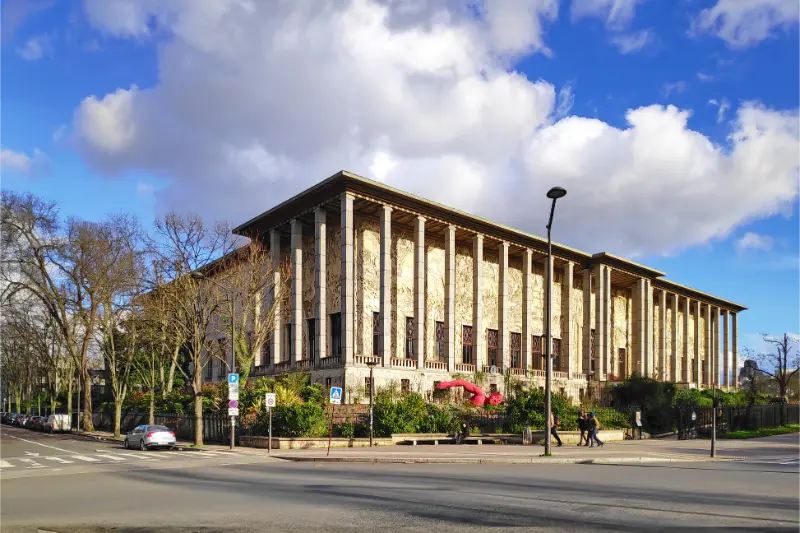
At the eastern edge of Paris, a monumental Art Deco building holds stories that are essential to understanding France today. The Musée national de l'histoire de l'immigration, inside the Palais de la Porte Dorée, is not simply a museum about people arriving from elsewhere. It explores how migration, work, family life, politics and culture have shaped the country over centuries. The setting itself is part of the story: a striking building created for the 1931 Colonial Exhibition, now used to examine history through perspectives that the original building did not set out to represent.
A visit here is thoughtful rather than hurried. Photographs and family objects sit alongside documents, artworks and personal testimony. Some stories are hopeful; others involve discrimination, displacement or loss. This variety makes the museum one of the most revealing places to visit if you are interested in what lies behind the Paris of cafés, monuments and neighborhoods. It also offers a practical chance to explore the Porte Dorée area and the edge of the Bois de Vincennes rather than spending another day in the historic center.
I would give this museum a clear place in the day rather than squeezing it between unrelated highlights. Start outside with the 1931 building and the questions it raises, then move through the permanent exhibition with time to absorb the first-person accounts. If a document or portrait stays with you, stop there; you will remember more by following a few lives closely than by reading every label as quickly as possible.
For a short visit, make the permanent museum your priority and leave the aquarium for another trip. With children or mixed interests, reverse that logic if needed: agree on one section each person wants to see, then take a break before deciding whether to continue. This is a serious museum, but it need not be an exhausting one. The nearby paths toward Bois de Vincennes give you a welcome change of pace afterward.
| Where | 293 Avenue Daumesnil, 75012 Paris |
| Opening | Tue–Fri, 10 a.m.–5:30 p.m.; Sat–Sun until 7 p.m.; closed Monday |
| Admission | Museum standard €12, reduced €9 (check eligibility and changes) |
| Allow | 2–3 hours |
Find it: Open the location on Google Maps.
In this guide
First, take a moment outside the building
What the permanent exhibition covers
Personal stories are the heart of the visit
History, colonialism and difficult questions
How much time to allow
Current opening hours and admission
Getting to the Palais de la Porte Dorée
The aquarium and Bois de Vincennes: should you add them?
Is the museum right for your Paris trip?
First, take a moment outside the building
The Palais de la Porte Dorée was built for the International Colonial Exhibition held in Paris in 1931. Its scale, façade and decorative program were designed to make an impression. Before entering, look carefully at the stone reliefs and ask what kind of story the building was originally trying to tell. The architecture is beautiful, but it is tied to the history of colonial power and the ways colonies were represented to visitors at the time. Admiring the craftsmanship and examining the context are not mutually exclusive.
That contrast is crucial to the visit. Today the building houses a museum that explores immigration through experiences and voices from many backgrounds. The shift in purpose does not erase its history; it gives visitors a reason to think about how public institutions change. It is worth spending ten minutes outside before looking at the exhibits. When you later see photographs, documents and contemporary artworks inside, you may find yourself connecting them to the questions raised by the building's exterior.
What the permanent exhibition covers
The permanent exhibition was substantially redesigned in 2023. It follows a broad story from 1685 to the present, organizing the history through key dates, changing circumstances and the lives of individuals. That long timeline helps explain why immigration is not simply a modern phenomenon. Movement across borders has taken many forms, and the reasons people moved have included work, family, war, persecution, study and changes in political boundaries.
Rather than trying to memorize every date, choose a few transitions to explore. How did legal categories change? What kind of work did newcomers perform? Where did families settle, and how did their lives develop over generations? Labels and displays can introduce unfamiliar terms, so give yourself space to understand them. The exhibition is not a single story with one outcome; it contains experiences that differ by period, origin, social class and personal circumstances. Its strength comes from allowing those differences to remain visible.
Personal stories are the heart of the visit
A family photograph, a suitcase or a workplace document can make an enormous historical subject suddenly feel close. These objects represent decisions and journeys that statistics alone cannot explain. When you encounter personal testimony, pause long enough to think about the person's situation: what did they leave, what did they hope for and what did they encounter on arrival? The answer is not always one of triumph or hardship alone. People built ordinary lives while negotiating unfamiliar places and changing expectations.
The museum also connects migration to cultural life, including music, language, food and the arts. For a traveler, this can cast familiar Paris neighborhoods in a new light. Shops, music scenes, restaurants and public spaces reflect layers of history, but they are not museum exhibits in themselves. The point is to understand the richness of everyday life without treating living communities as colorful attractions. That distinction helps a visitor move through multicultural Paris with interest and respect.
History, colonialism and difficult questions
The building's colonial origin makes it especially important not to simplify the subject. The exhibition addresses the relationship between migration and French political history, including colonial and postcolonial periods. Some visitors may be familiar with these topics; others may encounter them for the first time. You do not have to agree with every interpretation to understand why the museum asks visitors to consider power, exclusion, belonging and citizenship alongside individual journeys.
If you are visiting with older children or teenagers, this is a good opportunity for a careful discussion. Ask what can be learned from a government document, what a personal account adds and why two people living in the same period may have very different memories. Avoid expecting a young visitor to absorb the whole exhibition in one go. Choose a few stories and let them lead the conversation. The displays can be emotional; leaving room for reflection makes the visit more meaningful than racing to the final gallery.
How much time to allow
Plan around two hours for the permanent museum if the subject interests you. You could spend less by focusing on selected periods, but the museum's chronological approach is easier to follow when you do not rush. If you want to see the architecture, visit a temporary exhibition or include the Aquarium tropical housed in the same Palais, your stay could become a half-day. Families may prefer the museum in the morning and a more playful experience afterwards rather than trying to cover everything in one continuous session.
Before buying tickets, decide what you actually want to see. The museum, aquarium and temporary exhibitions can have different admission rules and combined tickets. A combination may be good value if you have enough energy to enjoy both parts, but buying access to everything is unnecessary if you only have ninety minutes. Unlike an attraction where the main goal is a famous panoramic view, this place rewards attention. The best ticket is the one that suits the pace of your group.
Current opening hours and admission
The official permanent-exhibition information lists opening from Tuesday to Friday, 10 a.m. to 5:30 p.m., and Saturday and Sunday, 10 a.m. to 7 p.m.; Monday is closed. Last admission is generally an hour before closing. At the time of checking, the listed standard museum ticket is €12 and the reduced ticket is €9, with free entry for visitors under 26 under the published conditions. Verify the exact eligibility and prices for your date, because temporary exhibitions and combined admissions have separate rates.
Advance online reservation is strongly recommended by the institution. This is particularly sensible on weekends and during school holidays. If you are planning to visit with someone who needs step-free access, review the Palais accessibility information before leaving the hotel; the complex is large and entrances can differ for particular services. Bring any document required for a reduced or free ticket. It is better to resolve admission questions online than to spend the first half-hour of the visit at the ticket desk.
Getting to the Palais de la Porte Dorée
The Palais stands at 293 Avenue Daumesnil, 75012 Paris, near Porte Dorée. Metro line 8 and tram T3a are useful transport options. From the city center, the journey is straightforward, but do not underestimate the time needed if your hotel is on the opposite side of Paris. Entering the address in a route planner is more reliable than assuming that every train going toward eastern Paris will stop nearby. Porte Dorée is a distinct area from the busy Bastille or Gare de Lyon neighborhoods.
The surroundings reward a little walking. The broad avenues and the edge of the Bois de Vincennes feel different from central Paris, and the architecture of the Palais makes more sense when viewed from outside. If you arrive early, take a slow circuit of the building rather than waiting impatiently at the door. If you have limited mobility, check the precise accessible entrance and avoid planning a long stroll through the park unless the surfaces and distances suit you. A successful outing starts with a realistic understanding of the geography.
The aquarium and Bois de Vincennes: should you add them?
The Palais de la Porte Dorée also contains the Aquarium tropical. It can be a useful second stop for families or travelers who want a contrast between social history and living aquatic animals. However, do not confuse a museum ticket with automatic aquarium entry: check the combined-ticket offer and the time reserved for the aquarium. An adult who has spent two hours reading historical material may appreciate the change of pace, while a young child may need the aquarium first. Either order can work if you plan breaks.
Nearby, the Bois de Vincennes provides the possibility of a longer outdoor afternoon. It is a vast green space rather than a compact garden attached to the museum. Choose a short section to explore rather than treating the whole park as a quick add-on. On a mild day, a simple walk after the museum can help everyone unwind. In cold or wet weather, a café stop may be more sensible. You are building a trip for real people with limited energy, not trying to use every minute between opening and closing.
Is the museum right for your Paris trip?
This museum is especially rewarding for travelers who want to understand French society, history and the people who helped shape it. It will appeal to visitors interested in contemporary questions as well as those who enjoy architecture. It can also give a deeper perspective on places you have already visited: the Latin Quarter, Belleville or streets where several languages are heard in the space of a few blocks. The exhibition does not ask you to view Paris only through its monuments.
If your whole visit is a two-day romantic getaway, the museum may not match your priorities, and that is fine. Save it for a longer stay when you can dedicate time to the subject and explore the eastern side of the city. When you do go, allow the historical building, the personal stories and the surrounding neighborhood to form one experience. The result is not simply knowledge about arrivals in France. It is a more layered understanding of the city you have been walking through all week.
Frequently asked questions
Is the immigration museum the same as the Aquarium tropical?
No. They share the Palais de la Porte Dorée, but have different collections and ticket arrangements. Combined tickets may be available.
How long should I stay?
Allow around two hours for the permanent museum, more if you plan to add the architecture, aquarium or temporary exhibitions.
Is it appropriate for children?
Older children and teenagers can gain a lot from the personal stories. The museum provides family resources, but some themes may require age-appropriate explanations.
For further planning, see Paris 12th Arrondissement.
Official information
Review combined tickets, temporary exhibitions and admission rules through Permanent exhibition and practical details and Palais de la Porte Dorée: visitor information.
Useful booking links
The museum is the reason for this outing; use any booking links below only for the rest of your Paris stay or for experiences that genuinely fit an eastern-Paris itinerary.
Some booking links are affiliate links; prices are set by the providers.