The Paris Sewer Museum is one of the few attractions where the infrastructure is not a reconstruction: you descend beneath the city into the world that made modern Paris possible. It is not beautiful in the conventional museum sense, and that is exactly why it is useful. After days of palaces, paintings and façades, the Musée des Égouts explains how a dense 19th- and 20th-century capital actually moved wastewater, controlled sanitation and supported millions of residents.
The museum entrance is on Esplanade Habib Bourguiba near Pont de l’Alma in the 7th arrondissement. That location makes it easy to combine with the Eiffel Tower, Quai Branly area, Invalides or a Seine walk without creating another cross-city trip.
Check tickets and Paris experiences
Compare current tours, timed-entry tickets and experiences before fixing your itinerary.
GetYourGuideTiqetsCivitatisViator
Affiliate links: we may earn a commission at no extra cost to you.
2026 opening hours and prices
The museum is open Tuesday to Sunday from 10:00 to 17:00, with last access at 16:00. It closes on 1 May, 25 December and for the first fifteen days of January.
The 2026 full web ticket is €9 and the reduced rate is €7. Admission is free for several categories including visitors under 18 and, under the museum’s conditions, under-26 residents/citizens covered by the listed EU eligibility. Check the official page for the exact proof required.
What you actually see underground
The visit combines historical interpretation with the physical sewer environment. Exhibits explain the development of Paris sanitation, the work of sewer employees, water treatment and engineering. You also move through real underground galleries rather than looking at pipes behind glass in a conventional building.
This is important for expectations. Floors can be damp, the environment is industrial and the sensory experience is part of the visit. If you are extremely sensitive to enclosed underground spaces, odors or the idea of active infrastructure, this may not be the museum for you.
How long does the visit take?
Allow about 60 minutes for a normal first visit. Visitors who read every technical panel or join a guided activity can spend longer; people with younger children may be satisfied after 40–45 minutes. It is compact enough to pair with another major sight but substantial enough that it should not be treated as a five-minute curiosity.
Who will love it
- Travelers interested in engineering, urban planning and how cities work.
- Teenagers who are tired of traditional art museums.
- Families with school-age children interested in science and infrastructure.
- Repeat visitors looking for a genuinely different Paris experience.
- Anyone fascinated by Haussmann-era modernization beyond boulevards and façades.
Who may want to skip it
Visitors who strongly dislike underground environments, damp industrial spaces or sewer-related smells may not enjoy the sensory side. Toddlers can find the content abstract, and metal-frame backpack baby carriers are restricted under the museum’s visitor rules. Always check current family/access conditions if traveling with specialized equipment.
Why this belongs in a Paris history itinerary
Tourists often learn “Haussmann rebuilt Paris” as an architectural story: boulevards, uniform façades and vistas. But the transformation also depended on water, drainage and sanitation networks. The sewer system expanded alongside the modern city. Seeing the infrastructure gives context to what you later notice above ground.
Pair this museum with the Musée Carnavalet if you want a deeper urban-history theme across two different days: Carnavalet explains the city through objects and rooms; the Sewer Museum explains one of its hidden operating systems.
The best nearby combination: Eiffel Tower without wasting transport time
From the museum, the Eiffel Tower area is walkable along the Seine. A smart half-day is Trocadéro/Eiffel Tower in the morning, then lunch, then the Sewer Museum in early afternoon. Or reverse it if you have a fixed tower ticket later.
Do not schedule the museum at 15:45 assuming “last entry 16:00” means you can stay all evening. Aim to enter by 15:00 for a relaxed visit.
Alternative combination: Invalides and engineering Paris
Invalides is also nearby enough for a thematic day about the machinery of state: military history above ground, urban infrastructure below. This is especially effective for teenagers who want something more varied than a second art museum.
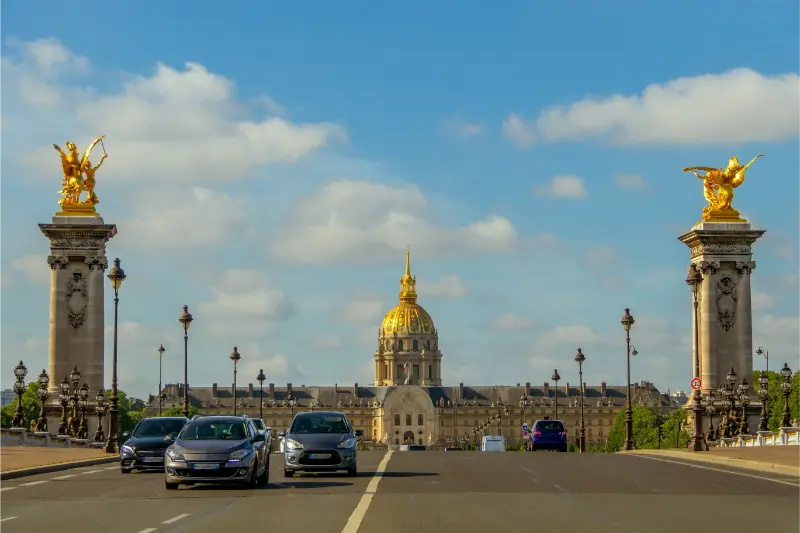
Use our Invalides guide to avoid trying to cover every gallery.
Is there a strong smell?
You are in a sewer environment, so some odor is possible and conditions vary. The experience is not equivalent to walking through untreated waste, but it is also not a neutral white-cube museum. If smell sensitivity is a serious issue, choose a different attraction rather than relying on reviews from visitors with different tolerance.
Accessibility
The museum and City of Paris list accessibility accommodations, including access for visitors with reduced mobility. However, “accessible” does not mean every visitor will experience the underground environment identically. Contact the museum if you have specific mobility, sensory or equipment needs.
The museum also advises visitors to follow hygiene instructions and wash hands after the visit, especially because parts of the route are in a working underground environment.
Children: the right age matters
For ages roughly 7–12, the museum can be excellent because sanitation, water filtration and underground engineering are concrete subjects. The museum runs occasional workshops for children, including water and filtration themes, with limited places and separate booking. Teenagers often appreciate the unusual setting even if they ignore half the labels.
For preschoolers, the stairs/underground atmosphere and technical interpretation may be less rewarding. If your child needs a large frame carrier, check the equipment restrictions before arriving.
What to wear
Choose closed, comfortable shoes with grip. Do not dress for the museum as if it were an elegant indoor gallery; damp surfaces and the underground environment make practical footwear more sensible. Bring a light layer if you are visiting in warm weather and moving between a hot street and cooler underground space.
Photography and phones
Low light and reflective wet surfaces can make phones struggle. Keep equipment simple and secure. This is not the place to unpack a large tripod in narrow circulation areas. Follow staff instructions because some operational areas are protected.
A 2.5-hour micro-itinerary
- 10:00: arrive at Pont de l’Alma and look at the Seine/Eiffel Tower perspective.
- 10:15–11:15: Sewer Museum.
- 11:15–11:45: walk along the river toward the Eiffel Tower.
- 12:00: lunch around Gros-Caillou/Rue Cler area or continue to Invalides.
This is a better use of geography than visiting the Sewer Museum between Montmartre and Père-Lachaise simply because you found a ticket slot.
How it compares with the Catacombs
Both are underground, but they are completely different. The Catacombs are an ossuary and historical underground route with many stairs and strict timed tickets. The Sewer Museum is an infrastructure museum focused on sanitation and the living city. Choose based on interest, not on the shared word “underground.”
What the museum teaches that a normal history museum cannot
You see the scale relationship between a street above and a service tunnel below. Labels explain how water is collected, routed and treated, but the environment also makes maintenance work tangible: restricted passages, equipment, flow channels and the reality that a city must be serviced continuously. This turns abstract infrastructure into physical space.
Haussmann, Belgrand and the hidden half of modernization
The expansion of Paris’s sewer network in the 19th century is closely associated with engineer Eugène Belgrand, working during the transformation of Paris under Napoleon III and Baron Haussmann. Wide boulevards are the visible symbol of that era; water and sewer systems were the hidden systems that allowed a rapidly growing capital to function more safely.
Read the museum as a counterpart to a Haussmann architecture walk: one explains what Paris looked like, the other helps explain how it worked.
Rainy-day value
The Sewer Museum is an obvious bad-weather option, but remember that reaching it still involves outdoor walking and the underground environment is damp by definition. Pair it with a nearby indoor sight such as Invalides or Musée du quai Branly rather than crossing the city through heavy rain. On a hot summer day, the cooler underground visit can also be appealing.
How it compares with Arts et Métiers
Arts et Métiers is broader, cleaner and object-rich: scientific instruments, machines, transport and inventions. The Sewer Museum is narrower but more site-specific because the infrastructure itself is the exhibit. Engineering fans should consider both on different days; families with limited time can choose based on whether children prefer machines or underground city systems.
Why it belongs on a repeat-visitor list
First-time Paris is dominated by symbols. A repeat trip becomes more interesting when you investigate systems: markets, transport, cemeteries, parks, water and infrastructure. The Sewer Museum is one of the clearest examples of a place that rarely makes a “top 10,” yet changes how you understand the streets above it.
Frequently asked questions
Is the Paris Sewer Museum worth it on a first trip?
If you have four or more days and enjoy engineering or urban history, yes. On a one- or two-day trip, the Louvre, Notre-Dame, Eiffel Tower and neighborhoods are higher priorities for most visitors.
How much is admission in 2026?
The full online price is €9, with a €7 reduced rate and several free-admission categories listed by the museum.
Can I visit on Monday?
No. Normal opening is Tuesday to Sunday, 10:00–17:00, last access 16:00.