Disclosure: This article contains affiliate links or booking widgets. If you book through them, Dreaming of Paris may earn a commission at no extra cost to you. How our affiliate links work.
Musée d’Orsay is large enough to exhaust you and compact enough to tempt you into trying to see everything. That combination causes many first-time visitors to walk gallery after gallery without a clear sense of what they actually care about. A better visit uses the museum’s building and chronology to create a focused route.
Check tickets and Paris experiences
Compare current tours, timed-entry tickets and experiences before fixing your itinerary.
GetYourGuideTiqetsCivitatisViatorAffiliate links: we may earn a commission at no extra cost to you.
Orsay is especially strong for art from 1848 to 1914, including major Impressionist and Post-Impressionist works, but the collection extends beyond the paintings most people recognize. Sculpture, decorative arts, photography and the former railway-station architecture are part of the experience. Give yourself two to three hours and make conscious choices.
2026 opening hours and tickets
The official Musée d’Orsay visit page lists the museum closed on Mondays. Regular opening is Tuesday, Wednesday, Friday, Saturday and Sunday from 9:30 a.m. to 6 p.m., with Thursday late opening until 9:45 p.m. Galleries begin closing before the building’s final closing time.
Current standard pricing lists €16 for an online full-rate ticket and €14 at the museum, with different reduced/night rates and free admission for eligible visitors including under-18s and qualifying under-26 EEA residents. Ticket structures can change, so check your date rather than copying an old screenshot.
Why Thursday evening is worth considering
Late opening changes the rhythm of the museum. You can spend the day outdoors, eat an early dinner or snack, then use the evening for art. Crowds are not guaranteed to be low—popular exhibitions can still draw visitors—but the later window gives you more scheduling flexibility than squeezing Orsay between lunch and another monument.
Thursday also works well with a Saint-Germain or Seine day because the museum sits on the Left Bank. See our Saint-Germain-des-Prés walking guide for a route that finishes naturally near the river.
The station building is part of the museum
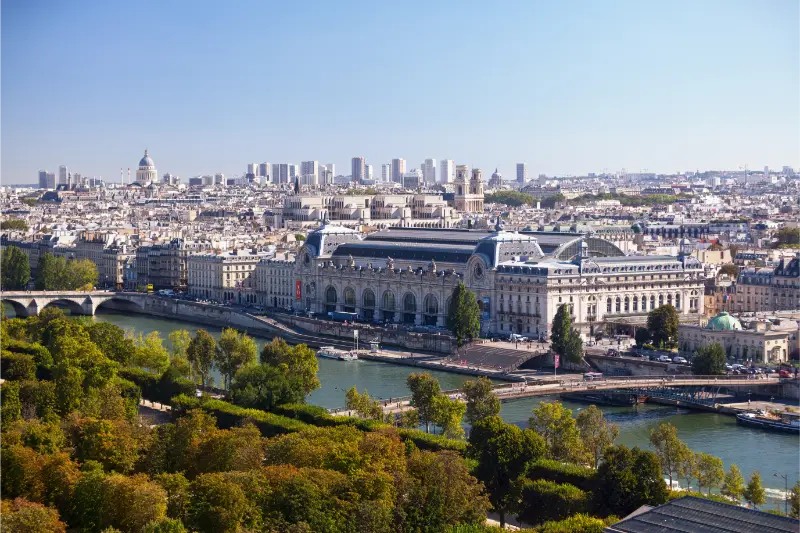
Before looking for Monet, take a moment to understand the architecture. The building opened as the Gare d’Orsay for the 1900 Universal Exhibition and was later converted into a museum. The long central nave still reads like a grand transport hall, and that scale shapes how sculpture is displayed.
This is one reason Orsay feels different from the Louvre. The building is not merely a container; its industrial and Beaux-Arts history is visible throughout the visit.
Start with one question: what do you most want to see?
If Impressionism is the answer, do not spend your first hour methodically reading every ground-floor label. Go toward the relevant upper galleries, then work backward through earlier or later movements. If sculpture or decorative arts matter more, build around those. Museums are not exams and there is no prize for visiting rooms in numerical order.
Check the museum map on arrival because gallery arrangements can change with loans, exhibitions and renovations.
A 2–3 hour first-time route
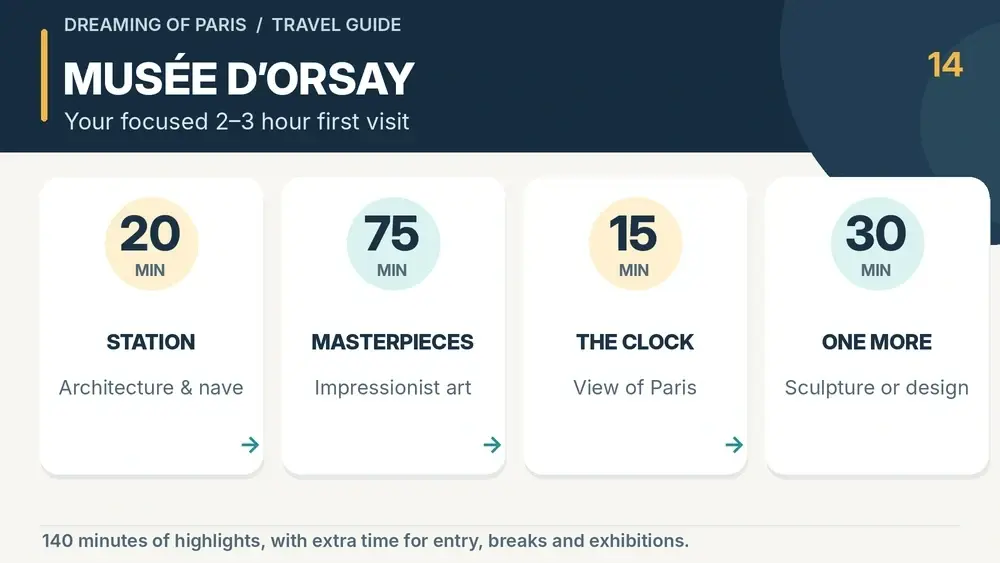
Step 1: central nave and station architecture — 20 minutes
Walk the main axis, look at the sculpture and understand the scale of the former station. This gives you orientation without committing to every side gallery.
Step 2: Impressionist and Post-Impressionist priorities — 75 minutes
Choose a limited set of artists or works rather than trying to photograph every famous label. The museum is associated with Monet, Renoir, Degas, Cézanne, Van Gogh and others, but the goal is not celebrity collecting. Compare how different artists handled light, urban life, landscape and the human figure.
Step 3: the clock and city view — 15 minutes
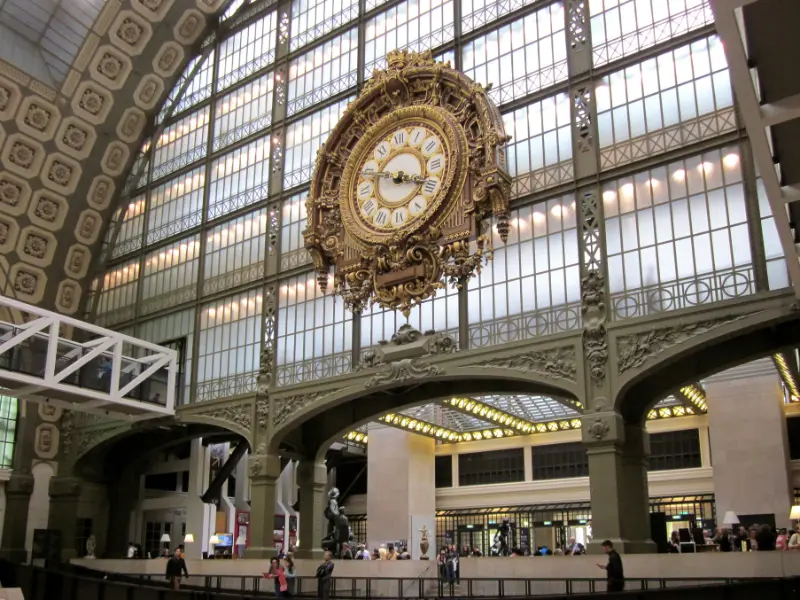
The great clock is one of the building’s signature visual features. The view through or around the clock area can be as memorable as a gallery because it reconnects the museum to the city outside. The clock area can become congested, so shorter photo stops usually work better.
Step 4: one “less obvious” department — 30 minutes
Finish with decorative arts, photography or sculpture. This prevents the visit from becoming only an Impressionism checklist and shows why Orsay is more than a collection of famous canvases.
Which masterpieces should you prioritize?
Specific works can travel or be removed from display, so I prefer artist and movement priorities over a rigid masterpiece list. If a single work is the reason for your visit, search the museum’s collection or ask staff on arrival. Do not assume a painting seen in every guidebook is hanging in its usual room that day.
This is one of the small habits that separates a realistic museum plan from copied travel content.
How Orsay compares with the Louvre
The Louvre is broader in geography and chronology and can feel like a city within a palace. Orsay covers a tighter period and is easier to understand in one focused visit. If you are doing both, separate them across different days. Two major art museums back-to-back rarely improves appreciation.
Use our Louvre 2–3 hour strategy for the other museum and let each have its own mental space.
Orsay vs Orangerie
Musée de l’Orangerie is smaller and especially associated with Monet’s large Water Lilies rooms, alongside other modern works. It can be a better choice if your time or energy is limited. Orsay is better if you want a broader story of 19th-century art and the experience of the station building.
Some visitors do both in one day because they are relatively close. It is possible, but leave a substantial outdoor break in Tuileries Garden between them.
Best time to arrive
Opening time is a good strategy if you want the maximum usable morning. Late Thursday is a good strategy if you want schedule flexibility. Midday can be busy because morning groups have not all left and afternoon visitors are arriving.
No time is magically empty. The real advantage comes from entering with a route so that you do not join every crowd simply because a room looks popular.
Photography and the famous clock
Follow current museum rules for photography and temporary exhibitions. Even when personal photography is allowed, avoid flash where prohibited and do not obstruct doorways. The clock is popular; if you want a photo, wait your turn and keep moving.
For photographers, the museum’s architecture is as interesting as its skyline view: iron, glass, stone, the vast nave and the oversized clock all create strong compositions.
Food and breaks
The museum has food options, but you do not need to build lunch into your ticket unless convenience is important. Saint-Germain, rue du Bac and the river area give you many choices before or after. If you are prone to museum fatigue, a short seated break is more valuable than pushing through another floor hungry.
Accessibility
Orsay provides accessibility information and lifts, but specific galleries or routes can be affected by works. If step-free movement is essential, check the official accessibility information shortly before travel. The building is much more navigable than many small historic sites, but “museum accessible” does not mean every movement is identical for every visitor.
Musée d’Orsay with children
Choose five works, not fifty. Give children themes—trains, dancers, animals, self-portraits, color—or let them choose one painting each. The former station architecture can be more engaging than a long lecture about Impressionism. Two hours is often enough for a family visit.
Combine the museum with open space by walking the Seine afterward or using Tuileries across the river. More pacing ideas are in our Paris with kids guide.
A smart half-day around Orsay
Start with Saint-Germain or a short Seine walk, visit Orsay for two to three hours, then cross the river via a nearby bridge toward Tuileries. Alternatively, visit Orsay late Thursday after a Left Bank afternoon. The museum fits the city better when it is one anchor rather than the entire day.
Common mistakes
- Trying to see every room because the museum looks smaller than the Louvre.
- Using a masterpiece list without checking whether works are currently displayed.
- Scheduling Orsay and the Louvre as one continuous art marathon.
- Ignoring the station architecture while rushing toward Impressionism.
- Assuming Thursday late opening means the museum will be empty.
- Forgetting that gallery closing begins before the stated building closing time.
How to decide whether a temporary exhibition belongs in your visit
Temporary exhibitions at Orsay can be excellent, but they also create the densest queues and can consume most of a short visit. If the exhibition is a major reason for your trip, build the route around it and reduce the permanent collection. If it is merely “included in the ticket,” do not automatically add it. Read the exhibition description before arriving and make an intentional choice.
This is one of the simplest ways to protect a two-hour museum visit from becoming a four-hour obligation.
FAQ
How long do you need at Musée d’Orsay?
Two to three hours is ideal for a first focused visit. Art specialists can easily spend longer.
Is Orsay closed on Monday?
Yes, under the current schedule. Always check exceptional opening information for holidays and special dates.
Is Orsay worth it if I already visited the Louvre?
Yes if 19th-century art interests you. The collection, period and building feel fundamentally different.
Should I buy a ticket online?
Online booking can secure your planning, but compare current ticket conditions and rates. In 2026 the museum lists different online and on-site full rates, so convenience rather than price alone may drive the decision.
The best Orsay visit is selective. Choose the art you care about, notice the extraordinary building, add one department you did not expect to like and leave before every gallery begins to blur together.
Continue with Monet
For a much smaller museum centered on an extraordinary immersive display of Monet, see our Musée de l’Orangerie guide.
Another focused art museum
If sculpture interests you, compare Orsay with our Musée Rodin guide, which also explains the current combined-ticket option.
Monet beyond Orsay
If Monet is a priority, compare this collection with the deeper holdings at Musée Marmottan Monet and the monumental Water Lilies at Orangerie.
Compare Musée d’Orsay tours and ticket options
The live options below are useful if you want a guided visit, reserved experience or packaged activity for this specific part of the trip. Compare the exact inclusions, meeting point, language and cancellation terms before booking.