Disclosure: This article contains affiliate links or booking widgets. If you book through them, Dreaming of Paris may earn a commission at no extra cost to you. How our affiliate links work.
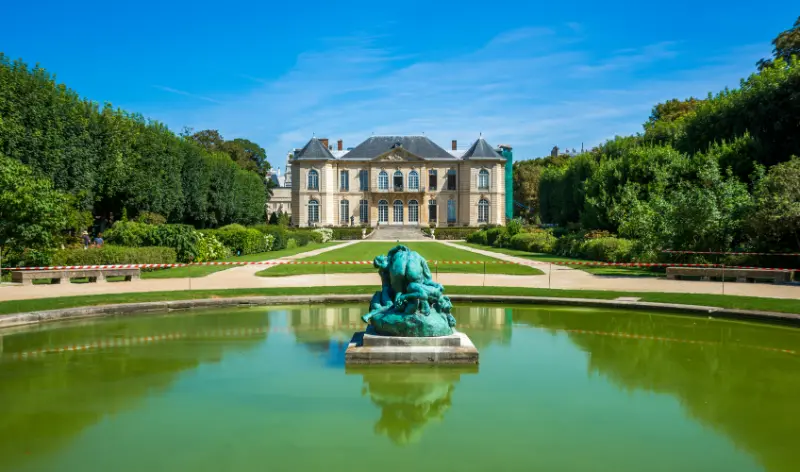
Musée Rodin is one of the easiest major Paris museums to visit well. The collection is focused, the Hôtel Biron gives the sculptures an intimate architectural setting, and the garden lets you alternate concentrated looking with outdoor space. That combination makes Rodin a strong choice for travelers who want serious art without another enormous museum.
Check tickets and Paris experiences
Compare current tours, timed-entry tickets and experiences before fixing your itinerary.
GetYourGuideTiqetsCivitatisViatorAffiliate links: we may earn a commission at no extra cost to you.
The Paris museum and sculpture garden are currently open Tuesday through Sunday from 10 a.m. to 6:30 p.m., with last admission at 5:45 p.m. Standard admission is €14 under the current official tariff. The museum also offers combined tickets with Musée d’Orsay and, through the Musée de l’Armée, an Invalides–Rodin combination.
Why Rodin works after the Louvre or Orsay
The Louvre rewards planning because of scale; Orsay rewards a focused route because of collection density. Rodin works differently. You can understand the museum as a dialogue between house, sculpture and garden. That makes it a good second or third museum of the trip when you no longer want to spend three hours under one roof.
If Impressionism is your priority, use our Musée d’Orsay guide first and treat Rodin as a separate sculpture-focused experience.
Hôtel Biron: do not rush directly to The Thinker
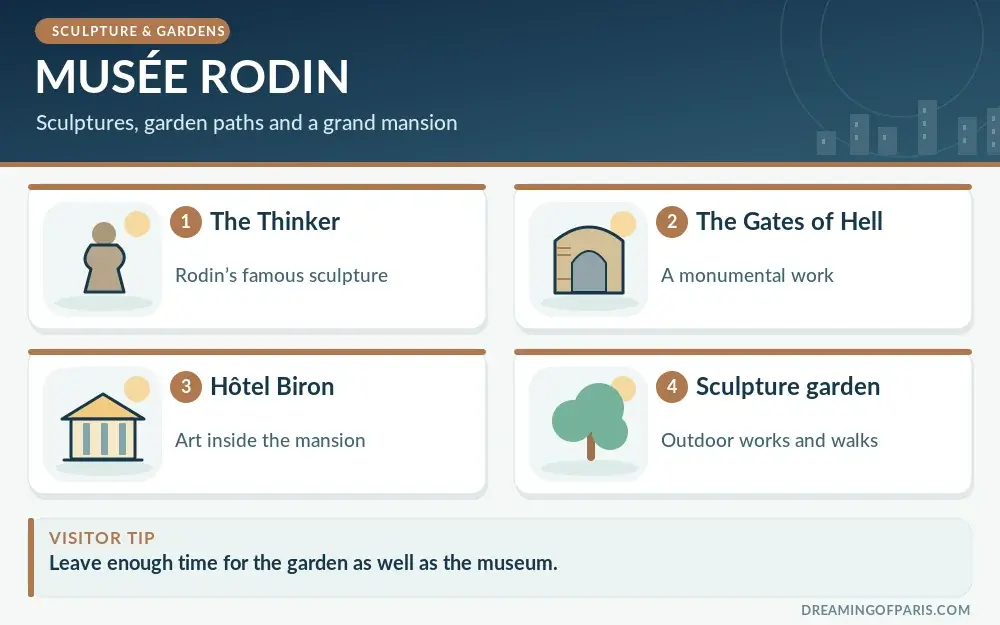
The 18th-century mansion is part of the experience. Rodin used the building, and the rooms let sculptures interact with windows, light, floors and domestic scale. Begin inside while your attention is fresh, even if the garden is the reason you came. Works such as The Kiss and portrait sculptures make more sense when you see the breadth of Rodin’s practice rather than only his most reproduced image.
Look for studies, fragments and repeated forms. Rodin often reworked figures and compositions, so the museum becomes more interesting when you notice relationships between pieces instead of treating every sculpture as an isolated masterpiece.
The sculpture garden: the museum’s secret weapon
The garden contains major works including The Thinker and The Gates of Hell in an outdoor setting. It changes with season and weather, which means the same sculpture can feel different in winter light, spring foliage or summer heat. The official museum currently notes that a structure in the garden makes part of the area inaccessible, although works remain visible; check current notices before relying on a specific path.
In warm weather, build in a seated pause. The garden is not wasted time between galleries; it is part of how the museum prevents visual fatigue.
The Thinker: see it, then keep moving
The Thinker attracts cameras, but the museum becomes better once you move past the famous silhouette. Rodin originally conceived the figure in relation to The Gates of Hell. Seeing both helps undo the modern habit of treating The Thinker as a standalone motivational symbol.
Spend a few minutes walking around sculpture whenever possible. Rodin’s surfaces and poses change with angle; frontal viewing misses much of the physical tension.
How long to spend
A focused first visit needs about 90 minutes: 45–60 minutes inside and 30–45 minutes in the garden. Two hours is more comfortable if you enjoy sculpture. Three hours is rarely necessary unless you read extensively, sketch or visit a temporary exhibition.
This makes Rodin a particularly efficient museum for a mixed day. You can combine it with Invalides, Saint-Germain or a walk toward the Seine without turning the whole day into museum endurance.
Rodin + Invalides: the strongest nearby combination
The two institutions are close and currently promote a joint ticket. Start at Invalides if military history requires more concentration, then finish at Rodin for art and garden space. Reverse the order if sculpture is your priority and you want to protect your attention for it.
Use our Les Invalides guide to decide whether you can realistically do both.
Rodin + Orsay: geographically possible, mentally heavier
The official museum currently sells a combined Rodin–Orsay ticket. It can be good value, but do not let the ticket force both museums into the same day. Orsay is dense and can use most of your museum attention. If you do combine them, place a long lunch or riverside walk between visits.
Our Orangerie guide offers another compact art experience if Monet is more important than sculpture.
Paris Museum Pass
Musée Rodin is included in the Paris Museum Pass network. It is exactly the kind of medium-size museum that can improve pass value without requiring half a day. But the same rule applies: calculate the pass around places you already want, not around a desire to maximize entries.
See our Museum Pass guide for current prices and break-even examples.
Guided experiences and sculpture-focused tours
A guide can add value if you are curious about Rodin’s working process, Camille Claudel, casting, repetition and the relationship between finished works and studies. If you simply want a beautiful small museum, self-guided is enough. Compare whether tours include admission and whether the guide actually enters the museum.
Official information
Check the official Musée Rodin visitor page for opening notices, ticket prices and current garden access. Garden conditions and temporary installations can change more easily than the core museum hours.
Frequently asked questions
How much time do you need at Musée Rodin?
About 90 minutes is enough for a strong first visit; two hours gives a more relaxed balance between the Hôtel Biron and garden.
Is The Thinker outside?
A monumental cast of The Thinker is displayed in the sculpture garden, where it is one of the museum’s best-known works.
Can you visit Rodin and Invalides together?
Yes, and they are one of the easiest major museum pairings in Paris. Keep each visit focused.
Is Musée Rodin included in the Paris Museum Pass?
Yes, currently.
Weather changes the value of the museum
Rodin is one of the rare Paris museums where weather should influence your scheduling. In steady rain, the garden loses part of its appeal; on a pleasant day, the ability to move between house and garden is the museum’s greatest advantage. Keep the visit flexible if sculpture is not tied to a non-refundable timed slot.
Camille Claudel context
Claudel’s work and relationship with Rodin are part of the museum’s broader story, but she deserves to be understood as an artist rather than only through biography. When you encounter her work, compare handling of movement and surface instead of reducing the room to a romantic narrative about two famous sculptors.
The Gates of Hell as the key work
The Gates of Hell can organize the whole museum in your mind because figures and ideas recur across Rodin’s practice. Spend time there before or after The Thinker and look for bodies that reappear in other compositions. It turns a room of famous sculptures into evidence of an evolving workshop process.
Seasonal garden strategy
In summer, visit the garden before midday heat or after the strongest sun. In winter, remember that the sculpture garden can close at nightfall for safety even while the museum building follows its normal schedule. Spring and autumn often provide the best balance of comfortable walking and changing vegetation.
A sculpture museum for people who think they do not like sculpture
Rodin is a good test case because the works are physical, expressive and easy to view from multiple angles. Instead of reading every label, choose one figure and walk around it slowly. Notice hands, weight, unfinished surfaces and how light catches the bronze or marble. This can make sculpture feel less academic.
Nearby streets after the museum
The 7th arrondissement around Musée Rodin is calmer than the museum corridors around the Louvre. After the visit, walk toward Invalides, Rue de Varenne or the Seine rather than immediately taking the metro. A short neighborhood transition helps the garden experience continue into the city.
Buying the right ticket
If Rodin is your only paid museum that day, the standard ticket is straightforward. If Orsay or Invalides is also essential, compare the official combined tickets with the Paris Museum Pass rather than buying automatically. The best product depends on the rest of the itinerary, not only on a headline discount.
Photography and looking
Sculpture museums encourage circling works, which can create friction when everyone stops in the same photo position. Take the photograph, then move and look from another angle without the screen. Rodin’s surfaces are especially sensitive to changing light, and a phone image often flattens exactly what makes the work interesting.
A museum for a mixed-interest couple or group
Rodin can work well when only one traveler is deeply interested in art because the garden, house and manageable scale create variety. Agree on a meeting point and let different people move at different speeds. Not every museum visit needs the whole group to read the same wall text together.
Why the garden changes your museum pace
At most museums, leaving a gallery means the visit is over. At Rodin, stepping into the garden lets your attention reset without leaving the collection. Use that deliberately: after several dense rooms, go outside for ten minutes, then return if needed. This rhythm is one reason the museum can feel substantial without becoming exhausting.