Disclosure: This article contains affiliate links or booking widgets. If you book through them, Dreaming of Paris may earn a commission at no extra cost to you. How our affiliate links work.
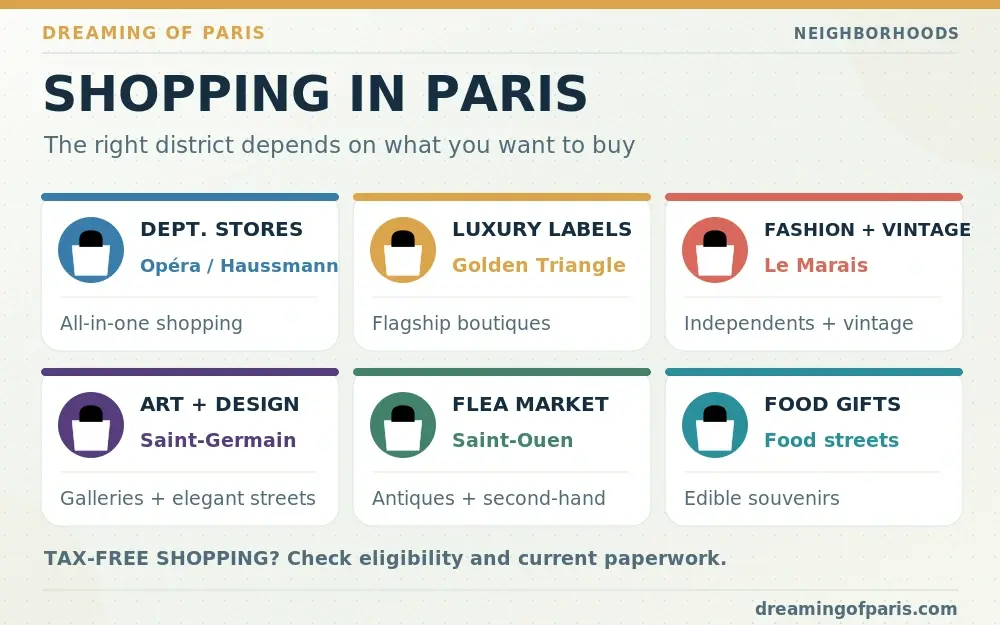
Shopping in Paris becomes much easier when you decide what kind of shopping you want before choosing a district. Department stores solve efficiency, luxury streets solve high-end brand concentration, Le Marais mixes fashion and vintage, Saint-Germain works for books, design and food, and markets give you edible souvenirs and everyday atmosphere.
Department stores
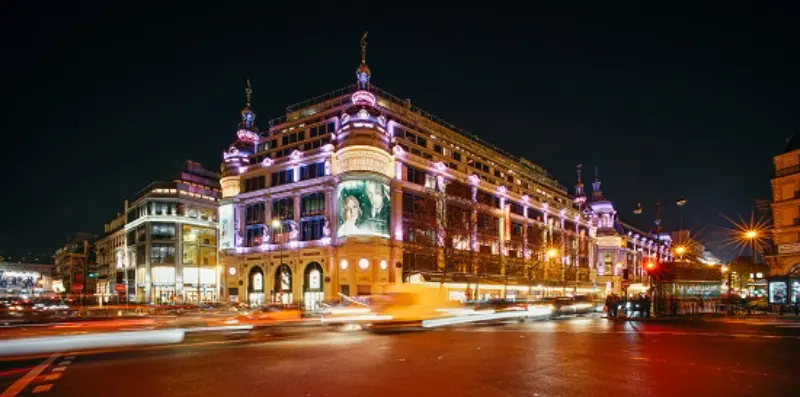
Galeries Lafayette Haussmann and Printemps concentrate major fashion and beauty brands around Boulevard Haussmann. Le Bon Marché gives the Left Bank a different department-store experience, while La Samaritaine sits near the Seine. These stores are ideal when you want many brands and centralized services, especially in poor weather.
Luxury districts
Avenue Montaigne, Rue du Faubourg Saint-Honoré and Place Vendôme form different luxury clusters. If you are making a high-value purchase, verify the brand’s official store and opening hours. Pair the appointment with the surrounding district instead of letting one boutique split the entire day.
Le Marais and Saint-Germain
Le Marais mixes French labels, international fashion, vintage, design and food. Saint-Germain is strong for books, galleries, fashion and refined food shopping. Use our Le Marais route or Saint-Germain guide so shopping remains part of a neighborhood day.
Vintage and flea markets
Vintage ranges from curated designer resale to casual secondhand stores. Saint-Ouen is a destination of its own rather than a quick central stop. Temporary brocantes and flea events vary by date, so verify schedules before crossing Paris for them.
Tax-free shopping rule
French Customs states that eligible travelers whose habitual residence is outside the EU may use the VAT-refund procedure when other conditions are met. The purchase threshold is more than €100 including tax in the same store on the same day. The merchant issues the export documentation and customs validation is part of the process.
Your refund is not simply 20 percent
Retailers or refund operators can deduct fees, and not every product has identical tax treatment. Ask what you should actually expect back. Keep goods and paperwork accessible for departure formalities.
Food souvenirs
Markets, fromageries, chocolate shops and specialist stores can produce better souvenirs than generic Paris merchandise. Check your destination country’s import restrictions before buying meat, dairy or fresh foods. Use our markets guide for neighborhood options.
Where to stay for a shopping trip
Haussmann/Opéra is efficient for department stores; Le Marais and Saint-Germain are better for neighborhood browsing. If shopping is only one part of the vacation, choose where you want to be after stores close. Compare our area guide and current hotels on Booking.com.
Compare hotels for your stay in Paris
Check current availability, location and prices before choosing the exact neighborhood.
Check Paris hotels on Booking.comAffiliate link: we may earn a commission at no extra cost to you.
Frequently asked questions
Can tourists shop tax-free?
Eligible non-EU residents may qualify under French rules. The purchase threshold is more than €100 including tax in the same store on the same day, plus other conditions.
Is everything closed Sunday?
No. Sunday opening varies by district and store; major shopping zones often have extensive Sunday trading.
Is Le Marais good for shopping?
Yes, especially for a mix of fashion, vintage, design and food within a historic neighborhood.
Where are the main department stores?
The biggest cluster is Boulevard Haussmann, while Le Bon Marché is on the Left Bank and La Samaritaine is near the Seine.
Is the VAT refund 20 percent?
Not necessarily. Fees and tax treatment mean the amount returned is not simply the headline VAT rate.
How this fits into our Practical Paris cluster
This guide is designed to connect with the rest of the site rather than sit alone. Continue with food markets, covered passages and Le Marais. Internal links are placed where the next decision naturally appears, so you can move from transport to neighborhood, attraction, season or day trip without rebuilding the plan from scratch.
The decision that matters most
Decide what you are shopping for before choosing the district. Department stores are excellent for efficiency; neighborhoods are better for discovery. Mixing the two deliberately prevents shopping from becoming a citywide scavenger hunt.
Use a decision rule instead of a long checklist
The easiest way to apply shopping in Paris advice is to define one rule before the day begins. For shopping, decide the purpose and budget. For safety, decide where phone, wallet and passport will live. For free sightseeing, decide which paid attraction is worth spending on and let free stops fill the surrounding geography. A clear rule prevents dozens of tiny choices from consuming the day.
Keep the city geographically coherent
A practical Paris day should rarely require repeated cross-city travel. Pair shopping with the neighborhood around it, free museums with nearby parks, and evening plans with where you already are. Every extra metro transfer introduces stairs, waiting and the temptation to buy something or eat somewhere simply because everyone is tired. Geography is one of the strongest budget and safety tools at the same time.
What to prepare offline
Save the hotel address, emergency contact details, copies of key reservations and the names of the official transport apps you intend to use. Do not keep every critical detail in one online document that becomes inaccessible when the phone battery dies or data fails. A small offline note with hotel, insurance and card-blocking information takes minutes to create and is far more useful than carrying a thick printed itinerary.
Cash, cards and payment habits
Cards are widely useful, but keep one backup payment method separate from the main wallet. Do not expose all cash, cards and identification every time you buy a coffee. For larger purchases, understand the refund or return conditions before paying. For small markets, having a modest amount of cash can be convenient, but there is no reason to carry a large emergency reserve on your person all day.
When “saving money” becomes false economy
Walking 40 minutes in bad weather to save one metro ticket, taking a complicated airport route with tired children or choosing accommodation far from every planned activity can cost more in time and energy than it saves in euros. Budget travel works best when you protect the expensive parts of the trip—your limited vacation days, sleep and major reservations—rather than optimizing every small transaction.
How to evaluate online advice
Check the publication date, whether the writer distinguishes official rules from personal preference, and whether prices or closures are sourced. Paris changes: transport fares, museum access, viewpoints and seasonal events can become outdated quickly. Advice that never mentions dates is useful for atmosphere but weaker for operations. Verify anything that can make you miss a train, ticket, refund or reservation.
End-of-day reset
Each evening, spend five minutes checking the next morning’s first reservation, transport disruptions and weather. Repack the day bag so valuables have fixed locations. This tiny routine reduces mistakes when you leave the hotel early and tired. It also lets you change tomorrow’s order before a weather or transport problem turns into a lost morning.
A simple daily money system
Separate the money you expect to spend today from backup funds and cards. Keep the main payment method accessible but protected, and store the backup separately. This reduces both overspending and the consequences of losing one wallet. For shopping-heavy days, note your intended budget before entering the first department store. For free-sightseeing days, decide in advance which paid experience is allowed to break the budget. Small rules are easier to follow than trying to evaluate every purchase from scratch.
How to avoid decision fatigue
When dealing with shopping in Paris, make the key choices before the busy part of the day. Know the correct transport ticket, identify the shopping district, choose the museum cluster or decide where valuables will be carried. Once outside, you should be looking at Paris rather than repeatedly researching logistics on the pavement. Good practical planning is almost invisible: it removes dozens of tiny problems so the city itself gets more of your attention.
What to verify with an official source
Use official sources for any rule that can cost money or make you miss something: transport fares, museum closures, tax-refund eligibility, airport taxi rates and event opening dates. Blogs are excellent for strategy and lived experience, but operational facts age quickly. If a rule has a number, deadline or exception attached to it, verify it close to the trip. This habit is one of the best ways to avoid the exact kind of outdated advice that makes otherwise useful travel articles unreliable.
Buying high-value items without derailing the trip
If a luxury or high-value purchase matters, treat it like a reservation: verify the exact store, stock or appointment rules, identification needed for tax-free paperwork and return conditions. Put the shopping block near other activities in the same district. Avoid carrying expensive purchases through a full day of crowded sightseeing if the hotel can safely receive them later. For tax-refund purchases, keep the paperwork organized immediately rather than trying to reconstruct receipts at the airport.
Souvenir strategy that avoids generic purchases
Choose souvenirs by category rather than by shop name: a food item you can legally bring home, a book, stationery, a small design object, a print or a product from a museum shop you genuinely enjoyed. This gives you freedom to buy when the right object appears instead of visiting five souvenir stores. It also keeps luggage under control. Before buying fragile or liquid items, think about airline baggage rules and how you will transport them; a beautiful purchase is less useful if packing becomes a problem.
Vintage and flea-market shopping
For antiques, vintage objects and a completely different shopping day, see our Puces de Saint-Ouen guide.