Rain does not ruin Paris; bad geography does. A wet day becomes frustrating when you spend it crossing exposed bridges between reservations or hide in three huge museums until every gallery feels the same. The better strategy is one compact district, one strong indoor anchor and short covered or interesting transitions.
Light rain versus all-day rain
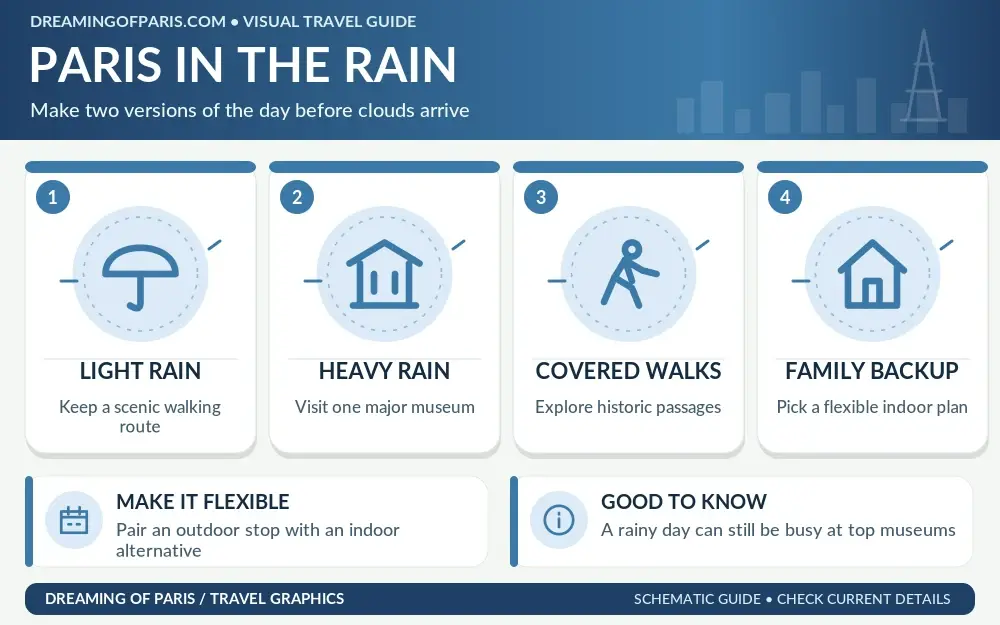
Drizzle changes little: waterproof shoes and a compact umbrella keep most neighborhood plans viable. Persistent heavy rain should change the structure. Put a museum, covered passages, churches, food halls or department stores around one area instead of crossing the city.
Louvre + Palais-Royal + passages
The Louvre is an obvious indoor anchor, but our focused Louvre strategy stops before museum fatigue. From there Palais-Royal and the historic arcades lead naturally toward Galerie Vivienne, Passages Panoramas, Jouffroy and Verdeau. Use our covered passages route as the connective tissue.
Left Bank rain plan
Musée d’Orsay pairs well with Saint-Germain because the walk is short. Combine our Orsay guide with Saint-Germain rather than adding another major museum across town.
Le Marais in rain
Le Marais works because small museums, Place des Vosges arcades, cafés and short streets sit close together. The neighborhood can be shortened or extended around the weather.
Eiffel Tower in bad weather
Rain alone does not automatically cancel a visit, but low cloud can erase long views and strong wind can affect upper-level access. If your ticket rules allow flexibility, compare the forecast. If not, value the structure itself rather than expecting a postcard panorama.
Family rainy days
Alternate one museum with a covered market, passage, food stop or short metro move. Children usually need movement even when outdoor breaks disappear. The family guide is built around that energy logic.
What to avoid
Do not build a wet day around exposed garden walks, slippery Montmartre staircases in poor shoes or a long outdoor photo circuit. A Seine cruise may still operate, but check vessel setup and visibility before choosing it only for open-deck views.
Frequently asked questions
What is the best museum for a rainy day?
The best one is the museum that fits your interests and area; Louvre and Orsay are strong anchors, but smaller museums can be better when the blockbusters are crowded.
Are covered passages free?
Walking through the historic passages is generally free, while shops and attractions inside have their own prices.
Should I visit Versailles in rain?
The Palace remains valuable, but the gardens and estate become less pleasant in heavy rain.
Do Seine cruises run in rain?
Many do, but weather, visibility and deck access vary by operator and conditions.
Is the Metro the best rain solution?
Use it for longer jumps, but group activities geographically so the day does not become an underground commute.
How this fits into our Seasonal Paris cluster
This guide is designed to connect with the rest of the site rather than sit alone. Continue with covered passages, small museums and food streets. Internal links are placed where the next decision naturally appears, so you can move from transport to neighborhood, attraction, season or day trip without rebuilding the plan from scratch.
The decision that matters most
Build a compact neighborhood day with one strong indoor anchor and flexible secondary stops. Then rain changes the rhythm of the trip rather than the quality of it.
Build two versions of each day
For Paris in the rain, create an outdoor-first version and an indoor-first version of the same geographic day. Keep the same neighborhood, restaurant area and evening plan, but swap the order when rain, heat or cold changes. This preserves reservations and minimizes transport while giving you real flexibility. Weather-aware planning works better when you rearrange a compact day than when you replace the entire itinerary every morning.
How to read the forecast usefully
Look beyond the headline temperature. Wind, rain intensity, cloud base, humidity and the timing of the worst conditions matter more to a traveler walking several hours. A cool dry morning can be perfect for Montmartre even if the daily icon says rain; a hot evening can remain uncomfortable if the pavement has stored heat all afternoon. Recheck the hourly forecast before leaving the hotel and move your most weather-sensitive activity accordingly.
Protect one flexible block every day
Leave at least two hours unscheduled. In good weather, use it for a park, river walk or neighborhood detour. In poor weather, use it for a small museum, covered passage, café or hotel break. This buffer also absorbs queues and transport disruption. The goal is not to leave Paris “unplanned”; it is to protect the trip from becoming brittle when the conditions do not match the original timetable.
Clothing strategy for a walking city
Paris rewards layers and footwear more than fashion-oriented overpacking. Shoes need grip and comfort on stone, stairs and long pavements. In cold seasons, choose layers you can remove indoors. In hot seasons, prioritize breathable clothing and sun protection. In rain, a waterproof outer layer can be more practical than relying only on an umbrella in crowded streets. Keep the day bag light enough that weather changes do not make it burdensome.
Food and breaks by season
Season changes the best break. In winter, a longer lunch or café stop can warm the middle of the day. In summer, lunch becomes a deliberate escape from peak heat. In rain, a covered market or restaurant can replace an outdoor picnic. Build meals into the geography rather than traveling across Paris for a specific address; the right break at the right moment often improves the afternoon more than a famous restaurant far away.
Photography and expectations
Bad weather does not mean bad photographs, and perfect blue sky is not always the most interesting light. Wet pavements, winter twilight and summer evening light create different versions of Paris. At the same time, accept that a paid panorama in low cloud may deliver very little. Spend money on weather-dependent experiences only when the conditions support what you actually want from them.
Seasonal verification checklist
Before each trip day, verify attraction closures, park opening times, strikes or transport works and any seasonal event you specifically care about. Christmas installations, summer events and maintenance periods change year to year. Treat dated social posts as inspiration, not operational information. The current official venue page should decide whether a specific seasonal stop belongs in your plan.
Morning decision routine
Before leaving the hotel, look at the next six hours rather than the whole day. Check rain timing, wind, heat or cold, then choose which part of the planned neighborhood should happen first. Keep the same lunch area and evening plan whenever possible. This minimizes cancellations and prevents the weather from forcing a citywide redesign. The best seasonal itineraries are modular: museum and street can swap order, park and café can swap duration, and the hotel break can move earlier or later without breaking reservations.
When to return to the hotel
A hotel break is not wasted vacation time when weather is draining energy. In winter it lets you dry shoes and warm up; in summer it avoids the hottest part of the day; in heavy rain it can save you from spending hours carrying wet layers through museums. A 60–90 minute reset often produces a much better evening than pushing through fatigue until dinner. This is especially true for families, older travelers and anyone who has already walked heavily for several days.
What to book and what to leave open
For Paris in the rain, book the attractions that genuinely sell out and leave weather-sensitive walking flexible. Avoid stacking three nonrefundable timed entries so closely that you cannot react to conditions. One fixed indoor anchor per day is usually enough. Restaurants can be reserved when they matter to you, but neighborhood flexibility is useful when rain or heat changes your route. Seasonal Paris rewards a schedule with structure at the center and freedom at the edges.
A rain plan for photography and viewpoints
If photography matters, rain can actually create reflective pavements, saturated colors and more dramatic skies. The problem is not rain itself but low cloud at expensive viewpoints and water on camera or phone equipment. Use covered arcades, bridges with nearby shelter and museum courtyards as short photographic transitions. Save high paid viewpoints for a visibility window if your ticket is flexible. A free street-level rain sequence can be more rewarding than paying for a panorama that disappears into cloud.
Shoes, umbrellas and museum security
Wet-weather comfort often comes down to shoes. Paris stone, polished station floors and old staircases become slippery, while soaked trainers can remain uncomfortable for the rest of the day. Choose water-resistant footwear with grip and carry a compact umbrella that is easy to close in crowds. Some museums and shops require wet umbrellas to be bagged or stored, so a reusable waterproof sleeve is useful. Keep electronics and paper tickets in a protected inner pocket rather than in the outside section of a damp backpack.
Rainy-night events can still work
If rain coincides with the city’s all-night art festival, our Nuit Blanche Paris guide explains how to build a compact route with indoor alternatives instead of crossing the city between exposed installations.