Paris can be expensive, but some of the city’s best experiences cost nothing when you know what is genuinely free and what is only free under certain conditions. The key is to separate permanent free access from occasional promotions, and to build free experiences into neighborhoods rather than spending half the day crossing Paris to save a few euros.
Free permanent collections in City of Paris museums
The City of Paris states that most permanent collections in its municipal museum network are free for everyone, with exceptions such as the Catacombs, the Archaeological Crypt and Palais Galliera. That includes excellent museums such as Carnavalet, Petit Palais, Musée d’Art Moderne, Cernuschi, Bourdelle, Maison de Balzac and Zadkine. See our small museums guide for the best ones to pair with your itinerary.
Notre-Dame: free cathedral entry
Entry to Notre-Dame Cathedral is free. A free reservation system can help manage access, but the cathedral itself does not charge an admission fee for ordinary entry. This makes Île de la Cité one of the strongest no-cost historic areas in central Paris, especially when paired with river walks and exterior views. Use our Notre-Dame and Île de la Cité guide for the full route.
Sacré-Cœur and Montmartre
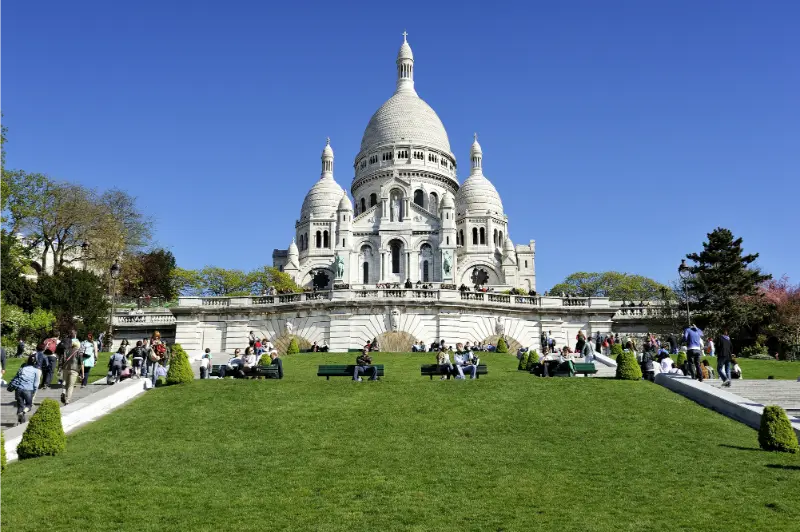
The Basilica of Sacré-Cœur is free to enter, while paid elements such as the dome are separate. The broader value is the neighborhood itself: the hill, staircases, rue Cortot, vineyard area and northern slopes cost nothing to explore. Our Montmartre walking route is designed to move beyond the most crowded square.
Parks and gardens that are experiences, not filler
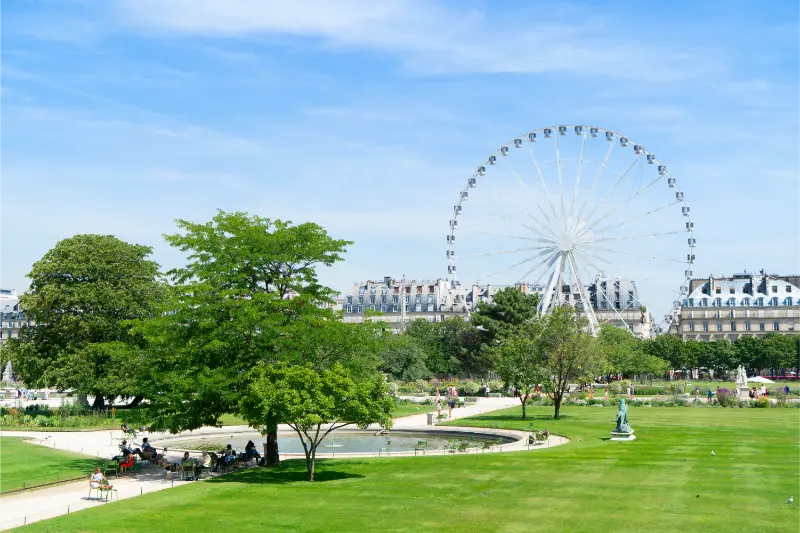
Luxembourg Gardens, Tuileries, Parc des Buttes-Chaumont, Parc Monceau and many neighborhood squares are free and function as real parts of Parisian daily life. Use them strategically: Luxembourg between Latin Quarter and Saint-Germain, Buttes-Chaumont with Belleville and Canal Saint-Martin, Parc Monceau with Cernuschi or Batignolles. A park is more valuable when it connects two parts of the day.
Covered passages
Historic passages such as Galerie Vivienne, Passage des Panoramas, Jouffroy and Verdeau are free to walk through. They combine architecture, shops and shelter, which makes them especially useful on rainy days. Follow our covered passages route instead of visiting them as isolated pins.
The Seine and bridges
Walking the Seine is one of the rare classic Paris experiences that does not become less valuable because it is free. Choose a coherent section rather than trying to walk the entire riverfront. Île de la Cité to the Louvre, or Eiffel Tower toward central bridges, both work well. Save the paid cruise for a different perspective rather than treating it as a substitute for walking.
Père-Lachaise
Père-Lachaise Cemetery is free to enter and can easily fill two hours if you care about history, sculpture or specific graves. Because it remains an active cemetery, it has a quieter atmosphere than a conventional attraction. Our Père-Lachaise guide focuses on a respectful route and less obvious corners.
Markets and food streets: browsing is free, eating is not
Market streets are excellent for atmosphere even when you do not buy much. Rue Mouffetard, Rue Montorgueil and neighborhood markets reveal daily rhythms that monuments cannot. Of course, food costs money, but the walk itself is free and can replace a generic shopping street. See our food streets guide.
Free viewpoints
Paris has free elevated or open views, but the list changes as buildings close, renovate or alter access. Do not rely on an old roundup that still recommends a viewpoint closed for works. Our 2026 viewpoint guide separates currently usable free and paid options.
A genuinely low-cost Paris day
- Morning walk through Île de la Cité and Notre-Dame.
- Walk the Seine toward the Louvre exterior and Tuileries.
- Picnic or inexpensive bakery lunch.
- Free permanent collection at Petit Palais or another municipal museum.
- Late-afternoon neighborhood walk in Montmartre or Le Marais.
- Sunset from a free public viewpoint or riverbank.
What “free” does not mean
- No guarantee of no queue.
- No guarantee that temporary exhibitions are free.
- No guarantee that a dome, tower or special area is included.
- No guarantee that reservation is unnecessary.
- No reason to cross the city for something you do not actually care about.
Frequently asked questions
Are Paris museums free?
Many City of Paris permanent collections are free, but national museums and temporary exhibitions follow their own pricing rules.
Is Notre-Dame free?
Yes, ordinary cathedral entry is free. A reservation system may be used to manage access, but it does not turn cathedral entry into a paid ticket.
Is Sacré-Cœur free?
The basilica is free to enter; paid access may apply to separate areas such as the dome.
Is Père-Lachaise free?
Yes, cemetery entry is free.
Can I visit Paris on a small budget?
Yes, especially if you combine free neighborhoods, parks, municipal museum collections, churches and walking routes with only a few paid attractions that matter most to you.
How this fits into our Practical Paris cluster
This guide is designed to connect with the rest of the site rather than sit alone. Continue with small museums, covered passages and viewpoints. Internal links are placed where the next decision naturally appears, so you can move from transport to neighborhood, attraction, season or day trip without rebuilding the plan from scratch.
The decision that matters most
Spend money where it changes the experience, not because every famous attraction appears on a checklist. A free neighborhood walk plus one paid museum you truly care about is often a stronger day than four mediocre paid stops.
Use a decision rule instead of a long checklist
The easiest way to apply free things to do in Paris advice is to define one rule before the day begins. For shopping, decide the purpose and budget. For safety, decide where phone, wallet and passport will live. For free sightseeing, decide which paid attraction is worth spending on and let free stops fill the surrounding geography. A clear rule prevents dozens of tiny choices from consuming the day.
Keep the city geographically coherent
A practical Paris day should rarely require repeated cross-city travel. Pair shopping with the neighborhood around it, free museums with nearby parks, and evening plans with where you already are. Every extra metro transfer introduces stairs, waiting and the temptation to buy something or eat somewhere simply because everyone is tired. Geography is one of the strongest budget and safety tools at the same time.
What to prepare offline
Save the hotel address, emergency contact details, copies of key reservations and the names of the official transport apps you intend to use. Do not keep every critical detail in one online document that becomes inaccessible when the phone battery dies or data fails. A small offline note with hotel, insurance and card-blocking information takes minutes to create and is far more useful than carrying a thick printed itinerary.
Cash, cards and payment habits
Cards are widely useful, but keep one backup payment method separate from the main wallet. Do not expose all cash, cards and identification every time you buy a coffee. For larger purchases, understand the refund or return conditions before paying. For small markets, having a modest amount of cash can be convenient, but there is no reason to carry a large emergency reserve on your person all day.
When “saving money” becomes false economy
Walking 40 minutes in bad weather to save one metro ticket, taking a complicated airport route with tired children or choosing accommodation far from every planned activity can cost more in time and energy than it saves in euros. Budget travel works best when you protect the expensive parts of the trip—your limited vacation days, sleep and major reservations—rather than optimizing every small transaction.
How to evaluate online advice
Check the publication date, whether the writer distinguishes official rules from personal preference, and whether prices or closures are sourced. Paris changes: transport fares, museum access, viewpoints and seasonal events can become outdated quickly. Advice that never mentions dates is useful for atmosphere but weaker for operations. Verify anything that can make you miss a train, ticket, refund or reservation.
End-of-day reset
Each evening, spend five minutes checking the next morning’s first reservation, transport disruptions and weather. Repack the day bag so valuables have fixed locations. This tiny routine reduces mistakes when you leave the hotel early and tired. It also lets you change tomorrow’s order before a weather or transport problem turns into a lost morning.
A simple daily money system
Separate the money you expect to spend today from backup funds and cards. Keep the main payment method accessible but protected, and store the backup separately. This reduces both overspending and the consequences of losing one wallet. For shopping-heavy days, note your intended budget before entering the first department store. For free-sightseeing days, decide in advance which paid experience is allowed to break the budget. Small rules are easier to follow than trying to evaluate every purchase from scratch.
How to avoid decision fatigue
When dealing with free things to do in Paris, make the key choices before the busy part of the day. Know the correct transport ticket, identify the shopping district, choose the museum cluster or decide where valuables will be carried. Once outside, you should be looking at Paris rather than repeatedly researching logistics on the pavement. Good practical planning is almost invisible: it removes dozens of tiny problems so the city itself gets more of your attention.
What to verify with an official source
Use official sources for any rule that can cost money or make you miss something: transport fares, museum closures, tax-refund eligibility, airport taxi rates and event opening dates. Blogs are excellent for strategy and lived experience, but operational facts age quickly. If a rule has a number, deadline or exception attached to it, verify it close to the trip. This habit is one of the best ways to avoid the exact kind of outdated advice that makes otherwise useful travel articles unreliable.
Free walks on reused infrastructure
Two of the best no-ticket routes are the Coulée Verte René-Dumont and the open sections of the Petite Ceinture.
Build a complete low-cost trip
Turn these free ideas into a full strategy with our Paris on a budget guide, including transport, food and accommodation trade-offs.
Free and low-cost Paris cluster
If free sights are part of a wider spending strategy, continue with Paris on a budget. Strong no-ticket cultural stops include the permanent collections at the Petit Palais and Musée Carnavalet. Free outdoor routes include the Tuileries and Luxembourg Gardens.
For a different way to reduce both crowds and spending pressure, see what is genuinely better early in the morning and our Paris on Sunday guide.