
Disclosure: This article contains affiliate links or booking widgets. If you book through them, Dreaming of Paris may earn a commission at no extra cost to you. How our affiliate links work.
The expensive mistake in Paris is not failing to reserve everything; it is reserving the wrong things too early and leaving the genuinely capacity-limited sights until the last week. Paris has several completely different ticket systems. Some open months ahead, one famous attraction releases tickets only a week ahead, and others remain possible on the day even when online inventory looks sold out.
Check tickets and Paris experiences
Compare current tours, timed-entry tickets and experiences before fixing your itinerary.
GetYourGuideTiqetsCivitatisViatorAffiliate links: we may earn a commission at no extra cost to you.
This guide turns those rules into a booking order you can actually use. It is especially useful if you are building a first trip around our 3-day Paris itinerary, 4-day first-time plan or 5-day itinerary. Prices, release windows and access rules can change, so the official ticket office linked in each section should always be the final check before payment.
The 2026 booking priority table
| Attraction | What matters in 2026 |
|---|---|
| Eiffel Tower | Elevator tickets are released well ahead and summit slots are the first to disappear; official guidance now uses a window of up to 90 days for elevator tickets. |
| Paris Catacombs | Online booking only, released 7 days in advance. Booking six weeks early is impossible, not prudent. |
| Notre-Dame Towers | No on-site ticket sales. Every visitor needs a reserved time slot, including free-admission visitors and Museum Pass holders. |
| Louvre | Timed booking is recommended year-round and was compulsory from 1 July to 31 August 2026. Do not rely on walk-up sales in busy periods. |
| Sainte-Chapelle | Advance booking is strongly recommended; Museum Pass holders also need a reserved time slot. |
| Versailles Palace | The Palace requires a timed slot; gardens, park and Trianon follow different access rules. |
1. Eiffel Tower: book the ticket type, not just “the Eiffel Tower”
The most useful distinction is between summit by elevator, second floor by elevator, stairs to the second floor and the mixed stairs-plus-elevator option. The official Eiffel Tower website states that elevator tickets can be sold online up to 90 days before the visit and stair tickets up to 60 days ahead. Summit inventory is the most constrained, so travelers who care specifically about the top should treat that as their first booking after flights and hotel.
A sold-out online calendar does not always mean the tower itself is impossible: the monument still sells tickets on site for immediate use, subject to availability. But that is a different strategy: you trade certainty for a queue and the possibility that summit access is temporarily unavailable. Also ignore marketing that promises a magical “skip every line” ticket. The tower itself warns that security checks remain mandatory and that third-party “priority” wording does not remove those checks.
For the full choice between levels, views and timing, use our Eiffel Tower visit guide. Official Eiffel Tower ticket office.
2. Catacombs: the booking window is deliberately short
The Catacombs reverse the normal “book as early as possible” logic. The official site states online booking only, 7 days in advance. That means your task two months before the trip is simply to decide which day can absorb a fixed one-hour underground visit. Your task exactly one week before is to buy the slot.
Build margin around it. The route is 1.5 km, with 131 steps down and 112 back up, and the underground temperature stays cool even in summer. A 10:30 Catacombs ticket followed by a 12:00 lunch in the immediate Montparnasse/14th-arrondissement area is sensible; a tight cross-city transfer to the Louvre is not. See our Catacombs guide for bags, stairs and the physical realities of the visit. Official Catacombs visitor information.
3. Notre-Dame Towers: cathedral entry and tower entry are two different plans
The cathedral interior and the towers are separate experiences. Since the towers reopened in September 2025, the Centre des monuments nationaux has operated them with online timed reservations only; there is no ticket sale at the monument. That rule also applies to people who qualify for free entry and to Paris Museum Pass holders.
This distinction matters because the cathedral itself is free. You can visit the church without buying the towers, but you cannot decide spontaneously at the base of the tower to buy a tower ticket. The tower circuit is also physically demanding: 424 steps, narrow passages, no lift, no toilets and no water point on the circuit. Our dedicated Notre-Dame Towers guide explains the new route and how to combine it with Notre-Dame and Île de la Cité. Official Towers practical information.
4. Louvre: reservation rules change with demand
The Louvre is not a simple “always mandatory” or “never mandatory” case. The museum normally recommends timed reservations for everyone, including free-admission visitors, and it can make them compulsory during peak periods. In 2026, reservations were explicitly required from 1 July through 31 August. Walk-up tickets may be sold when attendance is low, but they are subject to availability.
For a visitor with only three or four days in Paris, that uncertainty is unnecessary. Pick a museum block before buying other small attractions, then reserve the Louvre. Wednesday and Friday late opening can be useful if you prefer to keep daylight hours for neighborhoods. Our focused Louvre route is designed around a 2–3 hour visit rather than an endurance contest. Official Louvre hours and admission.
5. Sainte-Chapelle: small monument, real capacity constraints
Sainte-Chapelle is physically small, sits inside the Palais de Justice security perimeter and can develop queues that are disproportionate to the length of the visit. The monument strongly recommends advance purchase during busy periods, and a Paris Museum Pass does not remove the need to reserve a time slot. If you buy the combined Sainte-Chapelle/Conciergerie ticket, the reserved time applies to Sainte-Chapelle; you can place the Conciergerie before or after it.
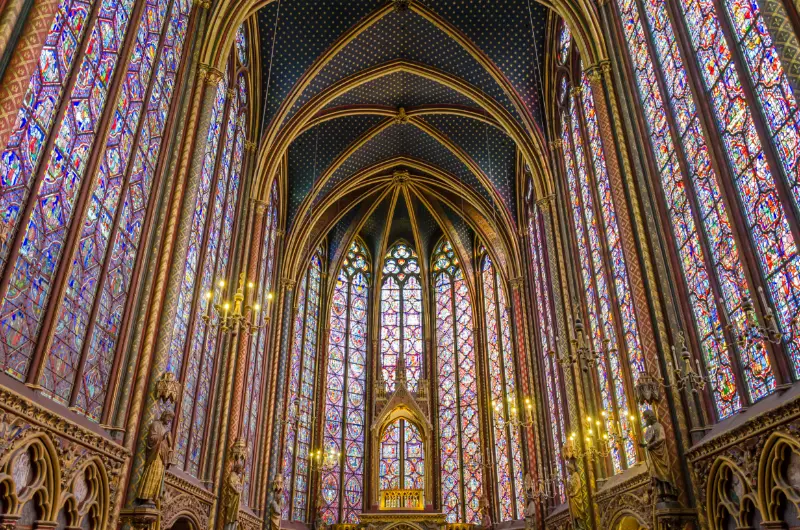
That makes it ideal for a fixed anchor + flexible neighbor plan: reserve Sainte-Chapelle, then let the Conciergerie and the rest of Île de la Cité flex around it. Our Sainte-Chapelle and Conciergerie guide explains this pairing. Official Sainte-Chapelle information.
6. Versailles: reserve the Palace, then design the estate around it
Versailles is another place where travelers often confuse one timed component with the entire estate. In 2026, the Palace visit requires a time slot. The Passport then gives access to the wider estate according to its rules, while the Trianon estate opens later than the Palace and the gardens can have separate paid access on Musical Fountains or Musical Gardens days.
A strong booking strategy is therefore to secure a morning Palace slot, then leave the afternoon less rigid for gardens and Trianon. Do not schedule Trianon at 10:00 when its regular opening is noon. Our Versailles day-trip guide includes a realistic pacing model. Official Versailles tickets.
A booking calendar that works
- About 3 months out: prioritize Eiffel Tower elevator/summit tickets as soon as your eligible date opens; decide your Louvre day and whether Versailles is a must.
- 4–8 weeks out: reserve Louvre, Versailles, Sainte-Chapelle and other fixed high-priority museums if your dates are busy.
- As soon as your Notre-Dame Towers date is available: reserve; there is no walk-up fallback.
- 7 days out: buy Catacombs tickets if they are part of your plan.
- 48 hours out: recheck strikes, exceptional closures, weather-sensitive tower access and your route between timed stops.
What I would never prebook back-to-back
Avoid building a day that requires exact transitions such as 09:30 Louvre, 12:30 Sainte-Chapelle, 14:30 Catacombs and 17:00 Eiffel Tower. Paris security queues, meal timing and simple walking distance make that fragile. Two hard reservations in one day are usually enough. Put a park, neighborhood walk, market or café between them. Tuileries, Île Saint-Louis and Luxembourg Gardens are useful “elastic” pieces.
If the ticket you want is sold out
First, check the official seller again rather than assuming every reseller has privileged access. For the Eiffel Tower, same-day on-site sales may exist. For the Catacombs and Notre-Dame Towers, the rules are stricter and there is no equivalent walk-up strategy. For the Louvre, change the day or use a late-opening evening before paying a large premium for a package you did not actually want. A guided experience can be valuable when the guide itself adds context; it should not be purchased only because a listing implies a nonexistent secret entrance.
Bottom line
Reserve capacity-limited experiences in the order dictated by their ticket systems, not by fame. Eiffel Tower first when your date opens; Catacombs only one week before; Notre-Dame Towers only with an online slot; Louvre and Sainte-Chapelle early enough to protect your itinerary; Versailles Palace as the fixed anchor of a flexible estate day. That approach preserves both certainty and the spontaneous Paris that happens between reservations.
Related Dreaming of Paris guides
Continue with Paris Museum Pass, our 2026 city-pass comparison, Paris public transport and the best time to visit Paris.
One final rule: protect the rare slot, not the most famous name
When two attractions compete for the same morning, give priority to the one with the tighter inventory. A Louvre ticket can often be moved to another museum block; a Catacombs slot exists only inside its seven-day sales window, and Notre-Dame Towers have no walk-up fallback. This simple rule prevents a famous sight from automatically swallowing the time that a genuinely scarce reservation needs.
For example, on a four-day trip, reserve Eiffel summit and Notre-Dame Towers first if those are non-negotiable, mark the Catacombs purchase date in your calendar for seven days before the visit, then fit Louvre or Versailles around the remaining fixed points. The result is a trip with two or three anchors, not a spreadsheet of hourly obligations.
Build bookings around Monday and Tuesday closures
Before choosing time slots, check our Monday and Tuesday Paris guide so Louvre, Orsay and Versailles weekly closures do not break the itinerary.